

Escrow & Indemnification Explained | Post-Closing Risk and Seller Protections in Business Sales | EIN Business Brokers | Enterprise Industry Network
Many sellers assume that once a business sale closes, the transaction is fully complete. However, escrow and indemnification provisions can extend financial exposure beyond closing.
In this video, EIN Business Brokers (EINBB) explains how escrow arrangements and indemnification clauses work, and why sellers must understand post-closing risk before finalizing a transaction.
What Is Escrow in a Business Sale?
Escrow is a portion of the purchase price that is held back for a defined period after closing. These funds are typically retained to protect the buyer against potential breaches of representations or undisclosed liabilities.
- Escrow amounts commonly range from 5% to 15% of the purchase price.
- Funds are held for a specified period, often 12–24 months.
- Release depends on whether claims arise during the escrow period.
What Is Indemnification?
Indemnification clauses define the seller’s responsibility for certain risks after closing. If representations made during the sale are later found inaccurate, buyers may seek recovery from escrow or directly from the seller.
- Financial misstatements.
- Undisclosed liabilities.
- Tax or compliance issues.
- Contractual breaches.
Understanding Post-Closing Risk
Escrow and indemnification are risk allocation tools. They do not automatically indicate distrust — but they require careful negotiation to limit exposure.
Key considerations include caps on liability, survival periods, and clearly defined claim procedures.
Common Seller Misconceptions
- Assuming escrow funds are automatically released.
- Overlooking indemnification caps and time limits.
- Not negotiating clear definitions of material breach.
- Failing to align escrow structure with transaction risk.
The EINBB Structured Transaction Approach
EIN Business Brokers (EINBB), a division of the Enterprise Industry Network (EIN), supports sellers in structuring and negotiating escrow and indemnification terms.
- Risk evaluation before closing.
- Escrow percentage and duration analysis.
- Indemnification cap and survival negotiation.
- Coordination with legal advisors.
Structured negotiation helps sellers protect proceeds while ensuring a smooth closing.
Structure Your Sale with Confidence
If you are preparing to sell your business, understanding post-closing risk allocation is essential to protecting your net proceeds.
Frequently Asked Questions
Is escrow mandatory in business sales?
While not legally mandatory, escrow is common in structured transactions to allocate post-closing risk between buyer and seller.
How long does escrow typically last?
Escrow periods often range between 12 and 24 months, depending on negotiated terms.
Can sellers negotiate indemnification limits?
Yes. Sellers can negotiate caps, time limits, and claim definitions to manage post-closing exposure.
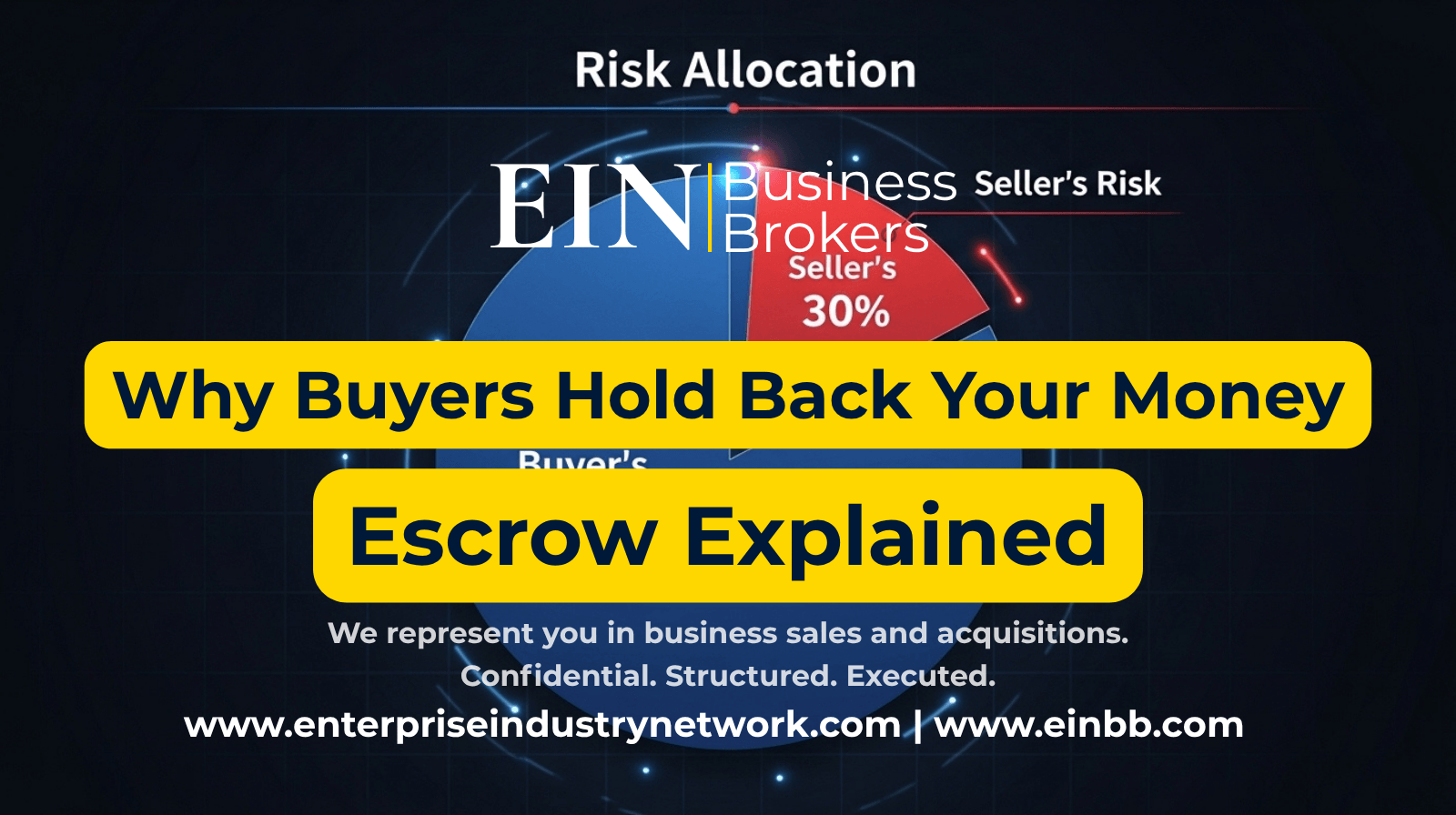 EIN Business Brokers explains how escrow, holdbacks, indemnification, and post-closing claims can affect seller proceeds, risk allocation, and business sale outcomes.