

Spatial Computing Is Moving From Demonstration to Enterprise Operations
Spatial computing is moving from demonstration to enterprise operations. Organizations are beginning to use augmented reality, mixed reality, three-dimensional visualization, and location-aware digital tools for practical business activities.
Applications may include employee training, equipment maintenance, facility design, remote technical support, product development, warehouse planning, and customer demonstrations. These tools can place digital information directly within a physical operating environment.
Successful adoption requires clear use cases, reliable hardware, secure data access, employee training, and integration with existing business systems. Technology should solve a defined operational problem rather than become an isolated experiment.
Strategic implementation support from EIN Business Consulting can help organizations evaluate emerging technologies and connect adoption with measurable business outcomes.
FAQs
What is spatial computing?
Spatial computing combines digital information with physical environments through technologies such as augmented reality, mixed reality, sensors, and three-dimensional interfaces.
How can enterprises use it?
Enterprises can use it for training, maintenance, design, remote support, facility planning, visualization, and customer experiences.
What should businesses evaluate first?
Businesses should evaluate the use case, expected value, hardware needs, data security, system integration, and employee readiness.
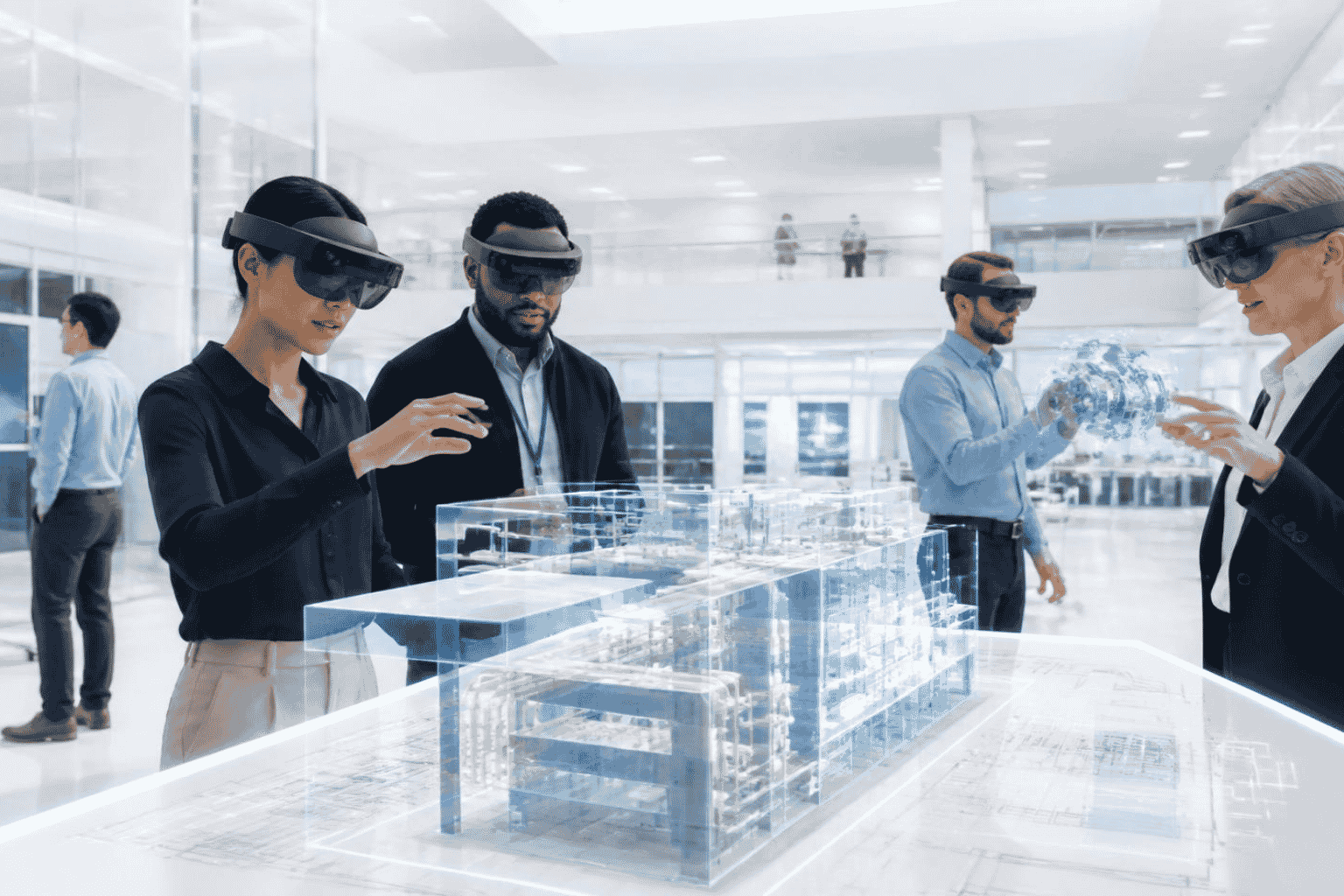 Spatial computing is helping enterprises visualize information, train employees, and improve complex operational tasks.