

Modular Construction Is Accelerating Commercial and Infrastructure Project Delivery
Modular construction is accelerating commercial and infrastructure project delivery. Building components can be manufactured in controlled environments and transported to project sites for assembly, allowing some activities to occur at the same time as site preparation.
This approach can reduce weather-related delays, improve production consistency, and limit congestion at active construction locations. It may be useful for healthcare facilities, hospitality projects, housing, offices, schools, and other repeatable building formats.
Successful modular projects require early design coordination, transportation planning, supplier capacity, quality controls, and clear integration between factory production and on-site construction teams.
Strategic insights from EIN Business Consulting can help organizations evaluate infrastructure, development, and operational opportunities connected to evolving construction models.
FAQs
What is modular construction?
Modular construction uses building sections produced away from the final site and assembled as part of the completed structure.
What advantages can it provide?
It can shorten timelines, improve consistency, reduce on-site disruption, and allow factory production and site work to proceed simultaneously.
What should project leaders evaluate?
They should evaluate design coordination, transportation, supplier capacity, quality standards, site access, and assembly requirements.
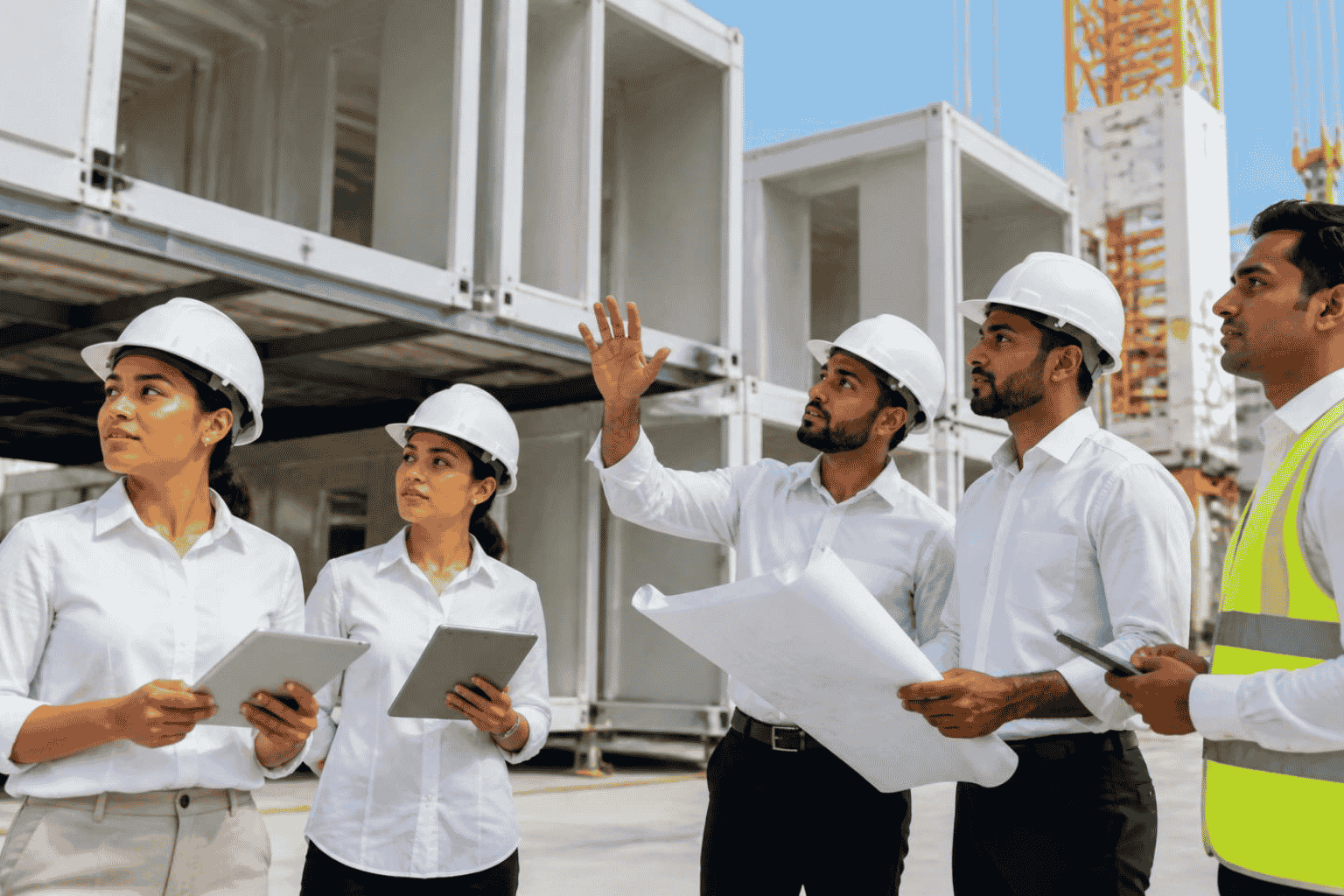 Modular construction is helping developers shorten project timelines, improve consistency, and reduce disruption at building sites.