
Selling a Business? How Taxes Affect What You Keep | EIN Business Brokers | Enterprise Industry Network | EINBB
When selling a business, the headline purchase price is not the same as the amount the seller ultimately keeps. Taxes can materially affect net seller proceeds depending on the transaction structure, entity type, purchase price allocation, asset treatment, stock or equity treatment, depreciation recapture, seller financing, earnouts, and other deal-specific factors.
In this video, EIN Business Brokers (EINBB), part of the Enterprise Industry Network (EIN), explains why business owners should evaluate after-tax proceeds before accepting an offer, how deal structure can influence tax outcomes, and why sellers should coordinate with qualified tax, legal, accounting, and financial professionals before closing.
How Do Taxes Affect What You Keep When Selling a Business?
Taxes can reduce the amount of sale proceeds a business owner retains after closing. The actual result depends on the specific transaction and the seller’s circumstances.
Potential tax considerations can include:
- Capital gain treatment.
- Ordinary income treatment.
- Depreciation recapture.
- Purchase price allocation.
- Entity-level taxation.
- State and local taxes.
- Seller financing.
- Earnouts.
- Other transaction-specific tax consequences.
Why Sellers Should Focus on After-Tax Proceeds, Not Just Purchase Price
Two offers with the same headline price can produce different net outcomes because the structure and tax treatment may differ.
Sellers should evaluate:
- Cash received at closing.
- Taxes.
- Debt payoff.
- Working capital adjustments.
- Seller financing.
- Earnouts.
- Escrow.
- Transaction expenses.
What Are Net Seller Proceeds?
Net seller proceeds generally refer to the amount the seller retains after accounting for relevant transaction deductions and obligations.
A simplified concept can be expressed as:
Purchase Consideration − Debt − Transaction Costs − Taxes − Other Adjustments = Estimated Net Seller Proceeds
The exact calculation varies by transaction.
Why Business Sale Taxes Depend on Deal Structure
Tax treatment can differ significantly depending on how the business sale is structured.
Common structures may involve:
- Asset sales.
- Stock sales.
- Equity or membership-interest sales.
- Other transaction structures.
Sellers should not assume that the same purchase price produces the same after-tax proceeds under every structure.
How Can an Asset Sale Affect Taxes?
In an asset sale, the transaction generally involves the sale of specified business assets rather than ownership of the legal entity itself.
Different assets may receive different tax treatment depending on applicable law and the seller’s circumstances.
Examples of transferred assets may include:
- Equipment.
- Inventory.
- Goodwill.
- Intellectual property.
- Customer relationships.
- Other business assets.
How Can a Stock or Equity Sale Affect Taxes?
In a stock or equity sale, the seller generally transfers ownership interests in the business entity rather than individually transferring operating assets.
The tax consequences can differ materially from an asset sale, depending on entity type, transaction terms, elections, applicable law, and the seller’s specific circumstances.
Why Sellers and Buyers May Prefer Different Tax Structures
A structure that is economically attractive to the buyer may not produce the same tax outcome for the seller, and vice versa.
This can become an important negotiation issue involving:
- Purchase price.
- Asset allocation.
- Deal structure.
- Seller proceeds.
- Buyer tax basis.
What Is Purchase Price Allocation?
Purchase price allocation determines how the transaction value is assigned among different assets or categories in transactions where allocation is relevant.
The allocation can affect the tax consequences for both buyer and seller.
Potential categories may include:
- Inventory.
- Equipment.
- Furniture and fixtures.
- Intangible assets.
- Goodwill.
- Other agreed categories.
Why Purchase Price Allocation Matters to Sellers
Different portions of the purchase price may receive different tax treatment.
As a result, two allocations applied to the same headline purchase price may potentially produce different after-tax outcomes.
What Is Capital Gain Treatment in a Business Sale?
Certain portions of a qualifying business sale may potentially receive capital gain treatment depending on the transaction, assets sold, holding periods, entity structure, and applicable tax law.
Not every dollar of a business sale is automatically treated the same way.
What Is Ordinary Income Treatment?
Some portions of transaction proceeds may potentially be taxed as ordinary income rather than capital gain, depending on the nature of the asset or payment and applicable tax rules.
This is one reason sellers should obtain transaction-specific tax advice before agreeing to final structure and allocation.
What Is Depreciation Recapture?
Depreciation recapture can affect the tax treatment of certain depreciated assets when they are sold.
Businesses with substantial depreciable assets may need to evaluate how recapture affects estimated after-tax proceeds.
Why Equipment-Heavy Businesses Need Careful Tax Planning
Businesses with significant machinery, vehicles, equipment, or other depreciated assets may have different tax considerations from companies whose value is primarily associated with goodwill or other intangible value.
Sellers should review the asset base with qualified tax professionals before closing.
How Can Inventory Affect Business Sale Taxes?
Inventory can receive different treatment from other categories of business value depending on transaction structure and applicable tax rules.
Sellers should understand how inventory is valued, transferred, and treated in the overall transaction.
How Can Goodwill Affect a Business Sale?
Goodwill can represent value associated with factors such as reputation, customer relationships, market position, systems, workforce, and the ability of the business to generate earnings beyond identifiable tangible assets.
The tax treatment of goodwill can be important in purchase price allocation and should be reviewed with qualified advisors.
Why Entity Type Matters When Selling a Business
The tax consequences of a business sale can vary depending on how the company is legally and tax-wise structured.
Potential entity forms can include:
- S corporations.
- C corporations.
- LLCs.
- Partnerships.
- Sole proprietorships.
- Other structures.
The seller should obtain advice specific to the entity and transaction.
Why C Corporation Sellers May Need Special Tax Analysis
Certain corporate structures can create different tax consequences depending on whether assets or ownership interests are sold.
Because the potential tax impact can be significant, sellers should evaluate structure before agreeing to transaction terms.
Why LLC and Partnership Sales Can Be Tax-Complex
Sales involving LLCs or partnerships may require detailed analysis of ownership interests, underlying assets, allocation, liabilities, and applicable tax rules.
The tax treatment should be modeled by appropriately qualified professionals before closing.
How Can Seller Financing Affect Taxes?
Seller financing means the seller receives part of the purchase price over time rather than entirely at closing.
Depending on the structure and applicable tax rules, timing of payments can affect when certain income is recognized.
Seller financing also creates credit and repayment risk separate from tax considerations.
Why Sellers Should Not Accept Seller Financing Only for Tax Reasons
Even if payment timing creates potential tax-planning considerations, seller financing still exposes the seller to the buyer’s ability to repay.
Sellers should evaluate:
- Buyer creditworthiness.
- Security.
- Interest rate.
- Repayment period.
- Subordination.
- Default risk.
How Can an Earnout Affect Taxes?
An earnout makes part of the purchase consideration dependent on future performance.
Tax treatment can depend on how the earnout is structured and characterized.
Because earnouts can involve complex legal, accounting, and tax questions, sellers should obtain professional advice before agreeing to final terms.
Why Earnout Tax Planning Should Happen Before Closing
After the purchase agreement is signed, the seller may have less flexibility to restructure payment terms.
Tax analysis should therefore be incorporated into the transaction process before final documents are executed.
How Can Consulting or Employment Payments Affect Seller Taxes?
A buyer may ask the seller to remain after closing through an employment, consulting, or transition arrangement.
Payments for services may receive different tax treatment from purchase consideration.
Sellers should clearly understand which payments represent:
- Purchase price.
- Compensation.
- Consulting fees.
- Other post-closing payments.
Why Seller Transition Compensation Should Be Clearly Defined
If a seller remains involved after closing, the purchase agreement or related documents should clearly define the nature and amount of any compensation.
This can help reduce confusion around transaction economics and tax reporting.
How Can Noncompete or Other Restrictive Payments Affect Taxes?
Payments associated with restrictive covenants or other contractual obligations may have distinct tax consequences depending on the transaction and applicable law.
The structure should be reviewed with qualified legal and tax professionals.
Do State Taxes Affect Business Sale Proceeds?
Potentially. State and local tax consequences can vary depending on the seller, business location, residency, transaction structure, and applicable tax rules.
Sellers should avoid estimating after-tax proceeds using only federal tax assumptions.
Why Seller Location and Business Location Can Matter
Business owners may operate in one jurisdiction, live in another, own assets in several states, or generate revenue across multiple locations.
This can complicate transaction tax analysis and should be evaluated before closing.
Why Taxes Should Be Modeled Before Accepting an Offer
A seller should ideally understand estimated net proceeds before becoming committed to a transaction.
An after-tax model can help compare:
- Competing offers.
- Asset versus equity structures.
- Cash at closing.
- Seller financing.
- Earnouts.
- Purchase price allocation.
Why Two Identical Offers Can Produce Different Net Proceeds
Two buyers could offer the same headline price while proposing different structures.
Differences in allocation, deferred payments, escrow, working capital, and tax treatment can change what the seller ultimately keeps.
Why Taxes Should Be Considered With Working Capital and Debt
Seller proceeds are affected by more than taxes alone.
A complete transaction analysis should also consider:
- Debt payoff.
- Working capital requirements.
- Cash treatment.
- Transaction expenses.
- Escrow.
- Seller financing.
- Earnouts.
- Taxes.
Why the Highest Business Valuation May Not Produce the Best Net Outcome
A higher valuation can be less attractive if the offer includes unfavorable tax structure, substantial deferred consideration, large escrow requirements, or other economic disadvantages.
Sellers should compare the entire transaction rather than only the multiple or headline purchase price.
What Tax Mistakes Can Business Sellers Make?
Common planning mistakes can include:
- Focusing only on headline purchase price.
- Waiting until late in the transaction to model taxes.
- Ignoring purchase price allocation.
- Assuming all proceeds receive the same tax treatment.
- Ignoring depreciation recapture.
- Ignoring state and local taxes.
- Not evaluating seller-financing tax implications.
- Failing to coordinate broker, legal, accounting, and tax advice.
When Should a Seller Start Tax Planning for a Business Sale?
Ideally, tax planning begins before the seller accepts a Letter of Intent or becomes locked into a specific transaction structure.
Earlier analysis may provide more opportunity to understand tradeoffs and negotiate with better information.
What Should Sellers Ask Their Tax Advisor Before Selling?
Useful questions can include:
- How could an asset sale versus equity sale affect me?
- How should we model estimated after-tax proceeds?
- How could purchase price allocation affect taxes?
- Could depreciation recapture apply?
- How would seller financing affect tax timing?
- How could an earnout be treated?
- What state and local taxes may apply?
- What records should be prepared before closing?
How EIN Business Brokers Helps Sellers Evaluate the Full Economics of a Sale
EIN Business Brokers (EINBB), under the Enterprise Industry Network (EIN), works with business owners preparing to sell, evaluating business value, comparing buyer offers, understanding transaction structure, and coordinating the sale process alongside the seller’s qualified professional advisors.
- Business valuation and market positioning.
- Seller readiness and exit planning.
- Confidential buyer outreach.
- Buyer qualification.
- Offer and Letter of Intent evaluation.
- Transaction-structure and negotiation support.
- Due diligence coordination.
- Closing coordination alongside qualified legal, tax, accounting, and financial professionals.
If you are considering selling your business, evaluating estimated after-tax proceeds before accepting an offer can help you understand the real economic outcome of the transaction and compare buyers based on what you may actually receive and retain, not simply the headline sale price.
Do You Know What You Could Actually Keep After Selling Your Business?
Purchase price is only one part of your exit. Deal structure, purchase price allocation, debt, working capital, seller financing, earnouts, transaction costs, and taxes can all affect net seller proceeds. Evaluate the full transaction with EIN Business Brokers and qualified tax, legal, accounting, and financial advisors before closing.
Frequently Asked Questions
How do taxes affect what I keep when selling a business?
Taxes can materially reduce net seller proceeds. The impact depends on transaction structure, entity type, purchase price allocation, assets sold, deferred payments, state and local tax rules, and other deal-specific factors.
Is the entire business sale price taxed the same way?
Not necessarily. Different portions of a business transaction may receive different tax treatment depending on the assets, transaction structure, allocation, entity type, and applicable tax law.
Why does purchase price allocation matter when selling a business?
Purchase price allocation determines how transaction value is assigned among assets or categories, and those categories may receive different tax treatment. Allocation can therefore affect after-tax seller proceeds.
Can an asset sale and stock sale produce different tax results?
Yes. Asset sales and stock or equity sales can have materially different tax consequences for sellers and buyers depending on entity structure, assets, transaction terms, elections, and applicable tax law.
How can seller financing affect taxes on a business sale?
Seller financing spreads part of the purchase consideration over time and may affect the timing or character of income depending on the transaction and applicable tax rules. It also creates repayment risk for the seller.
When should I talk to a tax advisor about selling my business?
Ideally, tax analysis should begin before accepting a Letter of Intent or agreeing to final deal structure, purchase price allocation, seller financing, earnouts, or other material transaction terms.
How can EIN Business Brokers help sellers evaluate net sale proceeds?
EIN Business Brokers can support sellers with business valuation, seller readiness, buyer qualification, offer and LOI evaluation, transaction-structure discussions, negotiation coordination, due diligence, and closing support alongside qualified tax, legal, accounting, and financial professionals.
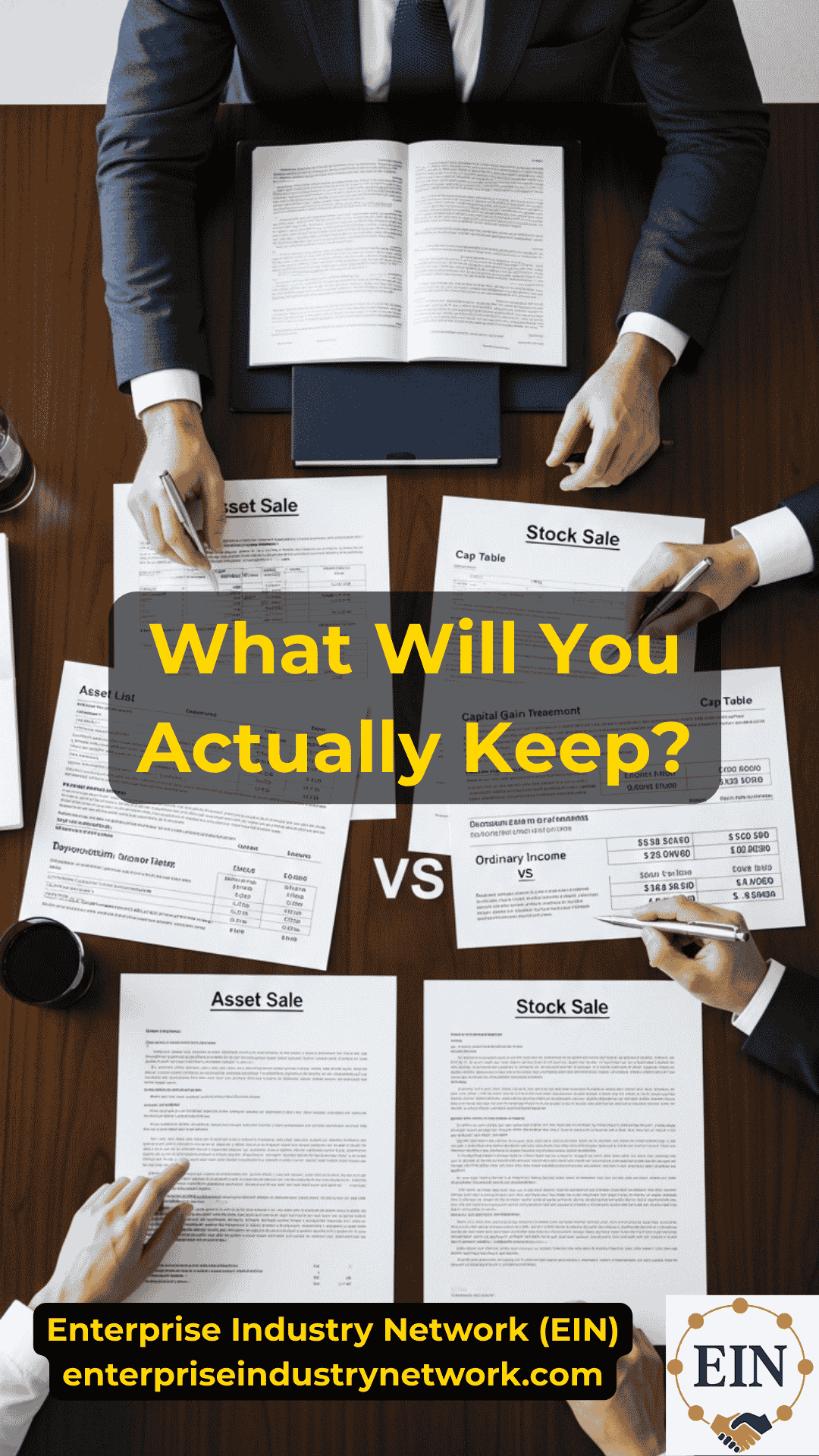 The headline business sale price is not the same as net seller proceeds because transaction structure, purchase price allocation, debt, working capital, deferred payments, transaction costs, and taxes can all affect what the seller ultimately keeps.