

What Is Indemnification When Selling a Business? | EIN Business Brokers | Enterprise Industry Network | EINBB
Indemnification is one of the most important risk-allocation concepts in many business sale agreements. It can determine when one party may be responsible for certain losses, claims, liabilities, or breaches that arise before or after closing.
In this video, EIN Business Brokers (EINBB), part of the Enterprise Industry Network (EIN), explains what indemnification means when selling a business, how it can relate to representations and warranties, taxes, liabilities, contracts, escrow, holdbacks, claim periods, and post-closing risk.
What Is Indemnification When Selling a Business?
Indemnification is a contractual mechanism that can require one party to compensate another for certain losses or claims defined in the purchase agreement.
In a business sale, indemnification provisions may address matters such as:
- Breaches of representations and warranties.
- Specified pre-closing liabilities.
- Tax obligations.
- Contractual breaches.
- Employee claims.
- Legal disputes.
- Other specifically negotiated risks.
Why Is Indemnification Important in a Business Sale?
A buyer is purchasing a business based on assumptions about its financial, legal, operational, and contractual condition. Indemnification helps allocate responsibility if certain agreed facts turn out to be inaccurate or specified liabilities later emerge.
For sellers, indemnification can be important because it may affect:
- Post-closing financial exposure.
- Escrow requirements.
- Holdbacks.
- Negotiation of representations and warranties.
- Final seller proceeds.
How Does Indemnification Relate to Representations and Warranties?
Representations and warranties are contractual statements about specified aspects of the business. Indemnification provisions may establish remedies if one of those statements is breached.
Representations may address areas such as:
- Financial statements.
- Taxes.
- Contracts.
- Employees.
- Assets.
- Intellectual property.
- Legal matters.
- Compliance.
What Is an Indemnification Claim?
An indemnification claim is generally a request for compensation under the terms of the purchase agreement after a qualifying loss or breach is alleged.
The agreement may define:
- What types of claims qualify.
- Who can make a claim.
- When claims must be submitted.
- How claims are documented.
- What financial limits apply.
What Types of Losses Can Indemnification Cover?
The exact definition depends on the agreement, but indemnification provisions may address certain:
- Financial losses.
- Tax liabilities.
- Third-party claims.
- Legal costs.
- Contract liabilities.
- Employee-related claims.
- Environmental or regulatory matters where applicable.
The specific scope should be reviewed with qualified transaction counsel.
Why Buyers Want Indemnification Protection
Due diligence reduces risk, but it cannot always uncover every issue before closing.
Buyers may therefore seek contractual protection against certain undisclosed or inaccurately represented matters.
Why Sellers Should Understand Indemnification Before Closing
A seller may focus heavily on purchase price while underestimating the importance of post-closing liability.
Indemnification provisions can affect:
- How much money is held back.
- How long exposure continues.
- Which claims can be made.
- How much liability is capped.
- How seller proceeds may be affected after closing.
What Is a Cap on Indemnification?
A cap is a negotiated limit on the amount one party may be required to pay for certain indemnification claims.
Different categories of claims may have different caps depending on the purchase agreement.
Why Indemnification Caps Matter to Sellers
Without appropriate limits, a seller may face greater post-closing exposure than expected.
Sellers may therefore negotiate:
- Overall liability caps.
- Separate limits for particular claims.
- Different treatment for specified fundamental matters.
What Is an Indemnification Basket?
A basket is a negotiated threshold that may need to be reached before certain indemnification claims become recoverable.
Its purpose is often to prevent relatively small claims from creating repeated disputes after closing.
What Is the Difference Between a Basket and a Deductible?
The terminology and mechanics can vary. In some agreements, one structure may allow recovery only for losses above a threshold, while another may permit recovery of a broader amount once the threshold is exceeded.
Because small wording differences can materially change the economics, sellers should rely on qualified legal counsel when reviewing these provisions.
What Is an Indemnification Survival Period?
A survival period specifies how long certain representations, warranties, or indemnification rights remain enforceable after closing.
Different claims may have different survival periods.
Why Survival Periods Matter to Sellers
The longer a claim period remains open, the longer the seller may face potential post-closing exposure.
Sellers should understand:
- Which provisions survive.
- How long they survive.
- Whether different categories have different periods.
How Does Escrow Relate to Indemnification?
A portion of the purchase price may be placed in escrow for a defined period to provide funds for certain indemnification claims or other post-closing adjustments.
For sellers, escrow can affect how much cash is received immediately at closing.
What Is an Indemnification Holdback?
A holdback can similarly reserve part of the purchase consideration instead of paying the full amount to the seller at closing.
The agreement may specify:
- Holdback amount.
- Duration.
- Permitted claims.
- Release conditions.
Why Headline Purchase Price Can Differ From Cash Received at Closing
A business may sell for an agreed headline price while the seller receives less cash immediately because of:
- Escrow.
- Holdbacks.
- Seller financing.
- Earnouts.
- Working capital adjustments.
- Debt payoff.
This is why sellers should evaluate the complete transaction structure, not only the headline price.
How Can Taxes Become an Indemnification Issue?
Purchase agreements may allocate responsibility for certain pre-closing tax obligations or tax-related claims.
Tax indemnification can involve significant legal and financial consequences, so sellers should review these provisions with qualified tax and legal professionals.
How Can Employee Claims Affect Indemnification?
Depending on the transaction, indemnification provisions may address specified employee-related matters that arose before closing.
Potential areas can include:
- Compensation claims.
- Benefits.
- Worker classification.
- Employment disputes.
- Other pre-closing obligations.
How Can Contract Problems Create Indemnification Risk?
A seller may represent that material contracts are valid, enforceable, or not in default subject to the specific agreement language.
If an undisclosed material contract problem later causes a qualifying loss, the buyer may potentially pursue contractual remedies.
Why Customer and Vendor Disputes Matter
Known customer or supplier disputes should generally be addressed during due diligence and disclosure rather than left as late surprises.
Material unresolved issues can affect:
- Buyer confidence.
- Valuation.
- Closing conditions.
- Indemnification negotiations.
How Can Legal Claims Affect Indemnification?
Pending or threatened litigation can become an important purchase agreement issue.
Depending on the circumstances, the parties may negotiate specific treatment for known claims rather than relying only on general representations.
Why Disclosure Schedules Matter for Indemnification
Disclosure schedules can identify exceptions to representations and give the buyer information about known issues before closing.
Proper disclosure can be important because indemnification disputes may arise when a buyer later claims that a material issue was not adequately disclosed.
Why Sellers Should Prepare Disclosure Schedules Carefully
Sellers may need to coordinate with:
- Transaction counsel.
- Accountants.
- Management.
- Tax professionals.
- Other advisors.
The goal is to identify relevant exceptions accurately and consistently with the purchase agreement.
Can Known Problems Be Handled Separately?
Yes. Some transactions may address a known issue through a specific indemnity or other negotiated provision rather than relying only on general representations and warranties.
The scope, duration, and financial limits can differ from general indemnification terms.
What Are Fundamental Representations?
Some agreements distinguish certain core or fundamental representations from ordinary business representations.
These may involve matters such as:
- Ownership.
- Authority.
- Capitalization.
- Other foundational transaction matters.
Their treatment can differ significantly from other representations, including different caps or survival periods.
Why Fraud Is Often Treated Differently
Many transaction agreements distinguish fraud or intentional misconduct from ordinary contractual breaches.
The exact legal treatment is highly transaction-specific and should be addressed by qualified counsel.
How Indemnification Can Affect Purchase Agreement Negotiations
Indemnification is part of the broader negotiation over how risk is divided between buyer and seller.
Negotiations may focus on:
- Scope of claims.
- Financial caps.
- Baskets.
- Survival periods.
- Escrow amounts.
- Disclosure standards.
- Specific indemnities.
Why the Highest Offer May Not Be the Best Offer
A seller comparing business sale offers should evaluate more than purchase price.
A higher offer may come with:
- Larger escrow.
- Broader indemnification exposure.
- Longer survival periods.
- More seller financing.
- More aggressive closing conditions.
How Buyer Competition Can Affect Indemnification Terms
When multiple qualified buyers are competing, sellers may have greater ability to compare not only valuation but also legal and economic deal terms.
This can include differences in:
- Escrow requirements.
- Indemnification caps.
- Survival periods.
- Seller financing.
- Other post-closing obligations.
Why Indemnification Should Be Considered Before Exclusivity
Once a seller grants exclusivity to one buyer, negotiating leverage may change.
Although full indemnification language often comes later, sellers should understand the likely transaction framework before becoming deeply committed to one buyer.
How Due Diligence Can Reduce Indemnification Disputes
Well-organized due diligence can help identify issues before closing and allow them to be addressed in the transaction documents.
Sellers may prepare:
- Financial records.
- Contracts.
- Tax documents.
- Employee information.
- Legal records.
- Debt schedules.
- Licenses and permits.
- Intellectual property records.
Why Early Disclosure Can Protect Transaction Momentum
A known problem disclosed early is generally easier to evaluate and negotiate than a material issue discovered unexpectedly late in due diligence.
Early preparation can reduce:
- Buyer distrust.
- Purchase price renegotiation.
- Closing delays.
- Failed transactions.
What Should Sellers Review Before Signing the Purchase Agreement?
Sellers should understand the complete risk allocation in the definitive agreement, including:
- Representations and warranties.
- Disclosure schedules.
- Indemnification obligations.
- Caps.
- Baskets.
- Survival periods.
- Escrow.
- Specific indemnities.
- Closing conditions.
These are legal provisions and should be reviewed with qualified transaction counsel.
How Can Sellers Reduce Indemnification Risk Before a Business Sale?
Preparation can help reduce avoidable disputes and post-closing surprises.
- Clean up financial records.
- Review contracts.
- Identify tax issues.
- Resolve or disclose legal matters.
- Organize employee records.
- Identify outstanding liabilities.
- Review intellectual property ownership.
- Prepare accurate disclosure schedules.
- Address known issues before closing where possible.
How EIN Business Brokers Helps Sellers Prepare for Transaction Risk
EIN Business Brokers (EINBB), under the Enterprise Industry Network (EIN), works with business owners preparing to sell, evaluating business value, understanding transaction structure, identifying buyer concerns, and navigating the business sale process.
- Business valuation and market positioning.
- Seller readiness and exit planning.
- Identification of financial and transaction risks.
- Confidential buyer outreach.
- Buyer qualification.
- Offer and Letter of Intent evaluation.
- Transaction-structure and negotiation support.
- Due diligence coordination.
- Closing coordination alongside qualified legal, tax, accounting, and other professional advisors.
If you are considering selling your business, understanding indemnification before signing the definitive agreement can help you evaluate the real economics of an offer, prepare disclosures, understand post-closing exposure, and compare transaction terms beyond headline purchase price.
Could Indemnification Affect What You Keep After Selling Your Business?
Indemnification, escrow, caps, baskets, survival periods, disclosure schedules, and post-closing claims can all affect transaction risk and seller proceeds. Understand the complete business sale structure before closing with EIN Business Brokers and qualified transaction advisors.
Frequently Asked Questions
What is indemnification when selling a business?
Indemnification is a contractual mechanism that can require one party to compensate another for certain defined losses, claims, liabilities, or breaches arising under the business purchase agreement.
How does indemnification relate to representations and warranties?
Representations and warranties are contractual statements about specified aspects of the business. Indemnification provisions may provide remedies for certain breaches of those statements, subject to the negotiated agreement.
What are indemnification caps and baskets?
A cap can limit liability for certain claims, while a basket can establish a financial threshold that applies before certain indemnification claims become recoverable. Their exact mechanics depend on the purchase agreement.
How does escrow relate to indemnification?
A portion of the purchase price may be placed in escrow or held back after closing to provide funds for certain indemnification claims or other defined post-closing adjustments.
How long can indemnification obligations last?
The purchase agreement may establish survival periods that determine how long certain representations, warranties, and indemnification rights remain enforceable after closing. Different provisions may have different periods.
Can indemnification reduce seller proceeds?
Potentially. Escrow, holdbacks, or successful post-closing claims can affect how much purchase consideration the seller ultimately receives or retains.
How can EIN Business Brokers help sellers prepare for indemnification negotiations?
EIN Business Brokers can support sellers with valuation, seller readiness, buyer qualification, offer and LOI evaluation, transaction preparation, negotiation coordination, due diligence, and closing support alongside qualified legal, tax, accounting, and other professional advisors.
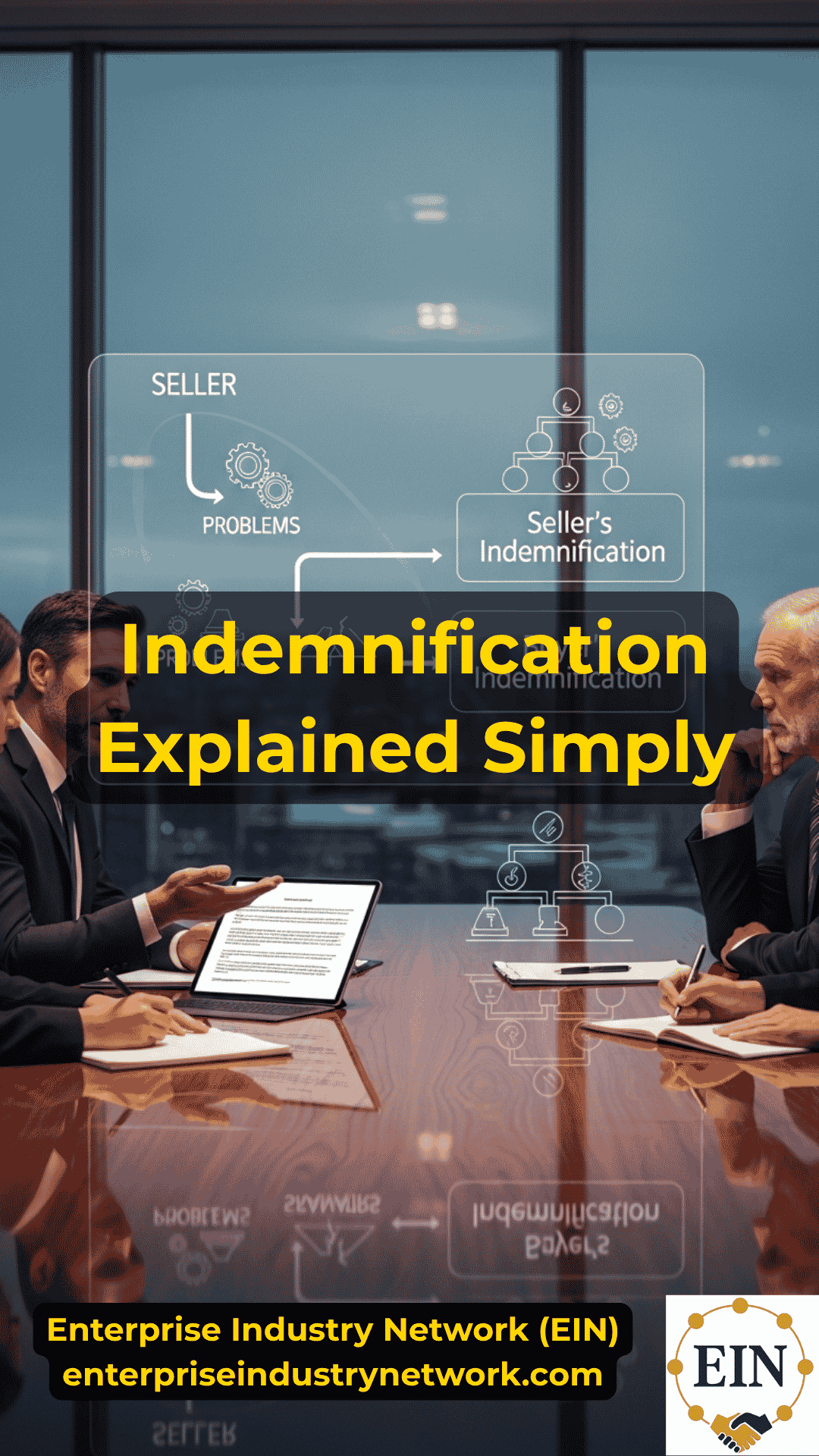 Indemnification provisions can allocate post-closing risk through representations and warranties, claim limits, baskets, survival periods, escrow, holdbacks, and other negotiated protections in a business sale.