
Why Business Systems Matter When Selling a Business | EIN Business Brokers | Enterprise Industry Network | EINBB
A profitable business can still be difficult to sell if too much of its success depends on the owner’s memory, personal relationships, or informal ways of working. Documented business systems can improve buyer confidence because they show how the company operates, how results are produced, and whether those results can continue after ownership changes.
In this video, EIN Business Brokers (EINBB), part of the Enterprise Industry Network (EIN), explains why business systems matter when selling a company and how repeatable processes, standard operating procedures, financial controls, customer systems, sales processes, employee training, technology, and management reporting can affect business value, transferability, due diligence, and seller readiness.
Why Do Business Systems Matter When Selling a Business?
Business systems matter because buyers are purchasing more than revenue, assets, and historical earnings. They are also acquiring the processes that allow the company to continue generating those results after the seller exits.
Strong business systems can help demonstrate:
- Operational consistency.
- Reduced owner dependence.
- Business transferability.
- Employee accountability.
- Customer-service consistency.
- Reliable financial reporting.
- Scalability.
- Management control.
- Lower transition risk.
What Are Business Systems?
Business systems are the repeatable processes, procedures, tools, responsibilities, controls, and workflows that help a company operate consistently.
They may include systems for:
- Sales.
- Lead generation.
- Customer onboarding.
- Customer service.
- Billing and collections.
- Accounting.
- Purchasing.
- Inventory.
- Vendor management.
- Employee training.
- Quality control.
- Management reporting.
- Technology and data.
How Systems Can Make a Business More Transferable
Transferability refers to how easily a company can continue operating under new ownership without losing customers, employees, operational knowledge, or financial performance.
A business becomes more transferable when important knowledge is built into systems rather than remaining only with the seller.
- Employees know how work should be performed.
- Managers understand decision-making responsibilities.
- Customer processes are documented.
- Financial reporting is consistent.
- Technology is organized.
- Critical procedures can be taught to a new owner.
Why Buyers Worry About Businesses Without Systems
When processes are undocumented, buyers may worry that important knowledge will disappear when the seller leaves.
They may ask:
- How are customers acquired?
- How are orders processed?
- Who manages key accounts?
- How are employees trained?
- How are financial results monitored?
- What happens when something goes wrong?
- Can someone other than the owner explain daily operations?
How Systems Reduce Owner Dependence
One of the biggest benefits of strong systems is that they reduce reliance on the owner for routine activities and decision-making.
Owner dependence may be high when the seller personally handles:
- Major sales.
- Customer relationships.
- Vendor negotiations.
- Pricing decisions.
- Employee management.
- Financial oversight.
- Problem resolution.
- Technical knowledge.
Documented systems and delegated responsibilities can help move this knowledge and authority into the company itself.
Why Standard Operating Procedures Matter to Buyers
Standard operating procedures, often called SOPs, describe how recurring business activities should be performed.
Useful SOPs may cover:
- Customer onboarding.
- Sales follow-up.
- Order processing.
- Service delivery.
- Employee onboarding.
- Inventory management.
- Billing.
- Collections.
- Quality assurance.
- Issue escalation.
Do Documented Systems Increase Business Value?
They can. Systems alone do not determine business value, but strong systems may reduce perceived buyer risk and improve transferability.
Buyers also consider:
- Revenue and EBITDA.
- Earnings quality.
- Recurring revenue.
- Customer concentration.
- Management strength.
- Growth potential.
- Industry risk.
- Financial records.
- Buyer demand.
Why Sales Systems Matter in a Business Sale
Buyers want to know how the company generates new business and whether sales can continue after the owner leaves.
A strong sales system may include:
- Lead-generation channels.
- Lead qualification.
- CRM tracking.
- Sales stages.
- Follow-up procedures.
- Proposal processes.
- Closing procedures.
- Sales reporting.
How Owner-Led Sales Can Create Buyer Risk
A company may have strong revenue but still appear risky if the owner personally generates most of the sales.
Buyers may question:
- Will customers continue buying after the owner leaves?
- Can employees generate new sales?
- Is the sales process documented?
- Are leads tracked in a CRM?
- Are important relationships institutionalized?
Why Customer Systems Matter When Selling a Business
Customer systems help demonstrate how the company attracts, serves, retains, and communicates with customers.
These systems may include:
- Customer onboarding.
- Account management.
- Service delivery.
- Complaint resolution.
- Renewals.
- Retention tracking.
- Customer communication.
- Upselling and cross-selling.
How Customer Systems Can Protect Recurring Revenue
Recurring revenue can be attractive to buyers, but the systems supporting that revenue are also important.
Buyers may want to understand:
- How renewals are managed.
- Who owns customer relationships.
- How customer satisfaction is tracked.
- How churn is monitored.
- How billing is handled.
- How accounts are retained after ownership changes.
Why Financial Systems Matter to Business Buyers
Financial systems help buyers understand whether management can reliably track revenue, expenses, cash flow, receivables, payables, and profitability.
Strong financial systems may include:
- Monthly financial reporting.
- Budgeting.
- Cash-flow monitoring.
- Accounts receivable procedures.
- Accounts payable procedures.
- Expense approval controls.
- Inventory reporting.
- Management dashboards.
How Financial Controls Can Improve Buyer Confidence
Buyers may feel more confident when important financial activities have clear controls rather than depending entirely on one individual.
Controls can include:
- Approval procedures.
- Reconciliations.
- Separation of responsibilities.
- Documented payment processes.
- Regular reporting.
- Access controls.
- Audit trails.
Why Management Reporting Matters in a Business Sale
Buyers often want more than annual tax returns. They may want to see how management monitors performance throughout the year.
Useful reporting can include:
- Monthly revenue.
- EBITDA.
- Gross margin.
- Customer retention.
- Sales pipeline.
- Accounts receivable aging.
- Inventory turnover.
- Employee productivity.
How Employee Systems Affect Transferability
A business may be easier to transfer when employees have documented roles, training processes, and clear expectations.
Employee systems may include:
- Job descriptions.
- Employee onboarding.
- Training manuals.
- Performance reviews.
- Reporting relationships.
- Compensation procedures.
- Backup responsibilities.
Why Training Systems Matter to Buyers
Buyers may want confidence that new employees can be trained consistently and that important knowledge is not limited to long-tenured employees or the seller.
Training systems can help:
- Preserve institutional knowledge.
- Reduce key-person dependence.
- Improve consistency.
- Support expansion.
- Reduce transition risk.
How Management Systems Strengthen Business Leadership
Strong leadership becomes more valuable when managers have systems that help them make decisions, track performance, and hold employees accountable.
Management systems may include:
- Regular leadership meetings.
- Performance dashboards.
- Department reporting.
- Decision-making authority.
- Issue escalation procedures.
- Goal tracking.
Why Vendor and Supplier Systems Matter
Buyers may examine whether purchasing and supplier relationships can continue smoothly after the seller exits.
Supplier systems can include:
- Approved vendor lists.
- Ordering procedures.
- Pricing agreements.
- Alternative suppliers.
- Contract management.
- Payment terms.
- Supply-chain monitoring.
How Inventory Systems Affect Business Value
For inventory-based businesses, organized inventory systems can improve financial and operational visibility.
Buyers may review:
- Inventory counts.
- Inventory aging.
- Obsolete stock.
- Reorder procedures.
- Purchasing controls.
- Inventory valuation.
- Shrinkage or loss.
Why Technology Systems Matter to Buyers
Technology may support nearly every part of the business, including sales, accounting, customer service, operations, inventory, and reporting.
Buyers may evaluate:
- Accounting software.
- CRM systems.
- Inventory platforms.
- Project-management systems.
- Cloud services.
- Software licenses.
- Cybersecurity practices.
- Data backups.
Why Technology Documentation Matters in a Sale
A business can create transition risk if important systems exist but passwords, vendors, licenses, integrations, or data-management procedures are not organized.
Sellers may want to document:
- Software platforms.
- System owners.
- Vendor contacts.
- Licensing information.
- User-access procedures.
- Backup procedures.
- Data ownership.
- Critical integrations.
How Systems Affect Business Due Diligence
Buyers may evaluate operating systems during due diligence to determine whether the company is organized, controlled, and transferable.
They may request information about:
- Standard operating procedures.
- Sales systems.
- Customer processes.
- Employee responsibilities.
- Financial controls.
- Vendor systems.
- Technology.
- Management reporting.
Can Weak Systems Cause a Buyer to Renegotiate?
Yes. If due diligence reveals significant operational dependence, poor controls, missing documentation, or systems that require substantial investment after closing, a buyer may reconsider the transaction.
Potential changes may include:
- Lower purchase price.
- Longer seller transition.
- Additional seller financing.
- Earnout provisions.
- Escrow or holdbacks.
- Additional closing conditions.
How Systems Can Reduce Seller Transition Time
A buyer may require the seller to remain involved longer when business knowledge is not documented.
Strong systems can help shorten the learning curve by providing:
- Documented processes.
- Clear responsibilities.
- Organized customer information.
- Management reporting.
- Employee training resources.
- Technology documentation.
Why Systems Can Make a Business Easier to Scale
Buyers may value systems because repeatable processes can make growth easier to manage.
A systemized company may be better positioned to:
- Add employees.
- Serve more customers.
- Open new locations.
- Enter new markets.
- Introduce additional products.
- Integrate with a strategic buyer.
How Scalability Can Affect Business Value
Scalability can influence buyer interest when the company has a realistic ability to grow without a proportional increase in complexity or owner involvement.
Buyers may examine whether systems can support:
- Higher sales volume.
- Additional employees.
- New customer segments.
- Geographic expansion.
- Additional locations.
- Operational growth.
Why Systems Matter to Strategic Buyers
Strategic buyers may value organized systems because they can simplify integration with the buyer’s existing operations.
They may evaluate:
- Technology compatibility.
- Customer systems.
- Sales processes.
- Operational procedures.
- Management reporting.
- Employee processes.
Why Systems Matter to Financial Buyers
Financial buyers may place significant importance on systems because they often want the acquired business to continue operating under its existing management.
They may prefer businesses with:
- Independent management.
- Reliable reporting.
- Repeatable processes.
- Documented sales systems.
- Scalable operations.
- Low owner dependence.
How Systems Can Support More Reliable EBITDA
Buyers may view earnings as more sustainable when the systems producing those earnings are consistent and repeatable.
Strong systems can help demonstrate that:
- Revenue generation is repeatable.
- Expenses are monitored.
- Customers are managed consistently.
- Employees understand responsibilities.
- Management can monitor performance.
- Results do not depend entirely on the seller.
What Systems Should Sellers Build Before Selling?
The most important systems vary by business, but sellers can focus on areas where knowledge, control, or performance currently depends too heavily on individuals.
Potential priorities include:
- Sales and lead management.
- Customer onboarding and retention.
- Financial reporting.
- Billing and collections.
- Employee onboarding and training.
- Management reporting.
- Vendor management.
- Inventory control.
- Technology documentation.
- Quality control.
Should Every Business Have Formal SOPs Before It Is Sold?
Not every small business needs an extensive manual for every activity. However, critical processes should be documented well enough that a qualified manager or buyer can understand how important functions are performed.
The goal is practical transferability, not unnecessary bureaucracy.
How Can Sellers Improve Systems Before Going to Market?
Business owners who have time before selling can review where the company depends too heavily on informal knowledge and convert those areas into repeatable systems.
- Document critical processes.
- Clarify responsibilities.
- Implement regular reporting.
- Use a CRM for sales and customers where appropriate.
- Standardize employee training.
- Organize financial controls.
- Document technology.
- Create backup responsibilities.
- Reduce owner involvement in routine tasks.
How EIN Business Brokers Helps Sellers Evaluate Business Transferability
EIN Business Brokers (EINBB), under the Enterprise Industry Network (EIN), works with business owners preparing to sell, understanding business value, identifying owner-dependence and transferability risks, positioning the company for qualified buyers, and navigating the transaction process.
- Business valuation and market positioning.
- Seller readiness and exit planning.
- Identification of operational and transferability risks.
- Confidential buyer outreach.
- Strategic and financial buyer identification.
- Buyer qualification.
- Offer and Letter of Intent evaluation.
- Transaction-structure and negotiation support.
- Due diligence and closing coordination.
If you are considering selling your business, strengthening the systems behind sales, customers, employees, finances, operations, and management can help make the company easier for buyers to understand, easier to transfer, and less dependent on you personally.
Could a Buyer Run Your Business Without Relying on You?
Documented sales, customer, financial, employee, management, and operating systems can reduce owner dependence and strengthen business transferability. Understand your current value and sale readiness with EIN Business Brokers.
Frequently Asked Questions
Why do business systems matter when selling a business?
Business systems can improve transferability by documenting how sales, customers, employees, finances, technology, and operations are managed so the company can continue functioning after the seller exits.
Can documented systems increase business value?
They can help. Documented and repeatable systems may reduce owner dependence and operational risk, which can improve buyer confidence. Overall value still depends on earnings, growth, customers, management, industry risk, and other factors.
What systems do buyers look for in a business acquisition?
Buyers may review sales processes, customer systems, financial reporting, employee training, management reporting, vendor procedures, inventory controls, technology systems, and standard operating procedures.
Why does owner dependence matter when selling a business?
Heavy owner dependence can create transition risk because important customers, sales, decisions, or operational knowledge may leave when the seller exits. Systems can help move this knowledge into the organization.
Do SOPs make a business easier to sell?
They can. Practical standard operating procedures can help preserve institutional knowledge, improve consistency, train employees, and make important functions easier for a buyer to understand and transfer.
Can weak systems cause a buyer to renegotiate a business sale?
Yes. If due diligence reveals poor controls, undocumented processes, owner dependence, or systems requiring significant investment after closing, buyers may seek different pricing, transition requirements, or transaction terms.
How can EIN Business Brokers help prepare a system-dependent business for sale?
EIN Business Brokers can support sellers with valuation, seller readiness, identification of owner-dependence and transferability risks, confidential buyer outreach, buyer qualification, offer evaluation, negotiation, due diligence coordination, and transaction support through closing.
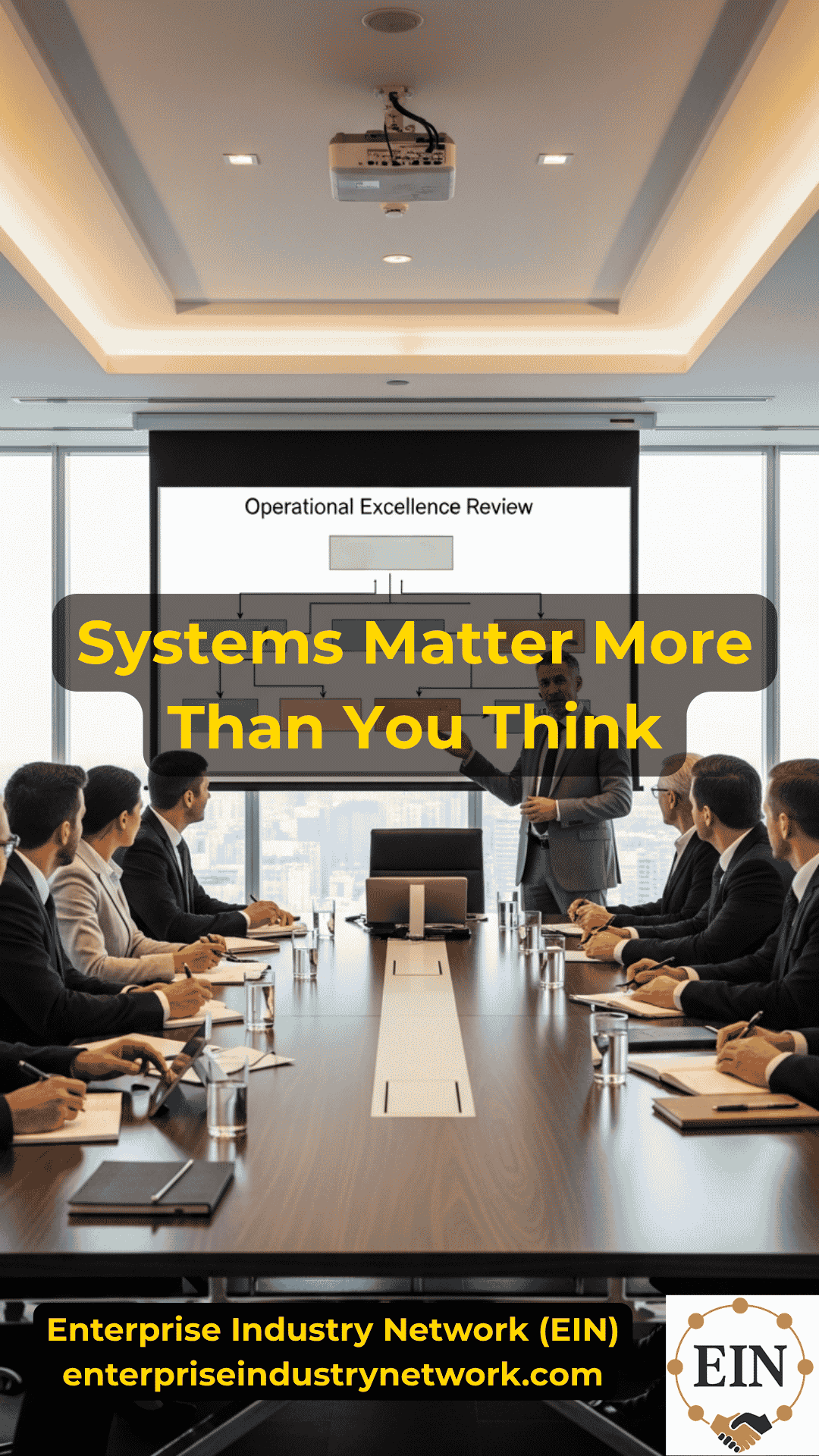 Documented business systems for sales, customers, finances, employees, technology, and management can reduce owner dependence, improve transferability, and strengthen buyer confidence.