

Business Overvaluation Can Kill a Sale | EIN Business Brokers | Enterprise Industry Network
Overvaluation is one of the most common yet overlooked risks in business sales. While every owner wants to achieve the highest possible price, unrealistic pricing can quietly damage deal momentum and ultimately reduce final outcomes.
In this video, EIN Business Brokers (EINBB) explains why overvaluation is often the silent deal killer in business transactions.
Why Overvaluation Happens
- Emotional attachment to the business.
- Confusion between revenue and profitability.
- Overreliance on informal “rule of thumb” multiples.
- Ignoring market comparables.
The Hidden Consequences of Overpricing
- Reduced buyer interest.
- Longer time on market.
- Weakened negotiation leverage.
- Stale listing perception.
- Lower final offers after repeated price reductions.
When a business remains unsold for an extended period, buyers often assume hidden risks, which can erode valuation even further.
Market-Driven Valuation Matters
- Valuation is determined by buyer demand and risk assessment.
- Industry multiples vary based on growth, stability, and scalability.
- Financial transparency strengthens pricing credibility.
The Psychological Impact on Buyers
- Buyers compare multiple opportunities simultaneously.
- Overpriced listings are quickly dismissed.
- Serious buyers seek value-aligned opportunities.
The EINBB Market Positioning Approach
EIN Business Brokers (EINBB), part of the Enterprise Industry Network (EIN), helps sellers position their businesses strategically for market acceptance and competitive offers.
- Comprehensive valuation analysis.
- Comparable market benchmarking.
- Strategic pricing strategy development.
- Structured buyer outreach processes.
Proper pricing does not mean undervaluing your business. It means aligning value with market realities to generate competitive interest and stronger final outcomes.
Price Strategically for Maximum Success
Accurate, market-aligned pricing attracts serious buyers and protects deal momentum.
Frequently Asked Questions
Does overpricing always reduce final value?
Often yes. Overpricing can reduce buyer interest and negotiation leverage, leading to lower eventual offers.
How is fair market value determined?
Fair market value is determined by financial performance, industry multiples, buyer demand, and risk assessment.
Should sellers start high and negotiate down?
Strategic pricing is more effective than artificially high pricing. Market credibility is critical to maintaining buyer confidence.
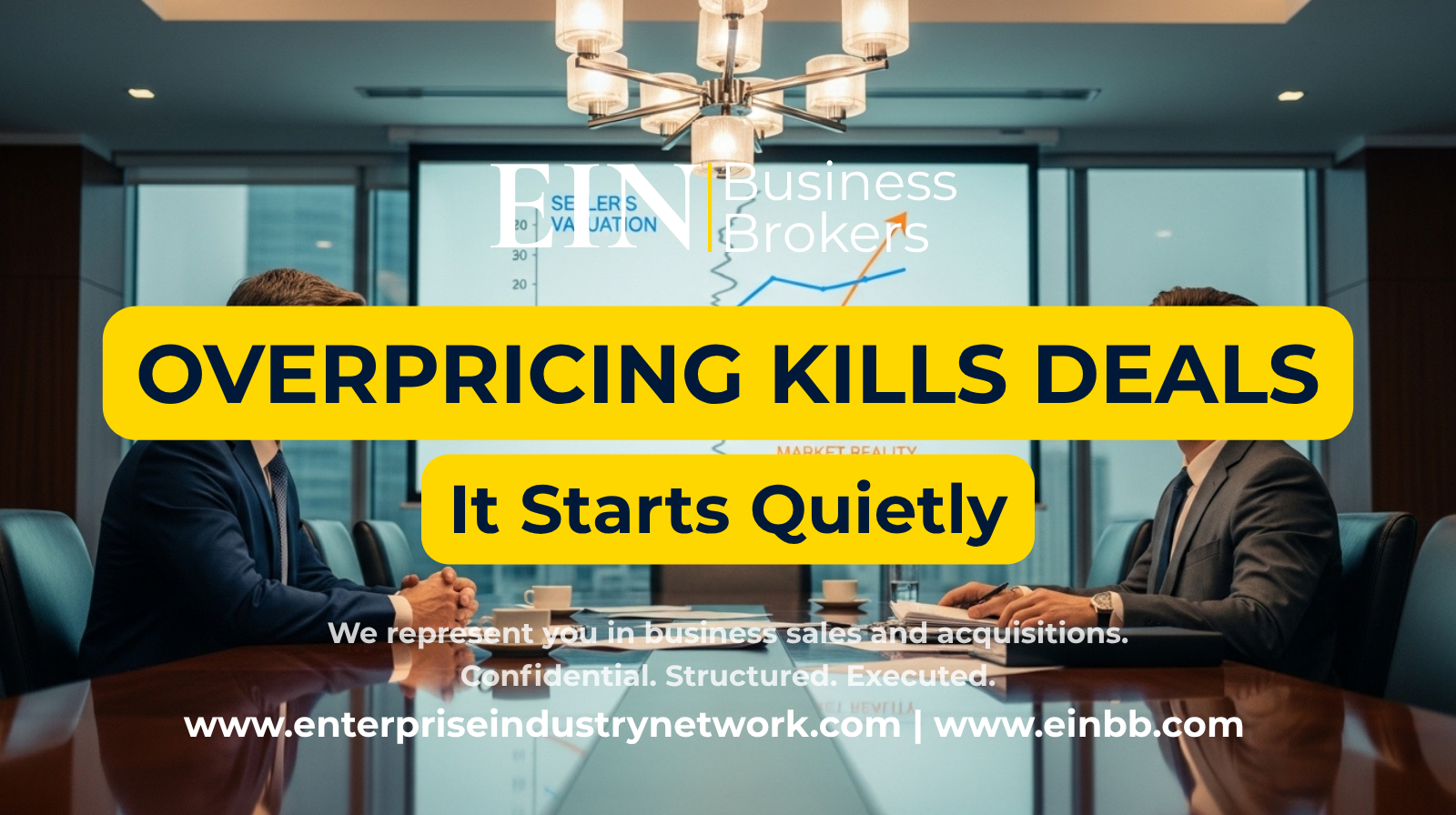 EIN Business Brokers explains why unrealistic business valuations can discourage qualified buyers, weaken negotiations, and become a major obstacle to completing a successful sale.