

Financial Forecast Accuracy Is Becoming a Key Test of Business Leadership Discipline
Financial forecast accuracy is becoming a key test of business leadership discipline. Companies are expected to understand not only where they want to go, but how reliably they can predict revenue, expenses, cash flow, and capital needs.
Accurate forecasting helps leaders make better decisions about hiring, expansion, financing, inventory, and investment. When forecasts are consistently inaccurate, lenders, investors, and buyers may question management visibility and execution quality.
Businesses can improve forecast accuracy by comparing projections against actual results, updating assumptions regularly, and connecting financial planning with operational data.
Strategic support from EIN Business Consulting and funding guidance from EIN Business Funding can help companies strengthen financial planning and capital readiness.
FAQs
What is financial forecast accuracy?
Financial forecast accuracy measures how closely projected financial results match actual business performance.
Why does it matter?
It helps leaders plan cash flow, manage risk, and build credibility with lenders, investors, and buyers.
How can businesses improve forecasting?
They can track actual results, update assumptions, use reliable data, and connect forecasts with operational activity.
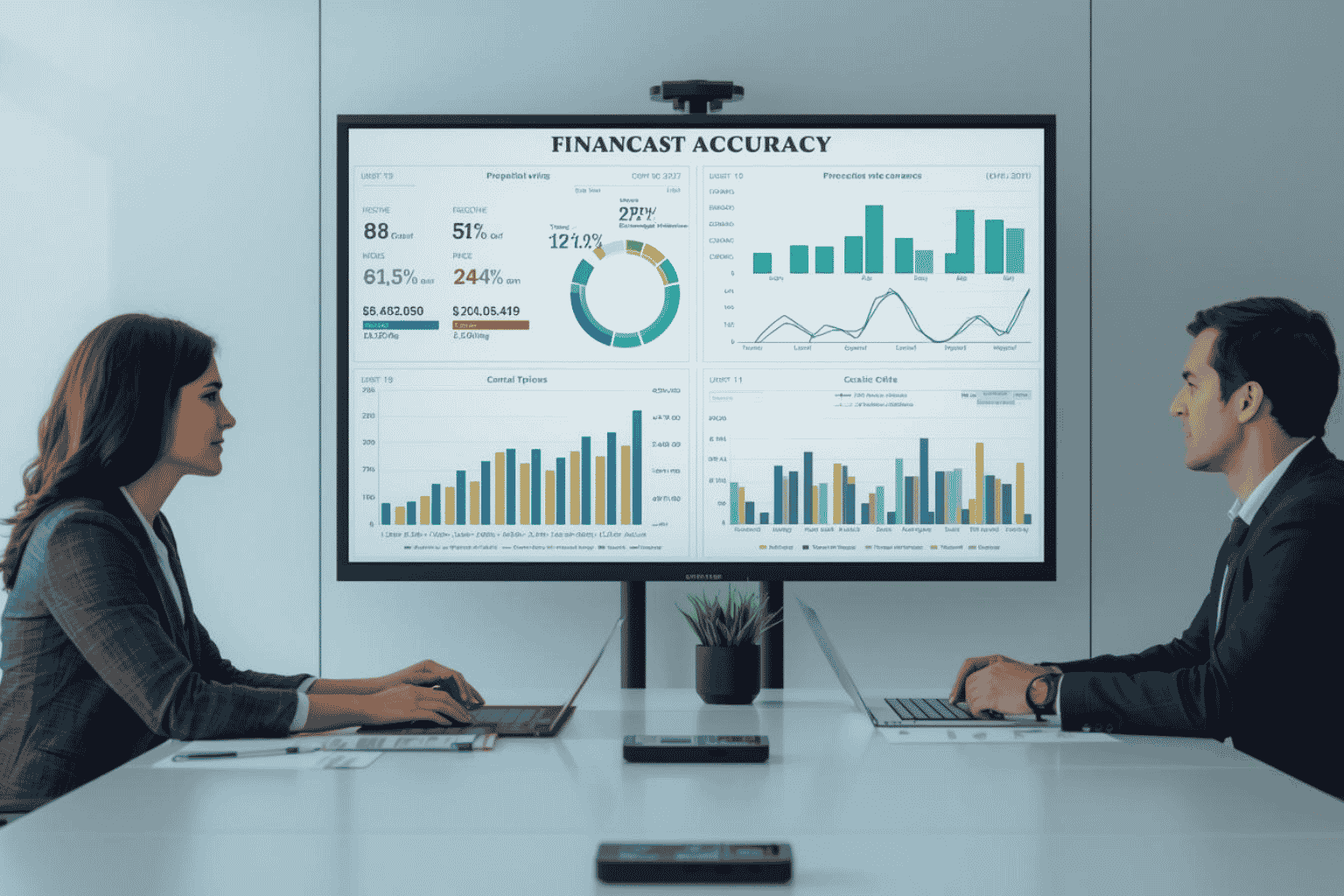 Financial forecast accuracy is helping businesses improve planning, capital decisions, and leadership accountability.