
Raising Capital? Build a Clear Use-of-Funds Plan Before You Pitch Investors
Raising capital?
One of the most important questions a founder should be prepared to answer is also one of the simplest:
What exactly will the capital allow the company to accomplish?
A fundraising target should ideally connect to identifiable business priorities rather than exist as an isolated number.
Investors may want to understand not only how much capital is being raised, but why that amount is appropriate, where it will be deployed and what the company expects to accomplish with it.
Start With the Business Objective
Before deciding how much capital to raise, identify what the company is trying to achieve.
The objective might involve launching a product, expanding into a new market, increasing production capacity, hiring key employees, strengthening sales and marketing, developing technology or supporting another stage of growth.
The capital request should connect logically to the company’s current position and intended next step.
Define the Use of Funds
A broad statement such as “we need capital for growth” may not provide enough information for a meaningful investor discussion.
A more useful use-of-funds plan explains the major areas where capital is expected to be deployed.
Depending on the company, those areas could include:
- Product development
- Technology or infrastructure
- Key hires
- Sales and marketing
- Inventory or production
- Geographic expansion
- Working capital
- Strategic initiatives
The specific allocation will vary by business.
Connect Capital to Milestones
A use-of-funds plan becomes more meaningful when the founder can explain what the spending is intended to achieve.
For example, capital allocated to hiring should connect to the functions or capabilities the company needs.
Capital allocated to product development should connect to identifiable development objectives.
Expansion capital should relate to the market, operating capacity or commercial opportunity being pursued.
The purpose is not to promise a guaranteed outcome. It is to show the reasoning behind the capital request.
Understand the Timing
Founders should also understand when capital is expected to be deployed.
Some expenses may occur immediately, while others may take place over several months or across different stages of the company’s plan.
Thinking about timing can help create a more realistic view of the company’s capital requirement.
Avoid Choosing the Raise Amount Arbitrarily
A fundraising target should not simply be the largest amount a company believes it can request.
Nor should it be based only on what other companies appear to be raising.
The amount should have a connection to the company’s own strategy, expected expenditures, operating requirements and planned milestones.
Know the Financial Story Behind the Ask
Investors may want to understand how the capital request relates to the company’s existing financial position.
Depending on the business and stage, that conversation may involve current revenue, operating expenses, cash requirements, growth assumptions and other relevant financial information.
Founders should be prepared to explain the assumptions behind the capital plan rather than relying only on the headline amount.
Be Ready for Questions
A capital discussion can create additional questions such as:
- Why does the company need this amount now?
- Which expenditures are most important?
- What happens if the company raises less than planned?
- What business milestones is the capital intended to support?
- How long is the capital expected to support the company’s plan?
- What assumptions were used to determine the amount?
Having thoughtful answers can make the capital story easier to understand.
The Capital Ask Should Tell a Story
A strong capital request is not simply:
“We are raising $X.”
It should help explain the connection between the company today and where management is trying to take it next.
A more complete story looks at:
- Where the company is today
- What the next stage requires
- How much capital is being sought
- Where the capital is expected to go
- What milestones it is intended to support
That does not guarantee investor interest or investment.
It simply creates a clearer foundation for evaluating the opportunity.
Prepare Before Investor Outreach
Before approaching potential investors, founders can benefit from aligning the capital request, use-of-funds plan, financial information and pitch narrative.
If those elements tell different stories, the opportunity may become harder to evaluate.
EIN Venture Capital provides a starting point for businesses preparing for capital discussions, investor readiness and potential capital-source alignment.
Investor mandates, interest, due diligence, valuations, terms and investment decisions vary by investor and opportunity. An inquiry, review, meeting or introduction does not guarantee investment or funding.
Frequently Asked Questions
What does “use of funds” mean when raising capital?
Use of funds describes how a company expects to deploy the capital it is raising, such as toward product development, hiring, marketing, expansion, working capital or other business priorities.
How should a company decide how much capital to raise?
The amount can be based on the company’s business objectives, expected expenditures, operating requirements, timing and the milestones the capital is intended to support rather than an arbitrary fundraising target.
Do investors care how the capital will be spent?
Potential investors may want to understand why the company needs capital, how management expects to deploy it and how the proposed spending relates to the company’s strategy and next stage of development.
Does having a clear use-of-funds plan guarantee investment?
No. Investor interest and investment decisions depend on many factors, including the company, opportunity, investor mandate, due diligence, valuation and proposed terms.
Take the Next Step
Subscribe on YouTube:
https://www.youtube.com/@enterpriseindustrynetwork
Looking to raise capital for your business?
Explore Capital Solutions with EIN Venture Capital:
https://www.einvc.com/get-capital/
Exit. Acquire. Invest.
Explore Enterprise Industry Network
https://enterpriseindustrynetwork.com/
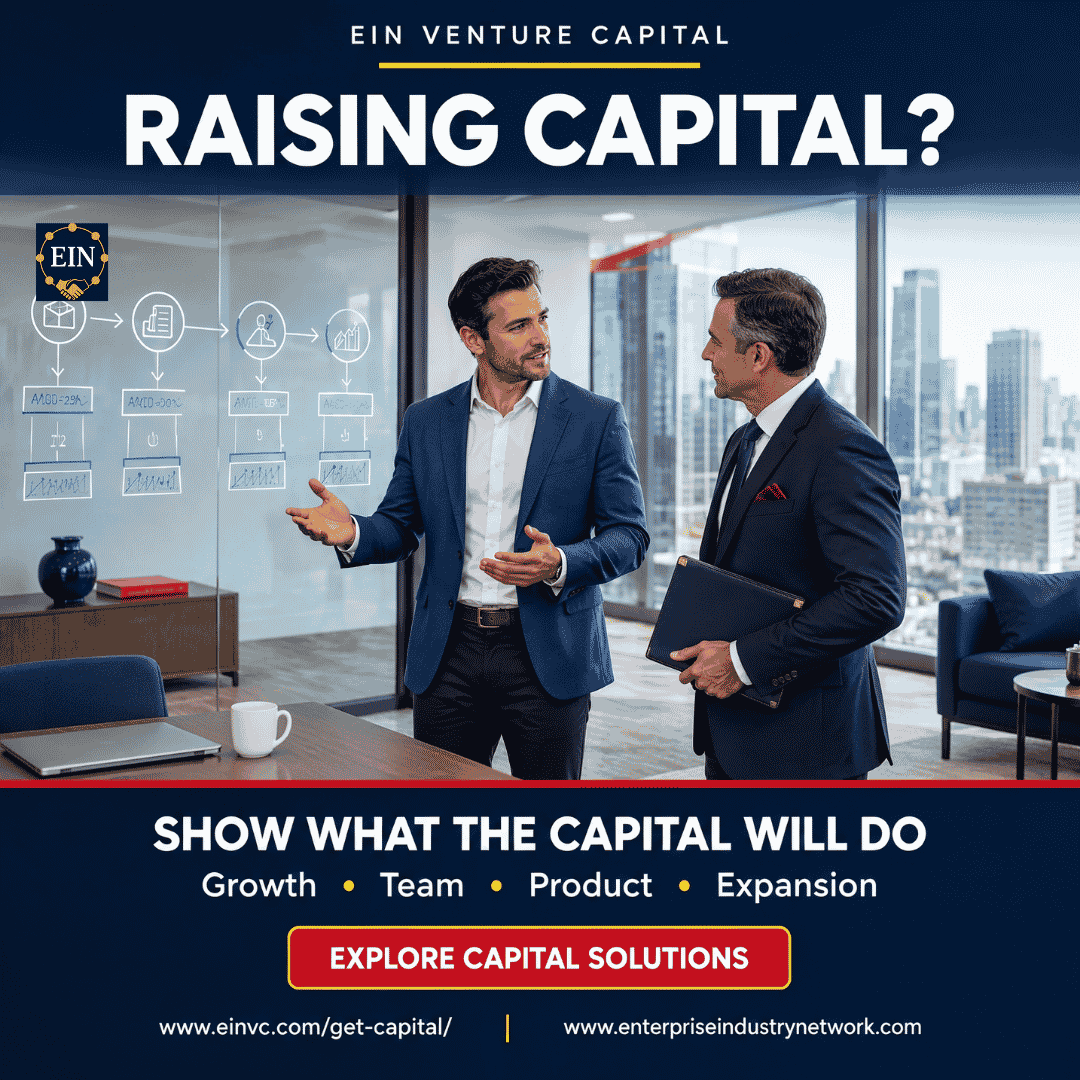 A clear capital request connects the amount being raised with the business priorities and milestones it is intended to support.