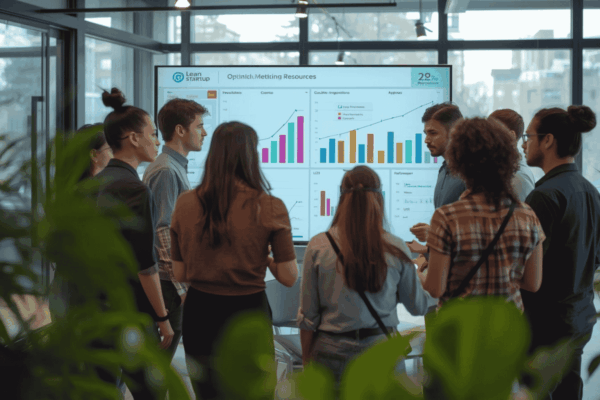


The future of work in the United States

The Future of Work Continues to Shift Toward Outcome-Driven Performance Models

The future of work in the United States is increasingly defined by outcome-driven performance rather than traditional time-based metrics. Companies are redesigning roles to emphasize results, accountability, and cross-functional collaboration. Hybrid work models are now widely accepted across industries, but successful organizations are pairing flexibility with clear performance expectations. Data-driven evaluation systems and transparent goal-setting…

Read More
Year-End Efficiency Gains

AI & Automation Adoption Accelerates as Companies Seek Year-End Efficiency Gains

U.S. companies are accelerating AI and automation adoption as they work to improve efficiency before entering 2026. From back-office automation to predictive analytics, businesses are using AI tools to streamline workflows and reduce operational friction. Automation is increasingly focused on measurable outcomes—faster decision-making, improved forecasting accuracy, and lower administrative overhead. Organizations that integrate AI into…

Read More
Applied AI

Applied AI Moves From Experimentation to Core Business Infrastructure

Applied artificial intelligence is rapidly transitioning from experimental projects to core business infrastructure across U.S. enterprises. Companies are embedding AI directly into operations, finance, customer service, and decision-support systems. Unlike early adoption phases, today’s AI deployments are focused on measurable outcomes—cost reduction, productivity gains, and real-time insight. Businesses are using AI to automate workflows, analyze…

Read More
Hybrid Leaderships

The Future of Work Shifts Toward Hybrid Leadership and Outcome-Based Teams

The future of work in the U.S. is increasingly defined by hybrid leadership models and outcome-based performance structures. Companies are moving beyond traditional office metrics and focusing on productivity, accountability, and collaboration across distributed teams. Organizations are redesigning roles to emphasize results rather than hours worked. This shift is encouraging flexible work arrangements while maintaining…

Read More
Innovation Cycles

U.S. Startups Accelerate Innovation Cycles as AI Lowers Development Costs

Startups across the United States are experiencing faster innovation cycles as AI-driven development tools reduce the time and cost required to build new products. Entrepreneurs are leveraging automated coding engines, rapid prototyping tools, and AI-based market research platforms to validate ideas more efficiently. As barriers to entry decline, a new wave of early-stage companies is…

Read More
Digital Twins

Digital Twins Gain Traction as U.S. Industries Prioritize Real-Time Operational Simulation

Digital twin technology—virtual replicas of physical systems—is becoming a major focus for U.S. companies aiming to improve accuracy in planning and operational performance. Manufacturing, logistics, construction, and energy firms are increasingly investing in digital simulation tools to model outcomes, reduce risk, and optimize decision-making. The appeal of digital twins lies in their ability to test…

Read More
Predictive AI Tools

Predictive AI Tools Are Becoming Essential for 2026 Business Strategy Planning

Predictive AI tools are gaining traction across U.S. companies as leaders prepare for the complexities of 2026. These tools provide improved accuracy in forecasting demand, pricing strategies, operational bottlenecks, and customer behavior—giving businesses more confidence in decision-making. Organizations that adopt predictive analytics early are seeing measurable improvements in efficiency and performance. From retail to transportation,…

Read More
Smart Automation

How Smart Automation Is Redefining U.S. Workplace Productivity for 2026

Smart automation technologies are accelerating across U.S. organizations as businesses seek cost-efficient ways to increase productivity. From automated scheduling tools to AI-driven customer support, companies are integrating intelligent systems to reduce manual workload and improve operational accuracy. The shift toward automation is not just about replacing repetitive tasks—it’s reshaping how teams execute strategic functions. Businesses…

Read More
AI-Driven Business Decision-Making

AI-Driven Business Decision-Making: How Leaders Are Preparing for the Next Decade

Artificial intelligence is rapidly shifting from experimental adoption to an essential part of business strategy. In 2026 and beyond, U.S. companies are expected to rely heavily on AI for forecasting, operational planning, customer segmentation, and revenue modeling. This shift is driven by the increasing pressure to operate leaner, make faster decisions, and identify opportunities before…

Read More
Drones Are Transforming Last-Mile Delivery

How Drones Are Transforming Last-Mile Delivery

How Drones Are Transforming Last-Mile Delivery Drones are emerging as a game-changing solution for last-mile delivery by reducing costs, shortening delivery times, and increasing accessibility. With the ability to bypass road congestion and reach remote locations quickly, drones offer a faster and more efficient alternative to traditional delivery methods. This technology is especially valuable for…

Read More