

How Buyers Calculate EBITDA When Valuing a Business | EIN Business Brokers | Enterprise Industry Network | EINBB
If you are preparing to sell your business, understanding EBITDA can help you see the company more like a potential buyer. Buyers often look beyond reported net income and analyze earnings before interest, taxes, depreciation, and amortization to better understand the operating performance of the business.
In this video, EIN Business Brokers (EINBB), part of the Enterprise Industry Network (EIN), explains how buyers may evaluate EBITDA when reviewing a business for acquisition and why sellers should understand the difference between reported earnings, adjusted EBITDA, and normalized financial performance before going to market.
What Is EBITDA When Selling a Business?
EBITDA stands for Earnings Before Interest, Taxes, Depreciation, and Amortization. It is commonly used as one measure of operating performance because it removes certain financing, tax, and non-cash accounting items from earnings.
In a business sale, EBITDA may help buyers compare operating performance and evaluate the earnings base that could support valuation discussions.
How Do Buyers Calculate EBITDA?
A basic EBITDA calculation generally begins with company earnings and adds back interest, taxes, depreciation, and amortization.
- Start with reported earnings.
- Add back interest expense.
- Add back applicable income taxes.
- Add back depreciation.
- Add back amortization.
- Review the resulting operating earnings figure.
However, buyers may not stop with the basic calculation. They may also analyze whether reported expenses and earnings accurately reflect the ongoing economics of the business.
What Is Adjusted EBITDA?
Adjusted EBITDA attempts to reflect normalized operating performance by considering certain expenses or income items that may not continue under new ownership.
Depending on the facts of the business, buyers and sellers may review possible adjustments such as:
- Certain owner compensation adjustments.
- Legitimate non-recurring expenses.
- One-time professional or transaction-related costs.
- Unusual expenses that are not expected to continue.
- Other supportable normalization adjustments.
Not every claimed adjustment will automatically be accepted by a buyer. Adjustments generally need to be reasonable, properly documented, and relevant to the ongoing financial performance of the company.
Why Do Buyers Scrutinize EBITDA Add-Backs?
Sellers may identify expenses they believe should be added back to earnings, but buyers may review each adjustment independently. An unsupported or aggressive add-back can create questions about the reliability of the seller’s financial presentation.
- Is the expense truly non-recurring?
- Will a new owner still incur the expense?
- Can the adjustment be supported by financial records?
- Is the adjustment consistent with normal business operations?
- Does removing the expense accurately reflect future earnings?
How Can EBITDA Affect Business Valuation?
For many businesses, buyers may use EBITDA as part of a valuation analysis. A potential transaction value may be considered in relation to normalized earnings, market conditions, industry characteristics, growth, risk, customer concentration, management strength, and other factors.
This means that two companies with similar revenue can potentially receive very different buyer reactions if their profitability, risk profile, and quality of earnings are significantly different.
Why Quality of Earnings Matters to Buyers
Buyers want to know whether historical earnings are reliable and likely to continue after the transaction. A strong EBITDA figure may be less persuasive if the underlying revenue or profitability appears unstable.
- Are earnings consistent over time?
- Is revenue recurring or predictable?
- Are margins stable?
- Are financial statements accurate and supportable?
- Does the business rely heavily on one customer?
- Does profitability depend heavily on the current owner?
The sustainability of earnings can be just as important as the headline EBITDA number.
How Do Buyers Verify EBITDA During Due Diligence?
Buyers and their advisors may compare EBITDA calculations against financial statements, tax returns, bank information, accounting records, invoices, payroll information, and supporting documentation.
- Review historical profit-and-loss statements.
- Compare financial statements with tax returns.
- Examine revenue and expense trends.
- Review proposed add-backs.
- Verify non-recurring expenses.
- Analyze owner compensation and related expenses.
- Evaluate whether earnings are sustainable.
If buyers identify inconsistencies, they may adjust their view of normalized earnings before determining valuation or transaction terms.
Can Messy Financial Records Affect Your EBITDA?
Messy or incomplete financial records can make EBITDA more difficult to calculate and defend. If buyers cannot verify revenue, expenses, or proposed adjustments, they may place less confidence in the seller’s earnings presentation.
Accurate bookkeeping and organized financial documentation can make it easier to explain historical performance and support legitimate adjustments during buyer due diligence.
How Should Sellers Prepare EBITDA Before Going to Market?
Business owners considering a sale should understand how their reported earnings translate into normalized operating performance before confidential buyer outreach begins.
- Review several years of financial statements.
- Reconcile accounting and tax records.
- Identify legitimate potential adjustments.
- Document each proposed add-back.
- Review owner compensation and discretionary expenses.
- Understand changes in revenue, margins, and profitability.
- Prepare explanations for unusual financial activity.
- Organize supporting documentation for due diligence.
Is EBITDA the Same as Business Value?
No. EBITDA is a financial performance measure, not the final value of a business. Buyers may consider EBITDA along with many other factors when assessing an acquisition opportunity.
- Industry and market conditions.
- Revenue growth and profitability trends.
- Customer concentration.
- Recurring revenue.
- Management strength.
- Owner dependence.
- Operational risk.
- Competitive position.
- Future growth opportunities.
Understanding EBITDA is important, but sellers should avoid assuming that one earnings number alone determines the sale price.
How EIN Business Brokers Helps Sellers Understand Business Value
EIN Business Brokers (EINBB), under the Enterprise Industry Network (EIN), works with business owners considering a sale, evaluating financial performance, preparing for valuation, identifying qualified buyers, and navigating the business sale process.
- Business valuation and market positioning.
- EBITDA and earnings review as part of sale preparation.
- Seller readiness and exit planning.
- Confidential buyer outreach.
- Buyer qualification.
- Negotiation and transaction coordination.
- Support throughout the business sale process.
If you are thinking about selling your business, understanding how a buyer may analyze EBITDA and normalized earnings before you enter the market can help you prepare stronger financial information and approach valuation discussions more effectively.
What Will Buyers See in Your EBITDA?
If you are considering selling your business, understand how buyers may evaluate earnings, adjustments, and financial performance before you go to market. Start confidentially with EIN Business Brokers.
Frequently Asked Questions
What does EBITDA mean when selling a business?
EBITDA means earnings before interest, taxes, depreciation, and amortization. Buyers may use it as one measure of operating performance when evaluating a business for acquisition.
How do buyers calculate EBITDA?
A basic calculation starts with earnings and adds back interest, taxes, depreciation, and amortization. Buyers may then review additional supportable adjustments to determine normalized operating performance.
What is adjusted EBITDA?
Adjusted EBITDA reflects certain legitimate normalization adjustments that may help show ongoing business performance. Buyers generally review whether each proposed adjustment is reasonable, documented, and likely to continue or disappear after the transaction.
Do buyers accept every EBITDA add-back?
No. Buyers may challenge add-backs that are unsupported, recurring, or likely to remain necessary under new ownership. Clear documentation can help support legitimate adjustments.
Does EBITDA determine the sale price of my business?
Not by itself. EBITDA may be an important valuation input, but buyers also consider industry conditions, growth, recurring revenue, customer concentration, management, owner dependence, risk, and other factors.
Can poor financial records affect EBITDA calculations?
Yes. Disorganized or incomplete records can make reported earnings and proposed adjustments harder to verify, which may reduce buyer confidence during valuation and due diligence.
How can EIN Business Brokers help me understand what my business may be worth?
EIN Business Brokers can assist with business valuation, financial and sale-readiness preparation, market positioning, confidential buyer outreach, buyer qualification, negotiation, and transaction coordination.
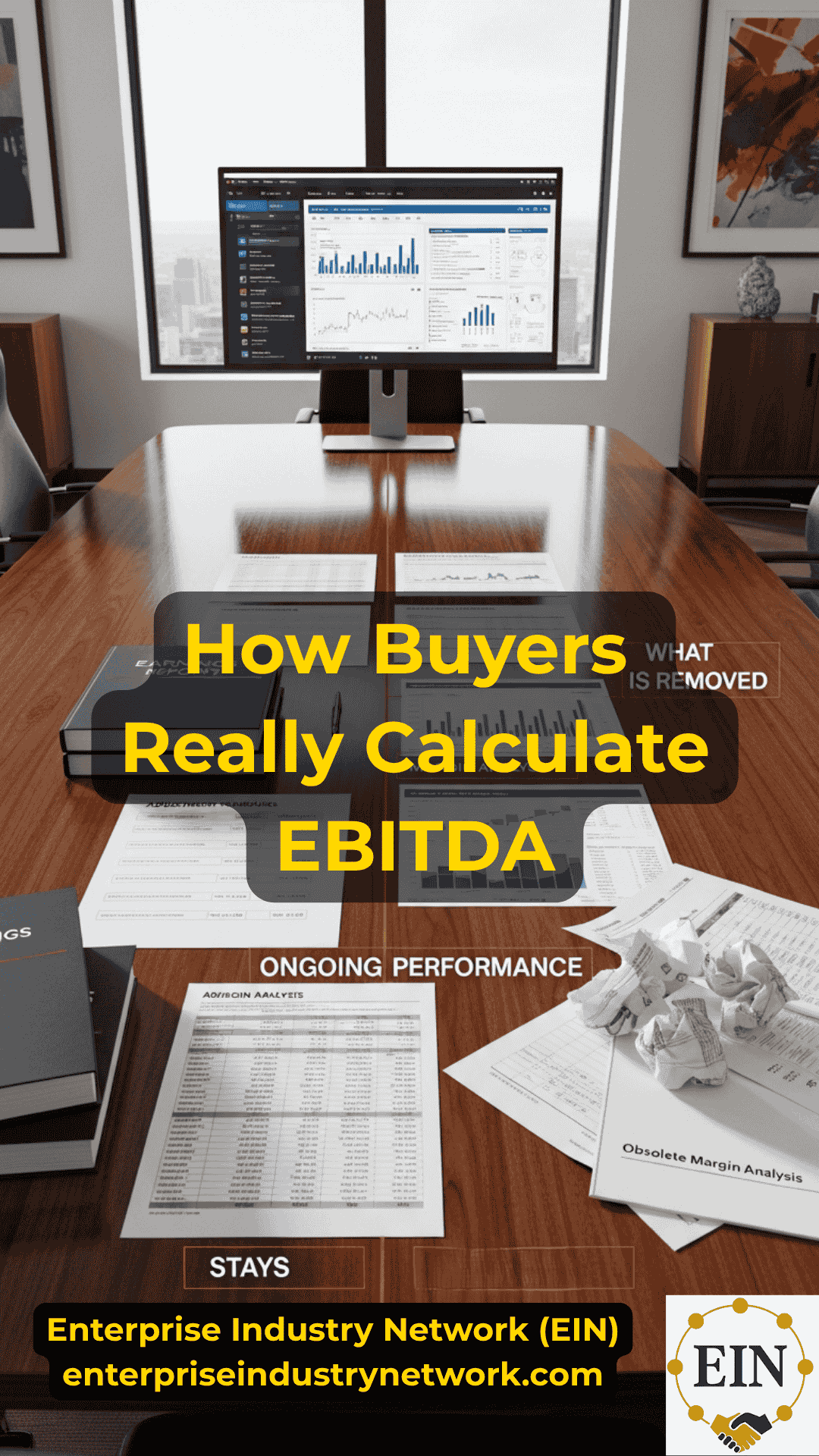 Buyers may analyze EBITDA, normalized earnings, and supportable add-backs to understand operating performance and assess a business before making an acquisition offer.