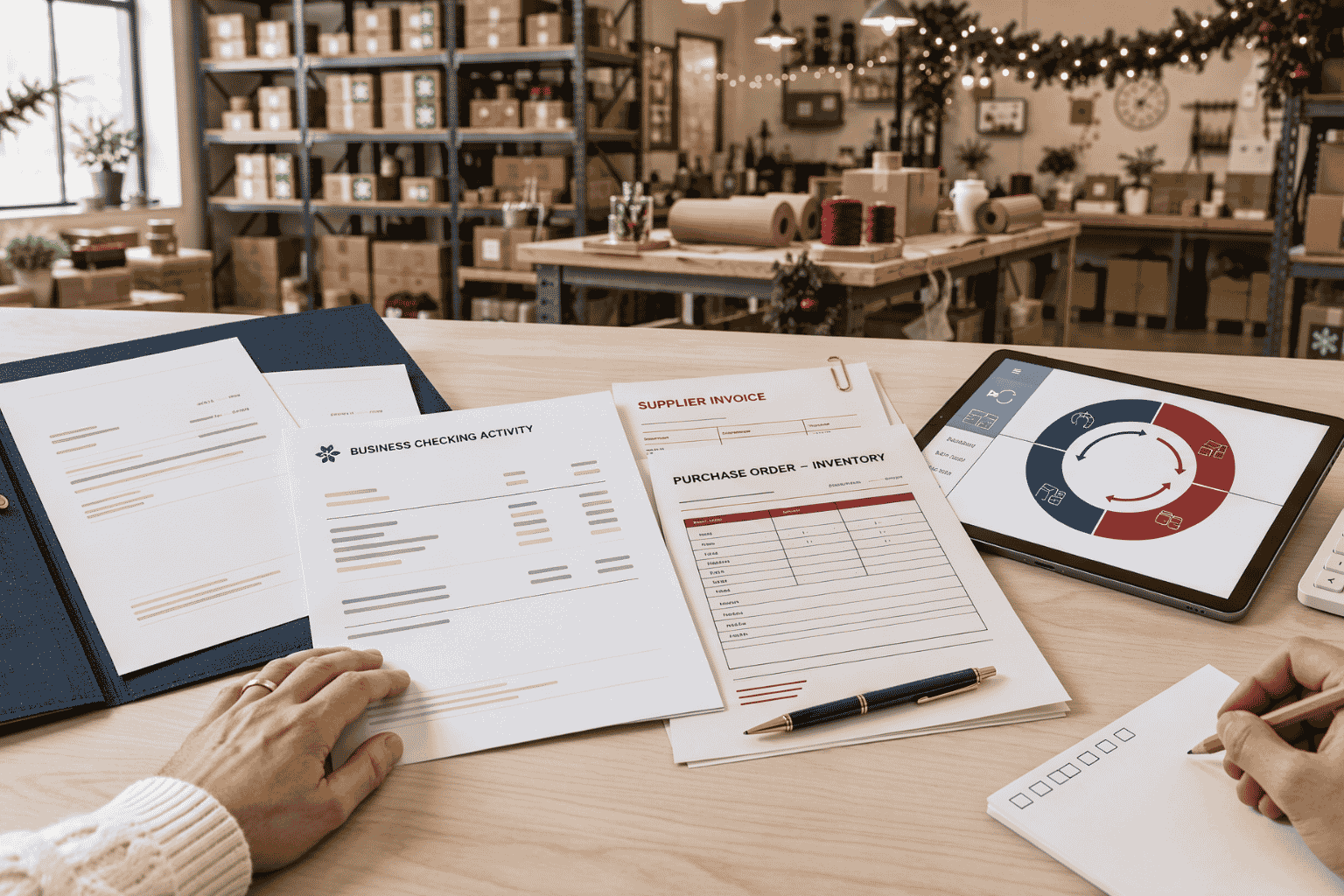
Holiday Sales and Business Valuation: What Seasonal Business Owners Should Document Before Selling in 2027
For many retail, e-commerce, gift, specialty food, consumer-service, and seasonal businesses, November and December can determine a meaningful share of annual performance.
That creates an important opportunity for owners considering a business sale in 2027.
A strong holiday season can strengthen the financial story—but only if the seller can explain what produced it and whether a buyer can reasonably expect similar performance in the future.
Holiday Revenue Alone Does Not Determine Business Value
A buyer is unlikely to value a company simply because December revenue was exceptional.
The buyer will want to understand:
- How repeatable the sales are
- What margins were earned
- How much working capital was required
- Whether customers return
- Whether the owner personally drove the performance
1. Document Monthly Revenue
Prepare monthly revenue for several years where available.
This allows buyers to understand:
- Seasonality
- Year-over-year trends
- Peak periods
- Normal baseline performance
A business generating 35% of annual revenue during the holiday period should explain that clearly rather than allowing a buyer to discover it later.
2. Track Holiday Gross Margin
High sales are less attractive if deep discounting removes the economic benefit.
Compare holiday margin with the rest of the year and explain differences caused by:
- Promotions
- Supplier pricing
- Shipping
- Overtime
- Returns
3. Document Inventory Requirements
A buyer needs to know how much capital is required before the holiday season begins.
Prepare information showing:
- Normal inventory
- Peak inventory
- Supplier lead times
- Seasonal purchasing
- Unsold inventory after the holidays
4. Explain the Cash Conversion Cycle
If inventory must be purchased in August or September but most revenue arrives in November and December, the buyer needs to understand that working-capital requirement.
This can influence acquisition financing and post-closing cash needs.
5. Track First-Time Holiday Customers
A strong seasonal period is more valuable when holiday customers return later.
Where possible, document:
- New customers
- Repeat purchases
- Email or loyalty enrollment
- Subsequent purchases
6. Document Customer Acquisition Channels
Buyers may ask whether holiday sales came from:
- Organic search
- Paid advertising
- Social media
- Marketplaces
- Repeat customers
- Referrals
A repeatable acquisition engine can be more attractive than a one-time viral result.
7. Track Returns and Refunds
Holiday revenue should be considered alongside post-holiday returns.
A seller should understand:
- Return rate
- Refund rate
- Product-specific issues
- Timing of returns
8. Document Seasonal Labor
Explain how much temporary labor is required and whether permanent employees can manage the normal-year business.
Buyers may evaluate:
- Seasonal hiring difficulty
- Training requirements
- Overtime
- Management involvement
9. Show What the Owner Personally Does During Peak Season
A seasonal business can appear highly profitable while relying heavily on the seller during its most important months.
Document the owner’s role in:
- Purchasing
- Marketing
- Staffing
- Customer service
- Fulfillment
Reducing owner dependence before a sale can improve transferability.
10. Explain Supplier Relationships
If holiday inventory depends on a few key suppliers, buyers may want to understand:
- Terms
- Lead times
- Minimum orders
- Exclusivity
- Transferability
11. Preserve the 2026 Holiday Data Now
Do not wait until the business is listed in spring 2027 to reconstruct the holiday season from memory.
Capture:
- Sales
- Margins
- Inventory
- Marketing
- Labor
- Returns
- Customer acquisition
while the information is current.
12. Update Normalized Earnings After Year-End
Once 2026 is complete, the owner and broker can evaluate the company’s normalized performance using a full-year financial picture.
This can help support a more credible valuation discussion before entering the market.
A Seasonal Business Can Be Highly Attractive to Buyers
Seasonality itself is not automatically a weakness.
The challenge is predictability.
When buyers can see several years of consistent seasonal performance, sufficient margins, repeat customers, reliable suppliers, manageable working-capital needs, and transferable operations, they can evaluate the opportunity with greater confidence.
Prepare the Business While Holiday Performance Is Fresh
Owners planning a 2027 exit can use the current season to create the evidence future buyers will request.
EIN Business Brokers can help owners evaluate valuation readiness, financial presentation, confidentiality, buyer positioning, and how seasonal performance should be presented in a sale process.
Document the 2026 holiday revenue, margin, inventory, customer, staffing, and cash-flow story now—before beginning confidential buyer outreach.
Discuss Your 2027 Business Sale with EIN Business Brokers →
Frequently Asked Questions
Does strong holiday revenue increase the value of a business?
It can support the valuation when the revenue produces sustainable earnings and buyers can understand its repeatability, margins, customer quality, inventory requirements, and working-capital needs.
How do buyers evaluate a highly seasonal business?
Buyers may review several years of monthly financial performance, peak-season margins, inventory needs, customer retention, supplier relationships, seasonal labor, owner involvement, and post-season returns.
When should I contact a business broker if I want to sell in 2027?
Owners can begin preparing before the business is publicly marketed. Early preparation can help organize financials, understand valuation, identify weaknesses, and determine how the company should be positioned confidentially.
 Seasonal businesses can strengthen buyer confidence by documenting repeatable holiday revenue, margins, inventory needs, customers, staffing, and cash flow.