
Why Your Business-for-Sale Listing Is Not Generating Qualified Buyer Inquiries
Listing a business for sale does not automatically produce qualified buyer interest. Some listings receive little attention, while others generate numerous inquiries that do not match the seller’s expectations. The problem is often not the business itself. It may be how the opportunity is positioned, categorized, described, and presented.
Serious buyers compare multiple opportunities quickly. If a listing does not communicate the business model, financial profile, growth potential, ownership requirements, and transaction fit clearly, the buyer may move on before requesting additional information.
Why Is Your Business Listing Not Attracting Serious Buyers?
The Listing Is Too Vague
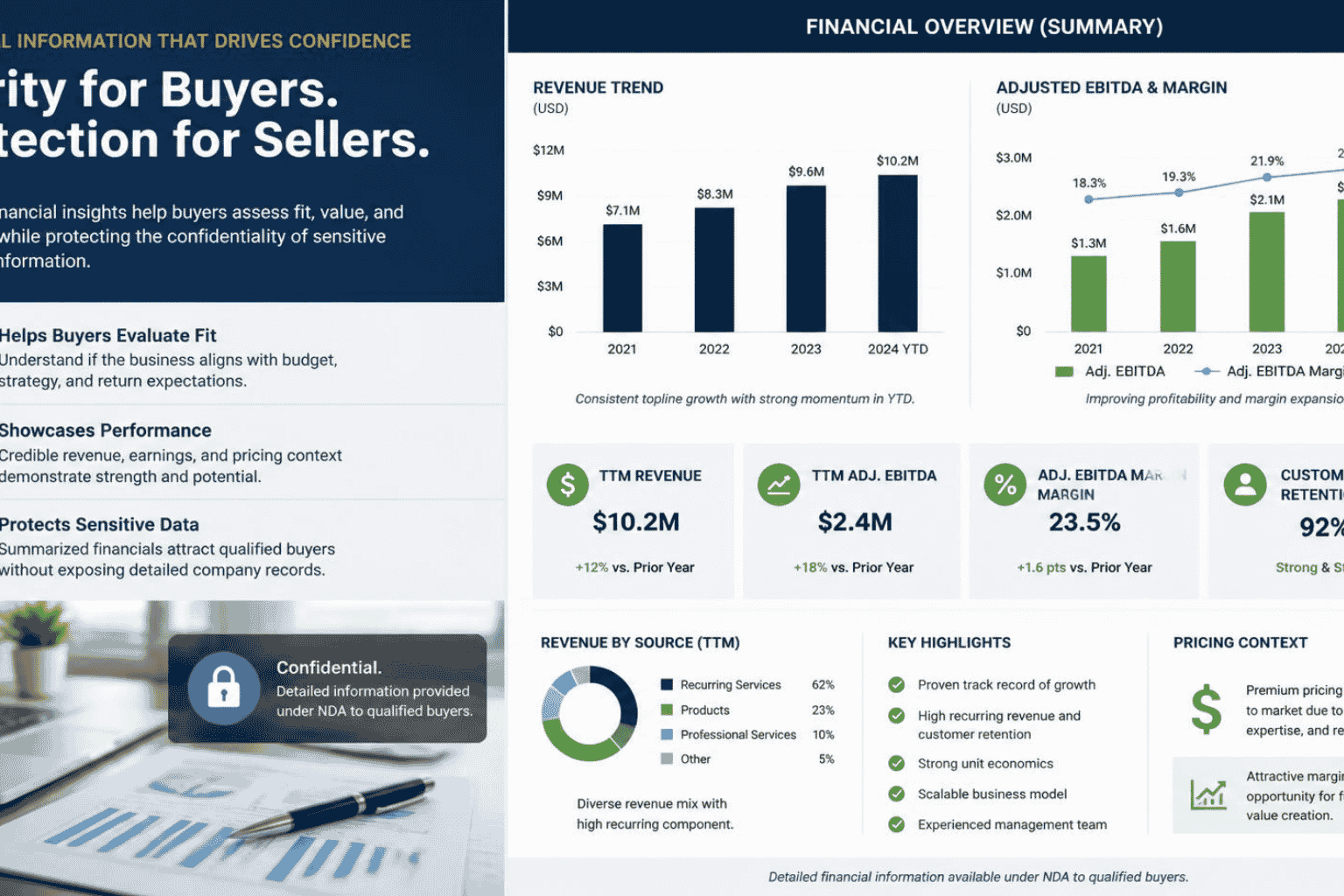
Confidentiality is important, but a listing that says only “profitable business available” gives buyers little reason to engage. The public description should provide enough information to establish relevance without revealing the company’s identity.
Useful information may include industry, general location, revenue range, earnings profile, years in operation, customer type, operational strengths, reason for sale, and growth opportunities.
The Financial Information Appears Incomplete or Inconsistent
Buyers want to understand the economic profile of the opportunity. A listing that shows a price without meaningful revenue or cash flow context can create uncertainty.
Financial information should be supportable and consistent with the materials that will later be shared during qualification and diligence. Unsupported claims can reduce trust and produce valuation disputes.
The Asking Price Is Not Explained by the Business
Buyers do not evaluate price in isolation. They compare it with earnings, assets, risk, financing requirements, industry conditions, and growth potential.
A listing should not disclose confidential valuation analysis publicly, but the overall opportunity should provide enough context for qualified buyers to understand why further evaluation may be worthwhile.
The Business Is Categorized Incorrectly
Marketplace search filters depend on accurate categories. A company placed in an overly broad or incorrect industry classification may be missed by buyers who are actively searching for that type of opportunity.
Incorrect revenue, price, location, or ownership filters can create the same problem. Structured listing data should be reviewed carefully before publication.
The Description Focuses on Features Instead of Buyer Value
A list of equipment, products, or services does not fully explain why the business may be attractive. Buyers also want to understand competitive position, recurring demand, customer relationships, operational stability, growth potential, and transferability.
The listing should help the buyer recognize the opportunity while avoiding exaggerated or unsupported marketing language.
The Opportunity Requires Too Much Owner Involvement
A business that depends heavily on the current owner may attract a smaller buyer pool. The listing should accurately explain the owner’s role and whether management, employees, or documented systems support transition.
If owner dependence is significant, the seller may benefit from improving transferability before aggressively marketing the company.
The Images Do Not Support Credibility
Generic stock images or poor-quality photographs can make a real opportunity appear less credible. Appropriate images may show the industry, facility type, products, equipment, or business environment without revealing confidential identifying details.
Visual presentation should support professionalism and buyer understanding.
The Listing Does Not Define the Likely Buyer
Different businesses are appropriate for different buyers. An owner-operator opportunity, strategic acquisition, franchise resale, investor-managed company, and highly technical business each require different qualifications.
Clear positioning can reduce irrelevant inquiries and attract buyers with appropriate experience, capital, and objectives.
How to Improve the Quality of Buyer Inquiries
A stronger listing should:
- Provide meaningful but confidential business context
- Use accurate industry and financial categories
- Present supportable revenue and earnings information
- Explain operational strengths and growth opportunities
- Clarify the owner’s current involvement
- Use professional and relevant imagery
- Include a defined buyer qualification process
- Direct serious buyers toward a confidential next step
The goal is not to attract the largest possible number of inquiries. It is to attract qualified buyers whose financial capacity, experience, timing, and acquisition criteria align with the opportunity.
Confidentiality and Transparency Must Work Together
Sellers sometimes provide too little information because they fear exposing the company. Others disclose too much before determining whether the buyer is credible.
A staged disclosure process creates balance. The public listing provides enough information to establish interest. Qualified buyers may then sign a confidentiality agreement and receive a more detailed opportunity profile. Additional financial, customer, legal, and operational information is shared as the transaction progresses.
A Better Listing Creates a Better Starting Point
A professional business-for-sale listing cannot guarantee a transaction, but it can improve discovery, buyer relevance, and early-stage confidence. It also sets expectations for how the opportunity will be evaluated.
When a listing is receiving no inquiries or attracting only unsuitable prospects, the seller should review the positioning before assuming there is no buyer demand. Improvements in classification, financial clarity, confidentiality structure, and presentation may produce a stronger response.
Explore EIN Business Listings →
Frequently Asked Questions
Why is my business-for-sale listing receiving no inquiries?
The listing may be too vague, incorrectly categorized, unsupported by clear financial information, poorly presented, or positioned toward the wrong buyer audience.
How much information should a confidential business listing include?
It should provide industry, general location, financial context, operational strengths, growth potential, and ownership requirements without publicly identifying the company or exposing sensitive information.
How can I reduce unqualified buyer inquiries?
Use accurate listing criteria, clearly describe the opportunity, define expected buyer qualifications, and require a structured confidentiality and qualification process before releasing detailed information.
 Qualified buyer interest depends on clear positioning, credible information, accurate classification, and professional presentation.