
Can Your Business Run Without You? | EIN Business Brokers | Enterprise Industry Network | EINBB
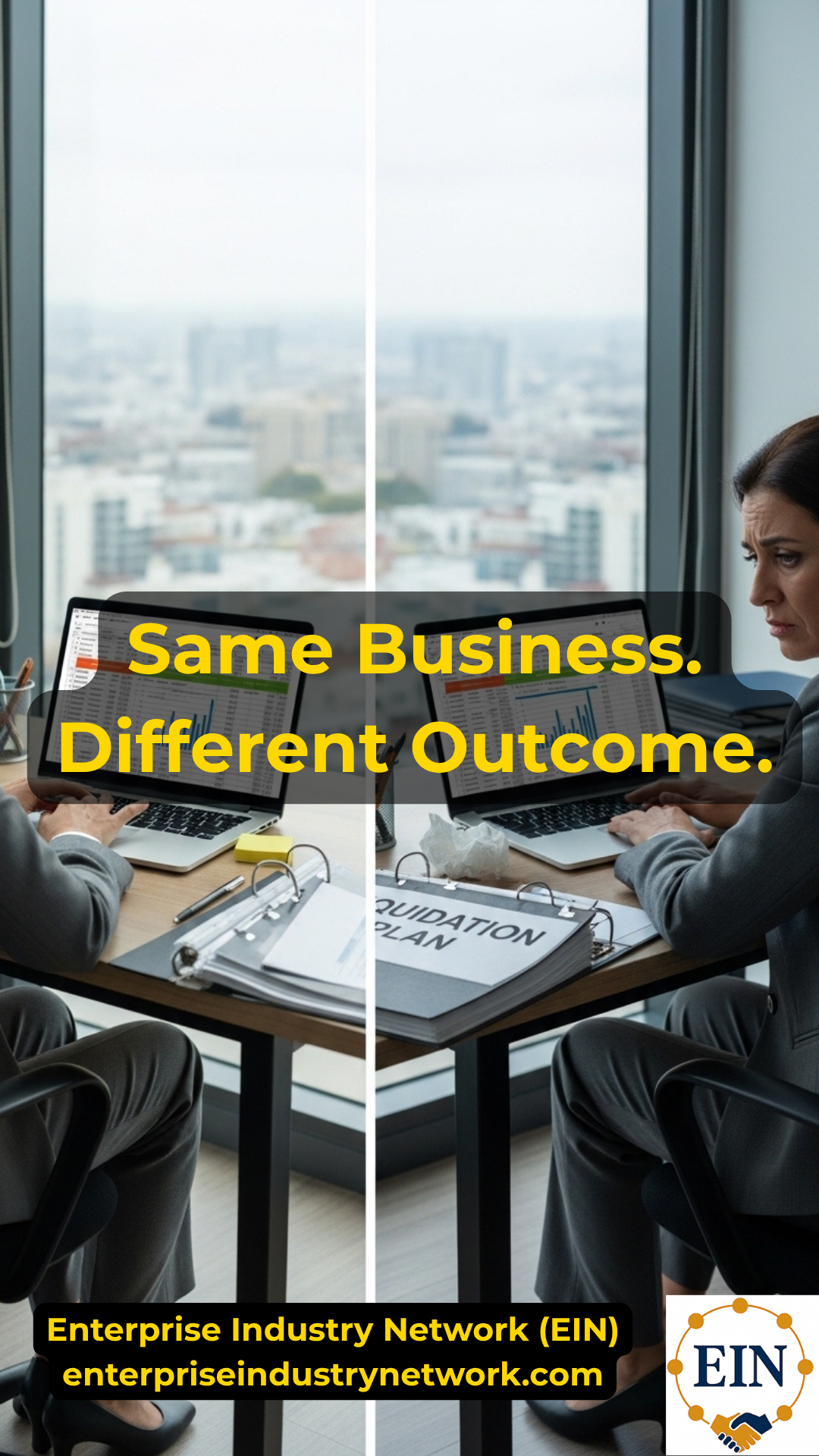
If you are planning to sell your business, one question can significantly influence buyer confidence: Can the business run successfully without you? A company that depends heavily on its owner for sales, customers, operations, employees, vendors, or daily decisions may appear more difficult to transfer to a buyer.
In this video, EIN Business Brokers (EINBB), part of the Enterprise Industry Network (EIN), explains why reducing owner dependence can improve business sale readiness, strengthen transferability, reduce perceived buyer risk, and help position a company more effectively before going to market.
Why Does Owner Dependence Matter When Selling a Business?
Prospective buyers are not only buying current revenue and profits. They are evaluating whether the business can continue producing results after ownership changes.
If the owner personally controls most important functions, a buyer may question whether customers, employees, suppliers, knowledge, and revenue will remain with the company after the sale.
- The owner manages most important customer relationships.
- Sales depend heavily on the owner’s personal involvement.
- Employees rely on the owner for everyday decisions.
- Critical business knowledge is not documented.
- Vendor relationships exist primarily through the owner.
- No management team can operate the company independently.
Can Owner Dependence Reduce Business Value?
Heavy owner dependence can increase perceived transition risk. A buyer may need the seller to remain involved for a longer transition period or may have concerns about whether historical financial performance can continue without the current owner.
A more transferable business generally has systems, employees, management, documentation, and relationships that belong to the company rather than depending entirely on one individual.
How Do You Make a Business Less Dependent on the Owner?
Reducing owner dependence usually requires transferring responsibilities, knowledge, and relationships from the owner into repeatable business systems.
- Delegate operational responsibilities to capable employees.
- Develop managers who can make routine business decisions.
- Document standard operating procedures.
- Create repeatable sales and customer-service processes.
- Transfer important vendor relationships to the company.
- Share institutional knowledge with key employees.
- Establish clear reporting and accountability systems.
Build a Management Team That Can Operate Without You
Management depth can be especially important when a business owner intends to leave after the transaction. Buyers may want confidence that employees and managers can maintain operations during and after the ownership transition.
- Clearly define leadership responsibilities.
- Give managers appropriate decision-making authority.
- Develop backup responsibilities for critical positions.
- Reduce dependence on one employee or one owner.
- Create measurable performance and reporting systems.
Document the Processes That Keep Your Business Running
Important knowledge should not exist only in the owner’s memory. Written procedures can help demonstrate that the business has repeatable systems a new owner can understand and continue.
- Document daily operating procedures.
- Record sales and lead-management processes.
- Document customer service standards.
- Organize vendor and supplier procedures.
- Define accounting and financial reporting workflows.
- Document employee responsibilities and approvals.
- Maintain records for technology and administrative systems.
Transfer Customer Relationships to the Business
When customers associate the company almost entirely with the owner, buyers may worry about customer retention after the sale.
Business owners preparing for an exit can gradually strengthen relationships between customers and the broader organization.
- Introduce managers and employees to important customers.
- Use company-controlled communication channels.
- Create standardized account-management procedures.
- Document customer histories and agreements.
- Reduce situations where only the owner understands a major account.
Can Your Sales Process Work Without You?
If nearly every sale depends on the owner’s personal relationships, reputation, or direct involvement, buyers may question whether future revenue will remain stable.
A more transferable sales operation may include documented lead sources, CRM records, repeatable sales processes, trained employees, and measurable conversion activity.
- Document how leads are generated.
- Maintain organized prospect and customer records.
- Train employees to manage sales conversations.
- Create repeatable follow-up procedures.
- Track sales performance independently of the owner.
Test Whether Your Business Can Operate Without You
One practical way to identify owner dependence is to examine what happens when the owner is unavailable. If routine operations stop, employees cannot make decisions, customers immediately call the owner, or important processes fail, the business may need additional preparation before a sale.
The objective is not necessarily to remove the owner immediately. It is to demonstrate that the business has the systems and people required to continue operating successfully through an ownership transition.
Why Transferability Matters to Business Buyers
A buyer generally wants to acquire a functioning business rather than simply purchase the current owner’s job. Greater transferability can help a buyer understand how operations, customer relationships, employees, and revenue can continue after closing.
- Documented systems can reduce operational uncertainty.
- Management depth can support continuity.
- Distributed customer relationships can reduce transition risk.
- Repeatable sales processes can support future revenue.
- Clear responsibilities can make ownership transition easier to evaluate.
How EIN Business Brokers Helps Business Owners Prepare to Sell
EIN Business Brokers (EINBB), under the Enterprise Industry Network (EIN), works with business owners who are considering selling a company, evaluating business value, preparing for qualified buyers, and navigating the business sale process.
- Business sale preparation and exit planning.
- Business valuation and market positioning.
- Seller readiness and transferability preparation.
- Confidential buyer outreach.
- Buyer qualification.
- Negotiation and transaction coordination.
- Support throughout the business sale process.
If you are considering selling your business, identifying where the company still depends heavily on you can be an important part of preparing for buyers. The earlier you begin building systems, management depth, and transferable relationships, the more prepared the business can become for an eventual ownership transition.
Could Your Business Run Without You?
If you are thinking about selling your business, understand how owner dependence, management depth, and transferability may affect your sale readiness. Start your exit confidentially with EIN Business Brokers.
Frequently Asked Questions
Can owner dependence make a business harder to sell?
Yes. If customers, employees, vendors, sales, or daily operations depend heavily on the owner, buyers may perceive additional transition risk and question how the business will perform after ownership changes.
How can I make my business run without me?
Owners can reduce dependence by delegating responsibilities, developing management, documenting operating procedures, transferring customer relationships, creating repeatable sales processes, and distributing critical business knowledge.
Does reducing owner dependence increase business value?
Reducing owner dependence can improve transferability and reduce perceived risk, both of which can be important considerations when buyers evaluate a business and its future performance.
Why do buyers care about management depth?
A capable management team can demonstrate that important functions and decisions can continue after the current owner reduces involvement or exits the business.
Should business processes be documented before selling?
Yes. Documented procedures help buyers understand how the company operates and can make important knowledge, responsibilities, and workflows easier to transfer after a sale.
When should I start reducing owner dependence before selling?
The earlier the better. Building management depth, systems, documentation, and transferable relationships can take time, so owners may benefit from addressing these areas well before going to market.
How can EIN Business Brokers help me prepare my business for sale?
EIN Business Brokers can support business owners with sale preparation, valuation, market positioning, confidential buyer outreach, buyer qualification, negotiation, and transaction coordination.
 Reducing owner dependence and building transferable systems, management, and customer relationships can strengthen business sale readiness and buyer confidence.