

Cash-Free Debt-Free in a Business Sale: What Sellers Should Know | EIN Business Brokers | Enterprise Industry Network | EINBB
When selling a business, a buyer may describe the transaction as cash-free, debt-free. This does not mean cash and debt are unimportant. It generally means the agreed business value is being discussed separately from excess cash, outstanding debt, and certain other balance-sheet items that may be adjusted at closing.
In this video, EIN Business Brokers (EINBB), part of the Enterprise Industry Network (EIN), explains what cash-free, debt-free can mean in a business sale and why sellers should understand the difference between headline enterprise value and the amount they may ultimately receive at closing.
What Does Cash-Free Debt-Free Mean in a Business Sale?
In many transactions, buyers negotiate a value for the operating business on the assumption that the company will be delivered without excess cash and without specified debt obligations.
The exact treatment depends on the transaction documents, but the concept is commonly used to separate the value of the underlying business operations from certain financing and balance-sheet items.
- The operating business is valued separately.
- Excess cash may be retained by or credited to the seller depending on the deal.
- Specified debt may need to be repaid at or before closing.
- Working capital is usually addressed separately.
- Other debt-like or cash-like items may also be negotiated.
Is Cash-Free Debt-Free the Same as the Purchase Price?
Not necessarily. A headline valuation may refer to enterprise value, while the seller’s actual proceeds can depend on adjustments for debt, cash, working capital, transaction expenses, escrow, seller financing, earnouts, and other deal terms.
This is why sellers should understand exactly what number is being discussed when a buyer presents an offer.
What Is Enterprise Value in a Business Sale?
Enterprise value generally refers to the value attributed to the operating business before certain cash and debt adjustments are made.
A simplified transaction discussion may begin with enterprise value and then adjust for items such as:
- Outstanding debt.
- Excess cash.
- Working capital.
- Debt-like obligations.
- Other negotiated closing adjustments.
The final amount received by the seller can therefore differ from the headline enterprise value.
How Can Debt Reduce Seller Proceeds?
If the transaction is structured on a cash-free, debt-free basis, specified business debt may need to be repaid at closing or otherwise accounted for in the purchase price calculation.
Debt that may be reviewed can include:
- Term loans.
- Business lines of credit.
- Equipment financing.
- Shareholder or related-party loans.
- Other financing obligations.
- Certain debt-like liabilities identified during due diligence.
The exact definition of debt should be clearly established in the transaction documents.
What Happens to Cash in a Cash-Free Debt-Free Transaction?
The treatment of cash depends on the specific deal. In some transactions, excess cash may remain with the seller or be distributed before closing, while the buyer receives the business with only the operating cash required under the agreed structure.
Sellers should understand:
- What qualifies as excess cash.
- Whether minimum operating cash must remain.
- How restricted cash is treated.
- Whether cash is included in working capital.
- How the final closing calculation handles cash balances.
How Is Working Capital Different From Cash?
Working capital is usually addressed separately from a cash-free, debt-free calculation because the buyer expects the business to have enough normal operating assets and liabilities to continue functioning after closing.
Working capital may include:
- Accounts receivable.
- Inventory.
- Accounts payable.
- Other short-term operating assets and liabilities.
The parties may negotiate a working capital target based on normalized historical operations.
What Is a Working Capital Peg?
A working capital peg is an agreed target level of working capital that the seller is expected to deliver at closing.
If actual working capital is above or below the target, the purchase price may be adjusted according to the transaction documents.
- Above-target working capital may increase value delivered.
- Below-target working capital may reduce seller proceeds.
- The exact calculation depends on negotiated definitions and exclusions.
Why Cash-Free Debt-Free Can Confuse Sellers
The phrase can create confusion because a seller may assume that an agreed valuation represents the exact amount they will receive. In reality, several adjustments may still occur between the headline valuation and final proceeds.
- Debt repayment.
- Working capital adjustments.
- Cash treatment.
- Escrow or holdbacks.
- Seller financing.
- Earnouts.
- Transaction expenses.
- Other negotiated closing adjustments.
What Are Debt-Like Items?
Buyers may sometimes identify obligations that are not traditional bank debt but are treated similarly for purposes of the transaction.
Depending on the deal, these can include certain unpaid obligations, accrued amounts, deferred payments, financing-related liabilities, or other items negotiated between the parties.
Because definitions vary by transaction, sellers should understand exactly which items the buyer intends to classify as debt-like before agreeing to the final purchase price calculation.
How Due Diligence Can Affect Cash and Debt Adjustments
During due diligence, buyers may examine the balance sheet and supporting records to verify cash, debt, working capital, liabilities, and other items that affect closing calculations.
- Bank balances.
- Loan statements.
- Lines of credit.
- Accounts receivable.
- Accounts payable.
- Accrued liabilities.
- Equipment financing.
- Other financial obligations.
Unexpected liabilities or differences in reported balances can affect the final transaction economics.
Why Sellers Should Understand the Purchase Price Formula
Before accepting a Letter of Intent or finalizing a transaction, sellers should understand how the buyer intends to move from the headline valuation to the final amount payable at closing.
A simplified calculation may consider:
- Enterprise value.
- Plus or minus agreed cash adjustments.
- Less specified debt.
- Plus or minus working capital adjustment.
- Less escrow or holdback amounts.
- Plus or minus other negotiated adjustments.
The actual formula depends on the transaction and should be clearly documented.
Can Cash-Free Debt-Free Affect a Letter of Intent?
Yes. A Letter of Intent may state that the proposed transaction value assumes a cash-free, debt-free structure and a normalized level of working capital.
Sellers should understand those assumptions before signing because they can materially affect the amount ultimately received at closing.
Why the Headline Price May Not Equal Net Seller Proceeds
Even after accounting for cash and debt, the seller’s net proceeds may be affected by other transaction terms.
- Seller financing.
- Earnouts.
- Escrow or holdbacks.
- Transaction expenses.
- Debt repayment.
- Working capital adjustments.
- Other negotiated obligations.
Comparing offers based only on headline valuation can therefore produce an incomplete picture of the actual economics.
What Should Sellers Review Before Accepting a Cash-Free Debt-Free Offer?
Business owners should understand the full purchase price mechanics before agreeing to a transaction.
- Headline enterprise value.
- Definition of cash.
- Definition of debt.
- Debt-like items.
- Working capital target.
- Cash required to remain in the business.
- Escrow or holdback amounts.
- Seller financing.
- Earnouts or contingent consideration.
- Closing adjustments.
How Sellers Can Reduce Closing Surprises
Preparing financial records and balance-sheet information before going to market can help sellers understand potential purchase price adjustments earlier in the process.
- Review outstanding debt.
- Reconcile bank balances.
- Analyze historical working capital.
- Review accounts receivable and accounts payable.
- Identify unusual liabilities.
- Organize financing documents.
- Understand likely closing adjustments before negotiating an LOI.
How EIN Business Brokers Helps Sellers Understand Transaction Economics
EIN Business Brokers (EINBB), under the Enterprise Industry Network (EIN), works with business owners preparing to sell, understanding business value, evaluating buyer offers, negotiating transaction structure, and navigating the business sale process.
- Business valuation and market positioning.
- Seller readiness and exit planning.
- Confidential buyer outreach.
- Buyer qualification.
- Offer and Letter of Intent evaluation.
- Purchase price and deal-structure discussions.
- Due diligence and closing coordination.
If you are considering selling your business, understanding cash-free, debt-free terms before accepting an offer can help you distinguish headline value from potential seller proceeds and approach negotiations with greater clarity.
Know What the Headline Business Value Really Means
Cash, debt, working capital, and closing adjustments can materially change what a seller ultimately receives. Understand the full transaction before accepting an offer for your business.
Frequently Asked Questions
What does cash-free debt-free mean when selling a business?
Cash-free, debt-free generally means the operating business is valued separately from specified cash and debt balances, with those items addressed through the final closing calculation.
Does cash-free debt-free mean the seller receives the full headline price?
Not necessarily. Debt repayment, working capital adjustments, cash treatment, escrow, seller financing, earnouts, transaction expenses, and other adjustments can affect final seller proceeds.
What happens to business debt at closing?
Depending on the transaction, specified debt may need to be repaid, assumed, or otherwise addressed as part of the closing calculation. The treatment should be clearly defined in the transaction documents.
What happens to cash when a business is sold?
Cash treatment depends on the negotiated structure. Excess cash may sometimes remain with the seller, while certain operating cash may need to remain in the business depending on the transaction terms.
Is working capital included in a cash-free debt-free deal?
Working capital is commonly addressed separately through an agreed target or working capital peg because the buyer typically expects the business to have a normal level of operating assets and liabilities at closing.
What is the difference between enterprise value and seller proceeds?
Enterprise value generally represents the value of the operating business before certain balance-sheet and transaction adjustments. Seller proceeds reflect what remains after debt, cash, working capital, deferred payments, escrow, expenses, and other deal-specific adjustments are considered.
How can EIN Business Brokers help with cash-free debt-free transaction terms?
EIN Business Brokers can support sellers with valuation, buyer qualification, offer and LOI evaluation, deal-structure discussions, purchase price mechanics, negotiation, due diligence coordination, and support through closing.
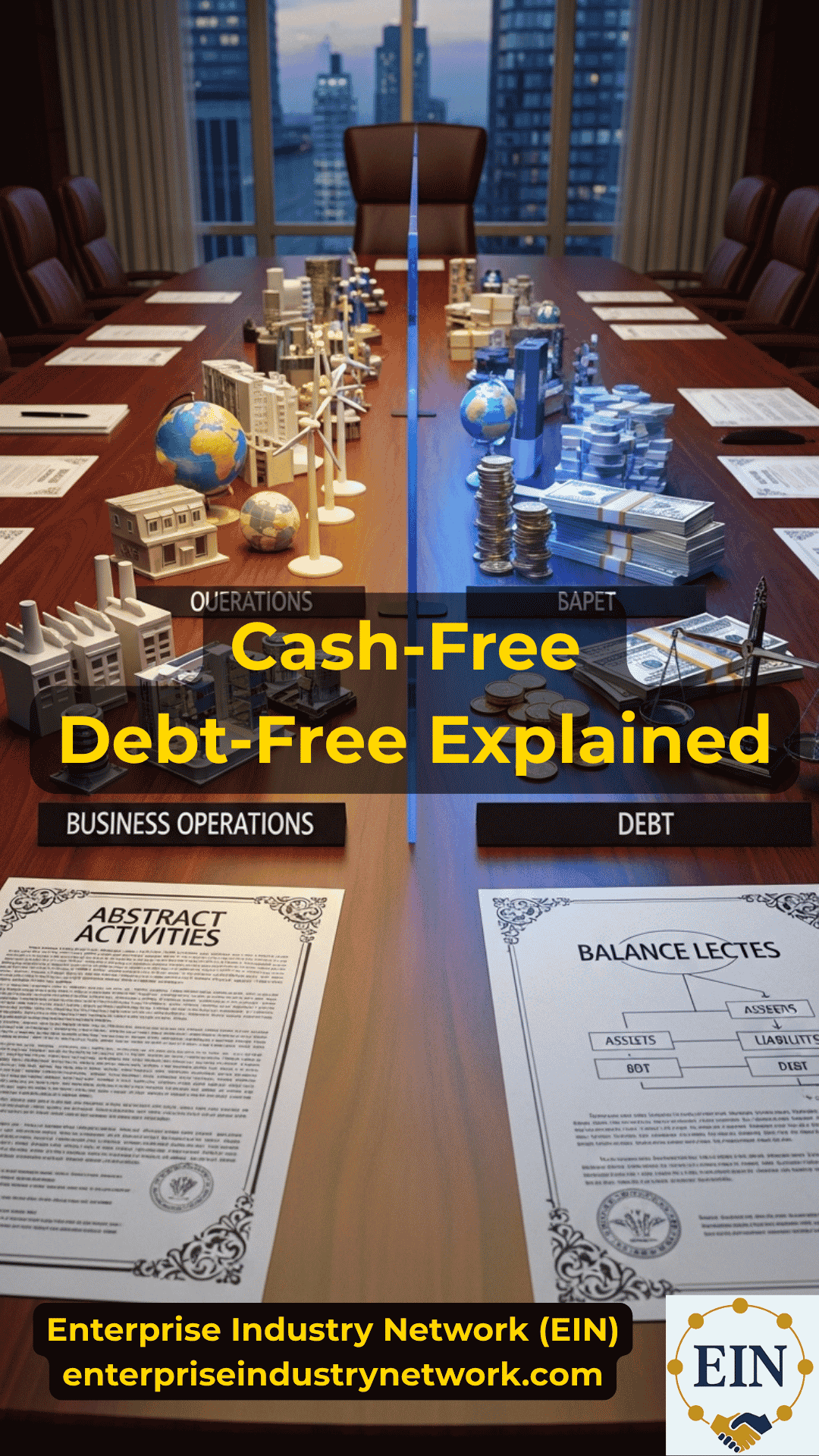 Cash-free debt-free deal terms can affect how enterprise value converts into final seller proceeds after debt, cash, working capital, and other closing adjustments are considered.