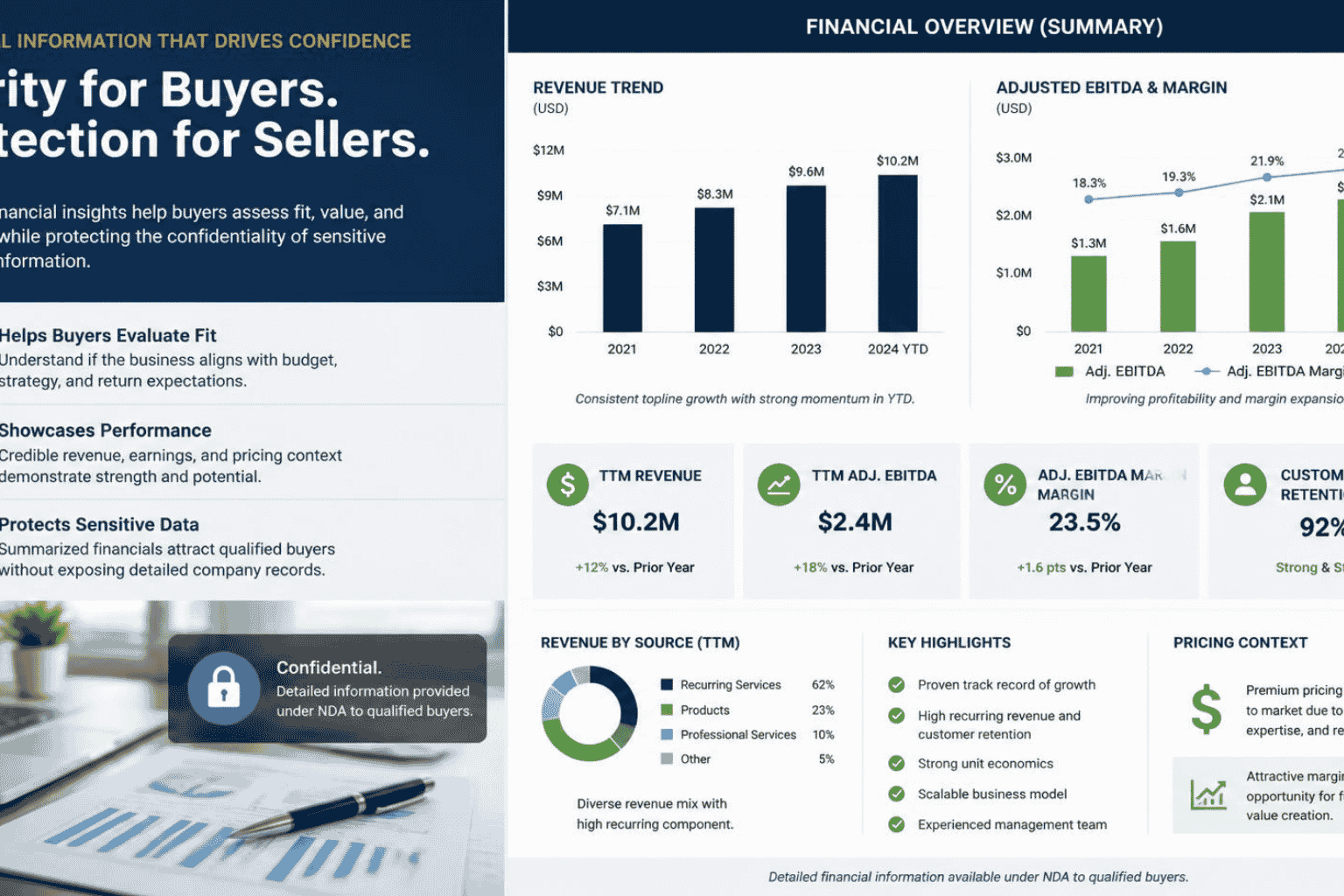

What Counts as Startup Traction? How to Present Evidence Investors Can Actually Evaluate
Founders frequently hear the same investor question: “What traction do you have?”
The term can feel vague because traction looks different across startup stages and industries. A pre-seed software company, medical-device startup, marketplace, consumer product business, and infrastructure technology company may each demonstrate progress differently.
What investors generally want is evidence that the company is moving beyond assumptions.
What Does Startup Traction Mean?
Startup traction is measurable evidence that the company is making progress toward a viable and scalable business.
Depending on stage, evidence may relate to:
- Customer demand
- Revenue
- Product usage
- Retention
- Pilots
- Commercial contracts
- Technical achievement
- Regulatory progress
- Partnerships
- Unit economics
The strongest traction is usually evidence that reduces an important investor uncertainty.
1. Revenue Is Strong Traction—but Context Matters
Revenue demonstrates that customers are willing to pay, but investors usually want to understand more than the headline number.
Relevant questions may include:
- How quickly is revenue growing?
- Is it recurring or one-time?
- How many customers generate it?
- Are customers renewing?
- What margins does the company achieve?
- How expensive is customer acquisition?
One large project can produce impressive revenue without proving repeatable demand.
2. Paying Customers Are Different From Users
A startup can have thousands of users but limited evidence that those users will ever pay.
That may still represent valuable traction for certain business models, but founders should present the metric accurately.
Useful distinctions include:
- Registered users
- Active users
- Paying customers
- Repeat customers
- Enterprise accounts
- Trial users
3. Retention Can Be More Important Than Initial Signups
Customer acquisition proves that the company can attract attention. Retention helps show whether the product continues creating value.
Depending on the business model, investors may examine:
- Renewal rates
- Repeat purchase behavior
- Churn
- Usage frequency
- Contract extensions
- Expansion within existing accounts
A startup that repeatedly loses customers may have strong marketing but weak product-market fit.
4. Pilots Can Be Meaningful Traction
For enterprise, industrial, healthcare, or technically complex startups, a paid or well-structured pilot can provide important validation before full commercial deployment.
Founders should explain:
- Who the pilot customer is
- What is being tested
- Whether the pilot is paid
- How long it runs
- What success looks like
- Whether conversion to a commercial contract is possible
5. Letters of Intent Need Context
A letter of intent can indicate customer interest, but not all LOIs carry the same weight.
Investors may ask whether the document is binding, what conditions must be satisfied, what commercial value it represents, and whether the counterparty has completed meaningful diligence.
Founders should avoid presenting preliminary interest as booked revenue.
6. Product Usage Can Demonstrate Engagement
For digital products, usage can reveal whether customers actually rely on the product after trying it.
Useful measures might include:
- Active usage
- Frequency
- Feature adoption
- Time spent
- Workflow dependence
- Cohort retention
The metrics should connect to the company’s business model rather than being chosen because they produce the largest number.
7. Technical Milestones Can Matter Before Revenue
Some startups require substantial development before commercial revenue is realistic.
Traction may include:
- Prototype completion
- Successful testing
- Manufacturing validation
- Engineering milestones
- Performance improvements
- Intellectual-property progress
The founder should explain why the milestone materially reduces technical risk.
8. Regulatory Progress Can Be Traction in Regulated Markets
Healthcare, financial services, energy, and other regulated industries may require approvals or compliance milestones before revenue can scale.
Investors familiar with those sectors may view regulatory progress as meaningful de-risking.
Founders should present the status precisely and avoid implying an approval has been obtained when only an earlier step has been completed.
9. Partnerships Can Help—If They Produce Something Real
Startups often announce partnerships that provide little commercial value.
Investors may ask whether the relationship produces:
- Customer access
- Distribution
- Technology integration
- Revenue
- Data
- Credibility
- Supply capability
The business outcome matters more than the partner’s logo.
10. Sales Pipeline Is Not the Same as Revenue
A large pipeline can demonstrate market activity, but pipeline quality matters.
Founders should distinguish among:
- Early leads
- Qualified opportunities
- Proposals
- Late-stage negotiations
- Signed contracts
- Recognized revenue
Inflating the pipeline by treating every conversation as likely revenue can reduce investor confidence.
11. Traction Should Be Presented as a Trend
A single number provides limited context.
Investors often want to understand how the company is progressing over time.
For example:
- Monthly recurring revenue growth
- Customer growth by quarter
- Improving retention
- Faster sales conversion
- Declining acquisition cost
- Increasing gross margin
Trends help demonstrate whether the company is learning and improving.
12. Connect Traction to the Next Funding Milestone
Current traction explains where the company stands. The fundraising plan should explain what comes next.
If the startup has completed ten pilots, perhaps the next round is intended to convert the model into repeatable commercial deployment.
If the company has reached early recurring revenue, perhaps the round will expand sales capacity and prove scalable customer acquisition.
Investors want to see how capital moves the company from current evidence toward the next meaningful stage.
Do Not Cherry-Pick Vanity Metrics
Large social-media followings, website visits, downloads, press mentions, or waitlists may be useful signals, but they should not be presented as stronger evidence than they actually represent.
The best fundraising materials distinguish clearly between awareness, engagement, customers, revenue, retention, and contractual commitments.
How Much Traction Is Enough?
There is no universal answer.
The appropriate level depends on:
- Startup stage
- Industry
- Capital intensity
- Product maturity
- Investor strategy
- Round size
- Technical risk
- Market risk
A pre-seed investor and a Series A investor will generally expect different evidence.
Present Evidence Investors Can Verify
As diligence advances, founders should be prepared to support traction claims with appropriate records such as customer contracts, revenue information, product analytics, pilot documentation, financial statements, or other relevant evidence.
Consistency between the pitch deck, financial model, data room, and founder conversations is essential.
Traction Is the Bridge Between Story and Evidence
A compelling vision can earn attention. Traction helps investors decide whether the team is turning that vision into reality.
Venture advisory can help founders identify which metrics best demonstrate progress for their stage, organize the investor narrative, and connect current traction with the capital and milestones required for the next phase.
Organize customer evidence, revenue, pilots, usage, milestones, and next-round objectives before investor outreach begins.
Review Your Investor Readiness with EIN Venture Capital →
Frequently Asked Questions
What counts as traction for a startup?
Traction can include revenue, paying customers, usage, retention, pilots, contracts, technical milestones, regulatory progress, partnerships, or other evidence that reduces important business risk.
Can a pre-revenue startup have traction?
Yes. Depending on the industry and stage, customer validation, pilots, product usage, technical milestones, regulatory progress, or commercial commitments may provide meaningful evidence before revenue begins.
Do investors care more about revenue or user growth?
It depends on the business model and investment stage. Investors generally want metrics that demonstrate real progress toward a viable, scalable business rather than the largest headline number.
How should startup traction be shown in a pitch deck?
Use clearly defined metrics, relevant time periods, trends, and appropriate evidence so investors can understand what has improved and how the next funding round is expected to build on that progress.
 Strong traction turns a fundraising story into measurable evidence that customers, products, and business milestones are progressing.