
Lender-Ready Business Funding Package: How to Present a Stronger Financing Request
What makes a business funding package stronger when approaching lenders and capital providers? A funding package is more than a collection of documents. It is the organized financial and business story that explains what the company does, why capital is needed, how much funding is requested, how the money will be used, what obligations already exist, and how the business expects to support repayment.
A well-prepared funding package can help lenders and funding sources evaluate the financing request more efficiently because the financial information, capital purpose, business risks, and supporting documentation are presented in a clear and consistent way.
In this long-form educational video, EIN Business Funding (EINBF), part of Enterprise Industry Network (EIN), explains how business owners can build a lender-ready funding package and present a stronger financing request.
What Is a Business Funding Package?
A business funding package is an organized collection of information used to present the company and its capital request to lenders or funding providers.
A complete package may help answer questions such as:
- What does the business do?
- How does the company generate revenue?
- How much capital is being requested?
- Why is the funding needed?
- How will the funds be used?
- What debt and other obligations already exist?
- What is the company’s current cash-flow position?
- How does the business expect to support repayment?
The goal is to make the financing request easy to understand rather than forcing the lender to piece together information from disconnected documents.
A Funding Package Is More Than Financial Statements
Financial statements are important, but they are only one part of the funding story.
A lender-ready package may also include:
- A business summary.
- A clear use-of-funds explanation.
- Recent bank statements.
- Profit-and-loss statements.
- Balance sheets.
- Business tax returns when requested.
- Debt schedules.
- Ownership information.
- Entity and legal records.
- Accounts receivable or payable information.
- Financial projections where relevant.
- Supporting documents tied to the funding purpose.
The specific requirements vary by lender and financing product, but the overall objective remains the same: present a clear financial picture.
Start With a Clear Business Summary
A lender should be able to quickly understand the company before reviewing deeper financial information.
A useful business summary may explain:
- What the company sells.
- Who its customers are.
- How long it has operated.
- How revenue is generated.
- The size and structure of the business.
- Management experience.
- The reason financing is being requested.
A concise summary can provide context for the documents that follow.
Clearly Define the Funding Request
A strong funding package should clearly state how much capital is needed.
The requested amount should connect logically with the business need rather than appearing arbitrary.
Owners should be prepared to explain:
- The total amount requested.
- Why that amount is appropriate.
- Whether the business is contributing its own cash.
- Whether other financing sources are involved.
- Whether additional working capital will be needed.
A lender may be more comfortable reviewing a request when the funding amount can be tied directly to a defined business purpose.
Explain the Use of Funds
The use of funds is one of the most important parts of a business financing request.
Potential uses may include:
- Working capital.
- Payroll.
- Inventory.
- Equipment.
- Technology.
- Marketing.
- Business expansion.
- Business acquisition financing.
- Refinancing.
- Other qualified operating or growth needs.
The more specific the use of funds, the easier it is to evaluate whether the financing structure and requested amount are appropriate.
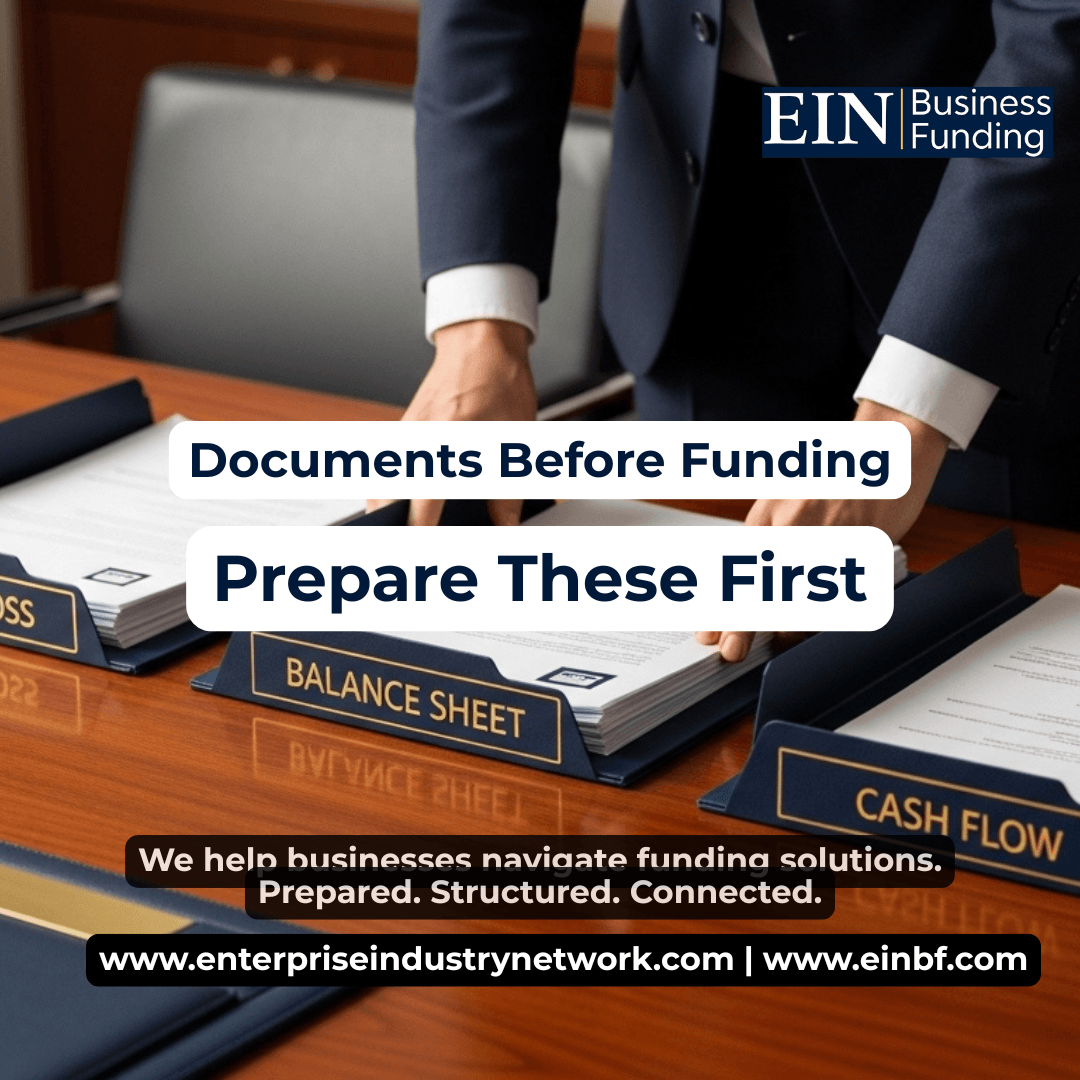
Present Current Financial Statements
Financial statements help lenders understand how the business has been performing.
A lender-ready package may include:
- Profit-and-loss statements.
- Balance sheets.
- Cash-flow information.
- Comparative prior-period financials where relevant.
These records can help show revenue, expenses, profitability, assets, liabilities, and overall financial condition.
Current records are generally more useful than outdated financial information that no longer reflects the company’s present position.
Include Business Bank Statements
Bank statements can provide another view of the company’s financial activity because they show actual cash moving into and out of the business.
Lenders may review:
- Deposit consistency.
- Average balances.
- Existing lender payments.
- Overdrafts or returned payments.
- Seasonal patterns.
- Large or unusual transactions.
Business owners should understand what appears in their bank activity and be prepared to explain significant transactions when necessary.
Provide a Clear Debt Schedule
Existing obligations are a critical part of the financing picture.
A debt schedule may summarize:
- Current lenders.
- Outstanding balances.
- Monthly payments.
- Repayment terms.
- Interest or financing costs.
- Collateral.
- Personal guarantees.
- Maturity dates.
A lender needs to understand how much of the company’s cash flow is already committed before evaluating additional financing.
Make Revenue and Cash Flow Tell the Same Story
The numbers in a funding package should connect logically.
Revenue shown in financial statements should generally make sense when compared with bank deposits, tax records, and other supporting information, subject to accounting and timing differences.
Business owners should be prepared to explain differences caused by:
- Cash versus accrual accounting.
- Seasonality.
- One-time transactions.
- Recent growth.
- Delayed customer payments.
- Accounting adjustments.
Unexplained inconsistencies can create additional questions during lender review.
Show Repayment Capacity
A lender-ready funding package should help demonstrate how the business expects to support repayment.
That does not mean simply showing revenue.
The lender may also consider:
- Operating expenses.
- Payroll.
- Taxes.
- Supplier payments.
- Existing debt.
- Working-capital needs.
- Expected new financing payments.
The company should ideally retain enough financial flexibility to continue operating while meeting its financing obligations.
Address Existing Risks Honestly
A strong funding package does not need to pretend that the business has no risk.
Instead, owners should understand and explain material issues that could affect financial performance.
Potential risks may include:
- Customer concentration.
- Seasonality.
- Supplier dependence.
- Recent revenue declines.
- Existing debt.
- Management changes.
- Legal or regulatory matters.
- Large upcoming expenses.
Transparent explanations can be more useful than allowing a lender to discover unexplained issues later in the review process.
Use Realistic Financial Projections
Some funding requests may require projections, especially when capital will support expansion, acquisitions, hiring, equipment, or another future initiative.
Projections may include:
- Expected revenue.
- Operating expenses.
- Payroll.
- Cash-flow forecasts.
- Debt-service requirements.
- Working-capital needs.
- Expected results from the new capital.
The assumptions behind the projections should be understandable and realistic.
Support the Funding Purpose With Evidence
The stronger the connection between the requested capital and supporting documentation, the easier the financing need may be to understand.
Examples can include:
- Equipment quotes.
- Inventory purchase orders.
- Expansion budgets.
- Acquisition documents.
- Invoices or receivables schedules.
- Refinancing statements.
- Project estimates.
These records can help demonstrate that the funding amount is tied to a defined business objective.
Build the Package Around the Financing Product
Different financing products may require different supporting information.
For example:
- Working-capital financing may emphasize revenue, bank activity, and cash flow.
- A business line of credit may focus on recurring liquidity needs and repayment capacity.
- Equipment financing may require asset information and purchase documentation.
- Invoice financing may require receivables and customer information.
- Acquisition financing may require target-company financials and transaction documents.
- Refinancing may require detailed information about existing obligations.
A funding package should therefore be adapted to the actual capital need rather than treated as a universal set of documents.
Funding Package for Working Capital
A working-capital request should clearly explain the temporary operating need.
The package may focus on:
- Revenue.
- Cash flow.
- Bank activity.
- Payroll.
- Inventory.
- Vendor obligations.
- Seasonality.
- Expected repayment source.
The lender should be able to understand why the short-term funding is needed and how the company expects to repay it.
Funding Package for Equipment Financing
Equipment financing may require information about both the company and the asset being purchased.
Supporting records may include:
- Equipment quote.
- Purchase price.
- Asset description.
- Expected useful life.
- Vendor information.
- Business financial statements.
- Expected operational benefit.
The business should be able to explain how the equipment supports productivity, capacity, revenue, efficiency, or another measurable business need.
Funding Package for a Business Acquisition
Acquisition financing generally requires a more complex package because the lender may evaluate both the buyer and the target company.
Potential documentation may include:
- Letter of intent.
- Purchase agreement.
- Target-company financial statements.
- Business tax returns.
- Buyer financial information.
- Buyer equity contribution.
- Seller financing terms.
- Business valuation information.
- Post-closing working-capital needs.
The funding package should explain not only how the purchase will be financed but also how the business will remain financially stable after closing.
Funding Package for Refinancing
A refinancing request should clearly identify the obligations that the business wants to replace or restructure.
The lender may need:
- Current payoff information.
- Existing payment schedules.
- Outstanding balances.
- Collateral information.
- Current financing costs.
- Cash-flow impact of the proposed refinancing.
The package should explain why the refinancing improves the company’s financial structure rather than simply moving debt from one source to another.
Keep Ownership and Legal Information Consistent
Ownership information should be consistent across the funding application, legal records, tax documents, bank accounts, and other supporting materials.
Depending on the structure, a lender may need:
- Formation documents.
- Ownership percentages.
- Operating or partnership agreements.
- Authorized signer information.
- Business licenses.
- DBA information.
Inconsistencies can lead to additional verification and delay.
Avoid Overloading the Package With Irrelevant Information
More information is not always better.
A strong package should provide enough information to support the financing request without burying the lender in unrelated material.
Documents should be:
- Relevant.
- Current.
- Clearly named.
- Easy to review.
- Consistent with the funding request.
Organize the Package in a Logical Order
A well-organized package can make review easier.
One possible sequence is:
- Business summary.
- Funding amount and use of funds.
- Financial statements.
- Business bank statements.
- Existing debt schedule.
- Ownership and legal records.
- Financial projections.
- Funding-purpose supporting documents.
- Additional lender-specific information.
The exact order can vary, but the package should present a coherent financial story.
Review the Package Before Submitting It
Before approaching a lender, business owners should review the complete package for accuracy and consistency.
Questions to ask include:
- Is the requested amount clear?
- Is the use of funds specific?
- Are financial statements current?
- Does bank activity support the financial story?
- Is all existing debt disclosed?
- Are ownership records correct?
- Are projections realistic?
- Are major risks explained?
- Do the numbers connect logically?
What Makes a Funding Package Look Stronger to Lenders?
A stronger funding package is not one that hides weaknesses. It is one that gives the lender a clear, accurate, and organized picture of the company.
Important qualities include:
- Consistent financial information.
- Clear use of funds.
- Current documentation.
- Transparent debt information.
- Realistic projections.
- Clear business explanation.
- Reasonable funding amount.
- Understandable repayment capacity.
- Honest discussion of material risks.
Funding Package vs Funding Approval
A well-prepared funding package does not guarantee financing approval.
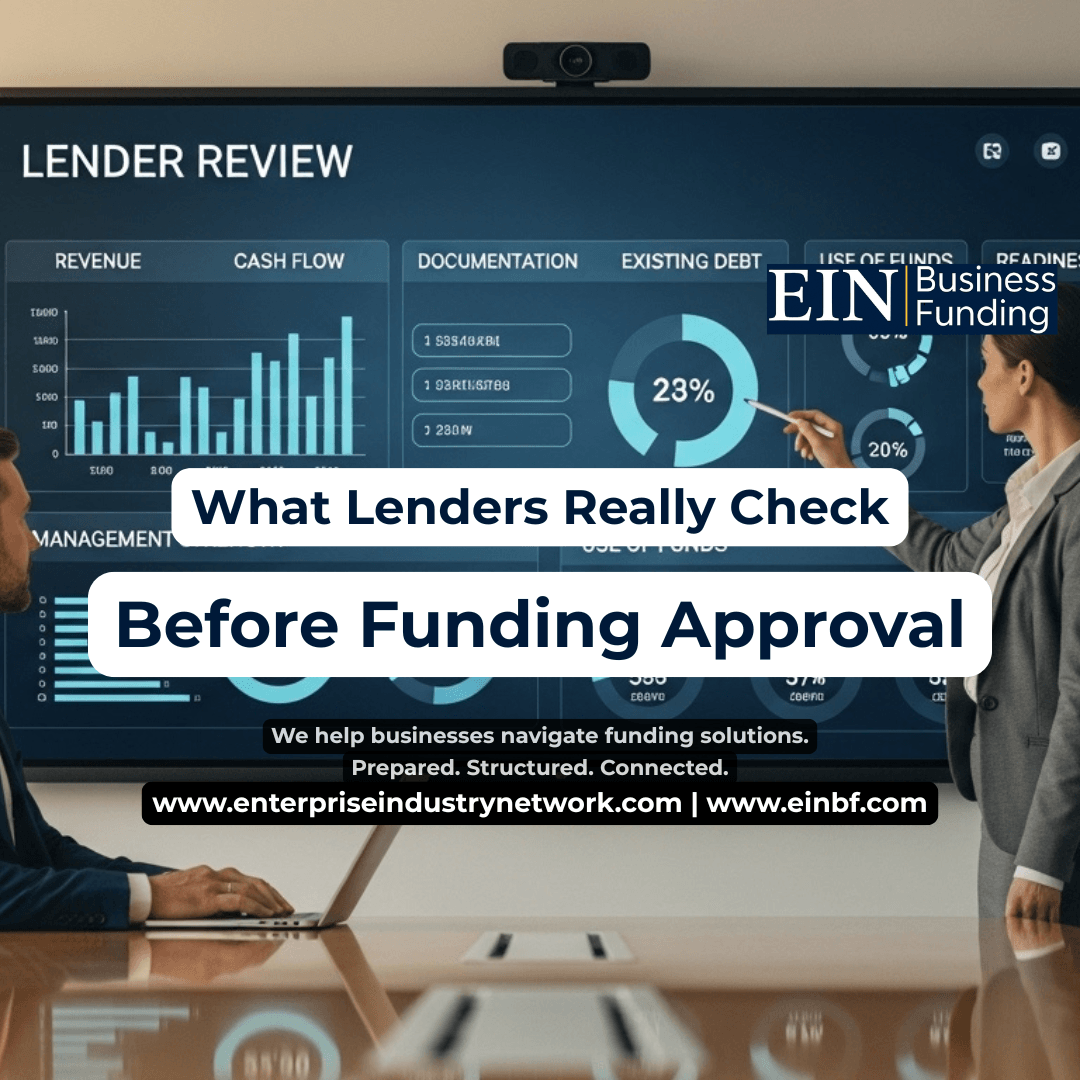
Lenders may still evaluate:
- Revenue.
- Cash flow.
- Credit.
- Existing debt.
- Industry.
- Time in business.
- Collateral.
- Repayment capacity.
- Requested amount.
- Specific underwriting requirements.
The purpose of a lender-ready package is to make the request easier to understand and evaluate—not to imply that approval is automatic.
How EIN Business Funding Helps Businesses Prepare
EIN Business Funding (EINBF), part of Enterprise Industry Network, helps business owners approach capital with greater preparation and clarity by reviewing funding needs, financial readiness, use of funds, existing obligations, supporting information, and potential financing paths.
Depending on the company and capital requirement, potential funding needs may include working capital, business lines of credit, equipment financing, invoice financing, acquisition financing, refinancing, growth capital, and other qualified business financing structures.
The objective is to help owners present a more organized, understandable, and financially consistent funding request when approaching lenders and funding partners.
Build a Lender-Ready Funding Package
Present a clear capital request, consistent financial information, realistic projections, transparent obligations, and supporting documentation that helps lenders understand your business.
Frequently Asked Questions
What should be included in a business funding package?
A funding package may include a business summary, requested funding amount, use-of-funds explanation, bank statements, financial statements, tax returns when requested, debt schedules, ownership records, projections, and product-specific supporting documents.
Why is a business funding package important?
A well-organized package helps lenders understand the company, financial position, capital need, existing obligations, repayment capacity, and intended use of funds more efficiently.
Is a funding package the same as a business loan application?
Not exactly. The application captures required information, while the broader funding package can include the financial records, business context, supporting documents, and explanations used to support the financing request.
What makes a funding package stronger?
Current and consistent financial records, a specific funding purpose, realistic requested amount, transparent debt information, understandable cash flow, realistic projections, and relevant supporting documentation can make the request easier to evaluate.
Does a strong funding package guarantee approval?
No. A lender-ready package can improve clarity and reduce avoidable questions, but approval still depends on the financing provider’s underwriting standards and the business’s financial profile.
Should different funding products use different funding packages?
Yes. Working capital, equipment financing, acquisition financing, invoice financing, refinancing, and other products may require different supporting information based on the financing purpose and lender requirements.
 A lender-ready business funding package connects the capital request, use of funds, financial records, existing obligations, projections, risks, and supporting documentation into one clear and consistent financing story.