

Institutional investors evaluating private capital investments

Private Capital Deployment Is Increasing as Institutional Investors Seek Higher Yields

Private capital deployment is increasing in 2026 as institutional investors seek higher yields in a changing financial environment. Traditional markets are offering lower returns, pushing investors toward alternative assets. Private equity, venture capital, and direct investments are attracting significant interest due to their potential for strong returns. This trend is creating more opportunities for businesses…


Read More
Executives planning roll-up acquisition strategy

Platform Roll-Up Strategies Are Accelerating Consolidation Across Fragmented Industries

Platform roll-up strategies are gaining momentum in 2026 as investors and operators consolidate fragmented industries. By acquiring and integrating multiple smaller businesses, companies can build scalable platforms. This strategy enables operational efficiencies, stronger market positioning, and improved financial performance. It is particularly effective in industries with many small independent players. Successful roll-ups require disciplined execution,…

Read More
Startup founder reviewing runway timeline and burn rate dashboard before investor discussion

Runway Clarity: Why Investors Want to Know How Long a Startup Can Execute

Startup investors pay close attention to runway because it reveals how much time a company has to execute before requiring additional capital. A strong idea may attract interest, but unclear runway planning can quickly weaken investor confidence. Founders need to show that they understand burn rate, milestones, and capital efficiency. Runway clarity helps investors evaluate…

Read More
Attorney explaining indemnification clauses in a business transaction agreement

Indemnification Awareness: Why Post-Closing Protection Matters in Business Transactions

In business transactions, the deal does not always end at closing. Certain risks may continue after the transaction is complete, especially if financial statements, contracts, liabilities, or representations later prove inaccurate. This is where indemnification becomes an important legal protection mechanism. Indemnification provisions define who is responsible if certain losses, claims, or breaches arise after…

Read More
Advisor comparing funding options to determine the right capital fit for a business

Funding Fit Analysis: Why Not Every Capital Option Is Right for Every Business

Many businesses approach funding with one question: how much capital can we access? A better question is: what type of capital actually fits the business? Not every funding option supports the same goals. Debt, equity, working capital, revenue-based financing, and other structures each carry different implications for control, repayment, flexibility, and risk. Funding fit analysis…

Read More
Business workflow showing small inefficiencies creating operational drag

Operational Drag: How Small Inefficiencies Quietly Reduce Business Performance

Operational drag is rarely caused by one major problem. More often, it develops through small inefficiencies that repeat across the business: slow approvals, unclear ownership, duplicate work, inconsistent reporting, or outdated workflows. These issues may seem minor individually, but together they reduce speed, margins, and leadership capacity. As companies grow, operational drag becomes more expensive….

Read More
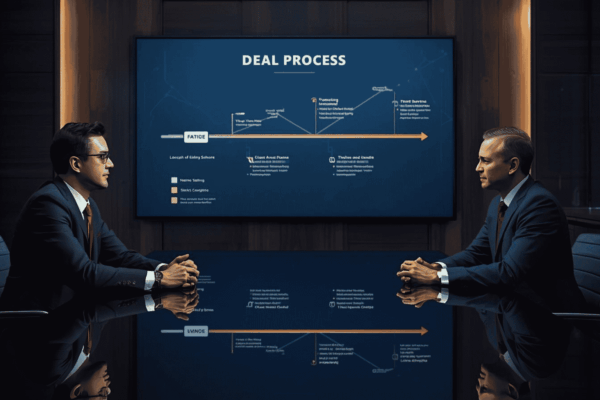
Business seller and broker reviewing a structured transaction process

Deal Fatigue in Business Sales: Why Sellers Need a Structured Transaction Process

Selling a business can become emotionally and operationally exhausting when the process lacks structure. Sellers may face repeated buyer questions, slow diligence requests, valuation pressure, and uncertainty around next steps. Over time, this can create deal fatigue, where the seller becomes more likely to accept weaker terms simply to move the transaction forward. Deal fatigue…

Read More
Business owner reviewing enterprise value gap with strategic advisor

Enterprise Value Gap: Why Growing Businesses May Be Worth Less Than Owners Expect

Many business owners believe revenue growth automatically increases enterprise value. In reality, buyers, investors, and strategic partners evaluate much more than top-line performance. A business may generate strong revenue but still face valuation gaps if margins are inconsistent, systems are weak, leadership is owner-dependent, or financial reporting lacks clarity. The enterprise value gap is the…

Read More
Startup founders focusing on capital-efficient growth

Capital-Efficient Startups Are Redefining Growth Models in the Innovation Economy

Capital-efficient startups are reshaping the innovation economy in 2026. Founders are focusing on sustainable growth rather than aggressive spending. This approach emphasizes profitability, efficient resource utilization, and disciplined execution. Investors are increasingly supporting startups that demonstrate strong fundamentals and long-term viability. Connections through EIN Venture Capital can help founders align with the right investors. FAQs…

Read More