
Buying a Business With a Commercial Lease? What Buyers and Sellers Must Review Before Ownership Changes
The holiday season can demonstrate how important a commercial location is to the financial success of a business.
Restaurants, retailers, automotive service companies, healthcare practices, franchises, and other location-dependent businesses may rely heavily on their existing premises.
When one of these businesses is sold, transferring ownership of the company does not necessarily guarantee that the buyer can continue operating from the same location.
Commercial lease arrangements should therefore receive careful attention during acquisition negotiations.
The appropriate legal approach depends on the lease, transaction structure, jurisdiction, and specific circumstances. Buyers and sellers should obtain advice from qualified transaction counsel.
Why a Commercial Lease Can Affect a Business Sale
The business may have established customers, trained employees, profitable operations, and valuable equipment.
However, if the buyer cannot continue occupying the premises on economically acceptable terms, the value of the acquisition may change substantially.
The lease can influence financing, operating expenses, business continuity, and the ability to complete the transaction.
1. Obtain the Complete Commercial Lease
Review more than the original lease document.
The complete lease package may include:
- Original lease
- Amendments
- Renewal agreements
- Personal guarantees
- Side agreements
- Landlord notices
Important rights and obligations may have changed since the original agreement was signed.
2. Review Assignment Provisions
A commercial lease may restrict the tenant’s ability to assign the agreement to another party.
The purchase transaction should address whether the proposed transfer requires landlord consent and what conditions may apply.
The exact result depends on the lease language and applicable law.
3. Understand Change-of-Control Clauses
Buying the ownership interests of a company may not automatically avoid lease-related approval requirements.
Some leases address changes in ownership or control even when the tenant entity remains unchanged.
Transaction counsel should evaluate the proposed deal structure against the actual contractual provisions.
4. Identify Landlord Consent Requirements Early
A landlord may request information about the proposed buyer, including business experience, financial capacity, operating plans, and proposed guarantors.
Consent can take time, particularly around year-end and holiday schedules.
Do not assume that landlord approval will be available immediately before the planned closing date.
5. Check the Remaining Lease Term
A business with only one year remaining on its lease may present a different acquisition risk from a business with several years of occupancy secured.
The buyer should evaluate whether the remaining term supports the proposed investment, operating plans, and financing requirements.
6. Review Renewal Options
A lease may include one or more renewal options.
Review how those options are exercised, whether deadlines have passed, how renewal rent is calculated, and whether the rights remain available after assignment or ownership change.
Do not rely solely on a seller’s verbal understanding of renewal rights.
7. Understand Future Rent Increases
The current monthly rent may not represent the long-term cost of occupying the premises.
Review scheduled rent increases, renewal pricing, common-area maintenance charges, property-tax allocations, insurance obligations, and other occupancy expenses.
A business valued using current earnings may produce different future cash flow after material rent increases.
8. Examine Personal Guarantees
The current owner may have personally guaranteed the lease.
A business sale does not necessarily release that guarantee.
The seller should determine whether a release is available, while the buyer should understand whether a new guarantee will be required.
Any release or replacement arrangement should be properly documented.
9. Review the Permitted Use of the Premises
The lease may limit the activities that can occur at the location.
A buyer planning to add products, services, production capacity, or a different operating model should verify that the proposed use is permitted.
Additional landlord approval, licensing, zoning, or regulatory review may be necessary.
10. Identify Maintenance and Repair Responsibilities
Commercial leases may allocate substantial responsibilities to the tenant.
Review obligations relating to heating and cooling systems, plumbing, electrical infrastructure, roofing where applicable, repairs, renovations, equipment, and restoration at the end of the lease.
Unexpected maintenance costs can affect the acquisition economics.
11. Coordinate Security Deposits and Prepaid Rent
The parties should understand how existing security deposits, prepaid rent, outstanding charges, and other lease-related balances will be treated.
These items may require specific purchase-agreement provisions or closing adjustments.
12. Compare a Lease Assignment With a New Lease
Depending on the circumstances, the buyer may assume the existing lease or negotiate a new lease with the landlord.
Compare the financial and legal consequences of each approach.
A new lease could offer a longer term but introduce higher rent, additional guarantees, different maintenance obligations, or other conditions.
13. Coordinate Lease Approval With Acquisition Financing
Financing providers may evaluate occupancy arrangements when the acquired business depends on its commercial location.
Unresolved lease terms can therefore affect the acquisition timeline and closing requirements.
Buyers should coordinate the landlord, financing provider, transaction advisors, and legal counsel early.
14. Address Lease Conditions in the Purchase Agreement
The purchase agreement should reflect any negotiated requirements concerning landlord consent, assignment, a replacement lease, guarantee release, and other occupancy-related closing conditions.
The consequences of failing to obtain the necessary approvals should also be understood before the parties sign.
Protect Business Continuity After Closing
The commercial lease should not be treated as a minor administrative detail.
For many businesses, the location is an essential operating asset. Buyers and sellers should understand the occupancy arrangement, financial obligations, transfer requirements, and continuing liabilities before ownership changes.
Review assignment rights, landlord consent, remaining lease terms, renewal options, guarantees, and occupancy-related closing conditions before finalizing the transaction.
Consult EIN Legal Counsel →
Frequently Asked Questions
Does a commercial lease automatically transfer when a business is sold?
Not necessarily. Transfer rights depend on the lease, transaction structure, applicable law, and whether landlord consent or other contractual conditions are required.
Can a landlord refuse to approve a new business owner?
The landlord’s rights and obligations depend on the lease provisions and applicable law. Qualified legal counsel should review any consent requirements and restrictions.
Does selling a business release the owner’s personal lease guarantee?
Not automatically. A seller should determine whether the guarantee continues after the transaction and whether a written release or replacement arrangement can be obtained.
Should lease approval be completed before a business acquisition closes?
When continued occupancy is essential, buyers and sellers should address the necessary lease arrangements and negotiated closing conditions before completing the acquisition.
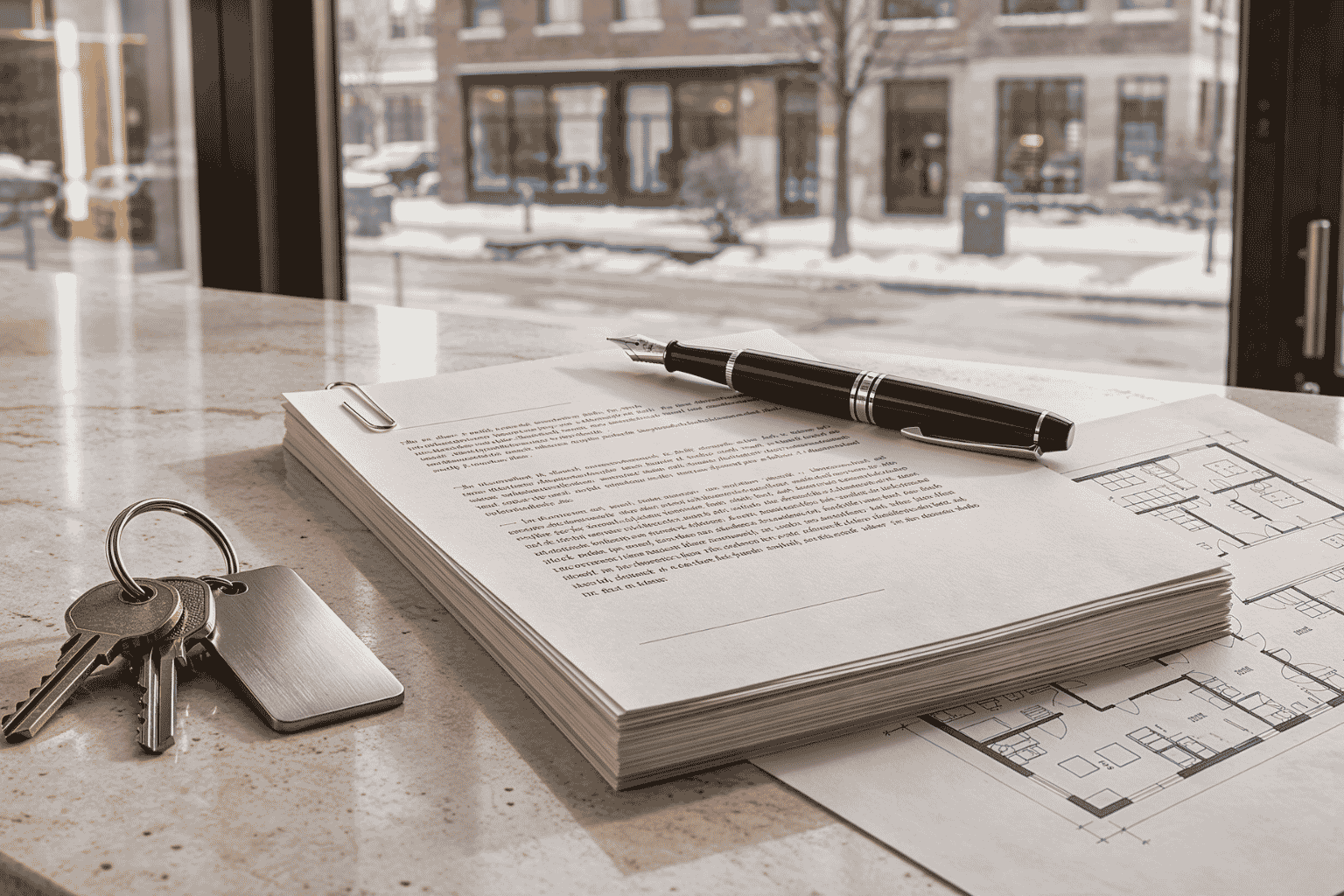 Buyers and sellers should address commercial lease rights, landlord consent, guarantees, and occupancy requirements before ownership changes.