Preparing for Investors? Build the Data Room Before Diligence Starts
Preparing to raise capital?
Your pitch may open the door.
Your data room may help determine what happens next.
When investor interest becomes serious, founders may be asked for supporting information about the company, its ownership, finances, customers, legal structure, intellectual property and operations.
Waiting until diligence begins to organize everything can slow the process and create unnecessary confusion.
A Data Room Is More Than a Folder
A data room is a structured collection of company information that can be shared with prospective investors at the appropriate stage.
It should make it easier to answer important questions about the business.
The objective is not to overwhelm investors with documents.
It is to provide the right information in a clear, organized and controlled way.
Start With Corporate Documents
Investors may want to understand the legal structure of the company.
Depending on the business, that may include:
- Formation documents
- Governing documents
- Board approvals
- Shareholder or member records
- Material amendments
- Other corporate records
Founders should know where those records are and whether they are current.
Make Sure the Cap Table Is Clear
The capitalization table is one of the most important documents in an equity financing conversation.
It should clearly show who owns the company and how ownership is structured.
Depending on the company, the cap table may include:
- Founder ownership
- Employee equity
- Option pools
- Existing investors
- Convertible instruments
- Other outstanding securities
If the cap table is inconsistent with legal documents or previous financing records, that can create questions during diligence.
Organize Financial Information
Investors may review the company’s financial condition and historical performance.
Potential materials can include:
- Profit and loss statements
- Balance sheets
- Cash-flow information
- Budgets
- Forecasts
- Bank information
- Revenue detail
- Other financial records relevant to the business
The numbers should align with the financial story being presented during fundraising.
Keep Forecast Assumptions Understandable
A forecast is not simply a spreadsheet with future revenue.
Investors may want to understand the assumptions behind it.
For example:
- Customer growth
- Pricing
- Hiring
- Gross margin
- Sales productivity
- Market expansion
- Operating expenses
Founders should be prepared to explain why those assumptions are reasonable.
Customer Information Can Matter
For companies with commercial traction, investors may want to understand the customer base.
Relevant information could include:
- Customer concentration
- Contract terms
- Recurring versus non-recurring revenue
- Retention
- Pipeline
- Customer acquisition
- Other revenue-related information
Confidential or sensitive information should be shared carefully and only when appropriate.
Document Intellectual Property
If intellectual property is important to the business, investors may want to understand who owns it.
That may involve:
- Patents
- Trademarks
- Copyrights
- Software
- Proprietary processes
- Employee or contractor IP assignments
Founders should avoid assuming that intellectual property is automatically owned by the company simply because it was created for the business.
Legal counsel should review ownership and assignment questions where appropriate.
Review Material Contracts
Important agreements may also be relevant during investor diligence.
Examples can include:
- Customer contracts
- Vendor agreements
- Licensing agreements
- Partnership agreements
- Debt agreements
- Leases
- Employment agreements
- Other material commitments
Investors may want to understand obligations that could materially affect the company.
Keep Employment and Team Records Organized
Investor diligence can extend beyond founders.
Depending on the company and stage, materials may include:
- Key employee information
- Employment agreements
- Compensation arrangements
- Equity grants
- Consultant agreements
- Organizational structure
The objective is to understand who is critical to the business and how those relationships are structured.
Do Not Ignore Existing Debt
If the company has debt, investors may want to understand those obligations.
That could include:
- Loans
- Lines of credit
- Convertible notes
- Other financing instruments
- Security interests
- Repayment obligations
Existing obligations can affect future financing structure and company risk.
Track Regulatory or Compliance Matters
Some businesses operate in industries where licenses, regulatory approvals or compliance obligations are important.
If those matters are material to the company, relevant documentation should be organized.
Investors may want to understand whether the company can legally operate as represented.
Do Not Share Everything Immediately
Investor readiness does not mean sending the full data room to every person who expresses interest.
Information should be shared in stages and with appropriate controls.
Sensitive materials may require:
- Limited access
- Confidentiality protections
- Watermarking
- Permission controls
- Careful timing
The appropriate approach depends on the transaction and sensitivity of the information.
Organization Matters
A data room should be easy to navigate.
Folders might be organized into categories such as:
- Corporate
- Capitalization
- Financials
- Customers
- Legal
- Intellectual Property
- Team
- Contracts
- Compliance
Clear naming and version control can prevent confusion.
Make Sure Documents Are Current
An organized data room filled with outdated information is still a problem.
Before investor review begins, check whether:
- Financial statements are current
- Cap table information is current
- Contracts are the latest versions
- Corporate records reflect recent changes
- Forecasts match the current business plan
Investors may compare documents against the information presented in meetings.
Consistency Is Critical
Your pitch, financial model, cap table and legal documents should tell the same underlying story.
If one document says one thing and another says something materially different, the investor may need additional explanation.
Consistency helps reduce unnecessary diligence questions.
Prepare Before Investor Interest Becomes Urgent
Data-room preparation is easier when there is no immediate deadline.
Founders can use that time to:
- Find missing documents
- Correct organizational issues
- Update financial records
- Clarify cap-table entries
- Resolve documentation gaps
- Work with legal or accounting professionals where needed
That is much easier than trying to solve every issue while an investor is actively waiting for answers.
The Data Room Supports the Story
The fundraising story may explain why the opportunity is compelling.
The data room provides supporting evidence.
Investors may want to verify:
Who owns the company?
What has the business achieved?
What obligations exist?
What is protected?
What risks need to be understood?
What assumptions support the future plan?
Investor readiness means being prepared to answer those questions clearly.
EIN Venture Capital provides a starting point for businesses preparing for investor conversations and exploring potential capital solutions.
Investor diligence, document requests, valuation, financing structure, terms and investment decisions vary by company, investor and transaction. An inquiry, introduction, meeting, data-room review or investor interest does not guarantee capital.
Frequently Asked Questions
What is an investor data room?
An investor data room is an organized collection of company documents that may be shared with prospective investors during diligence, including financial, corporate, legal, capitalization and other business information.
When should a startup build its data room?
Ideally, founders should begin organizing core documents before serious investor diligence starts. Early preparation provides time to identify missing, outdated or inconsistent information.
What should be included in a startup data room?
The contents vary by company and investor, but common categories may include corporate records, cap table information, financials, contracts, customer information, intellectual property, team documents and regulatory materials.
Should every potential investor receive full data-room access?
No. Sensitive information should generally be shared at the appropriate stage with suitable access controls and confidentiality protections based on the circumstances.
Take the Next Step
Subscribe on YouTube:
https://www.youtube.com/@enterpriseindustrynetwork
Preparing your business for investor review?
Get Started with EIN Venture Capital:
https://www.einvc.com/get-capital/
Exit. Acquire. Invest.
Explore Enterprise Industry Network
https://enterpriseindustrynetwork.com/
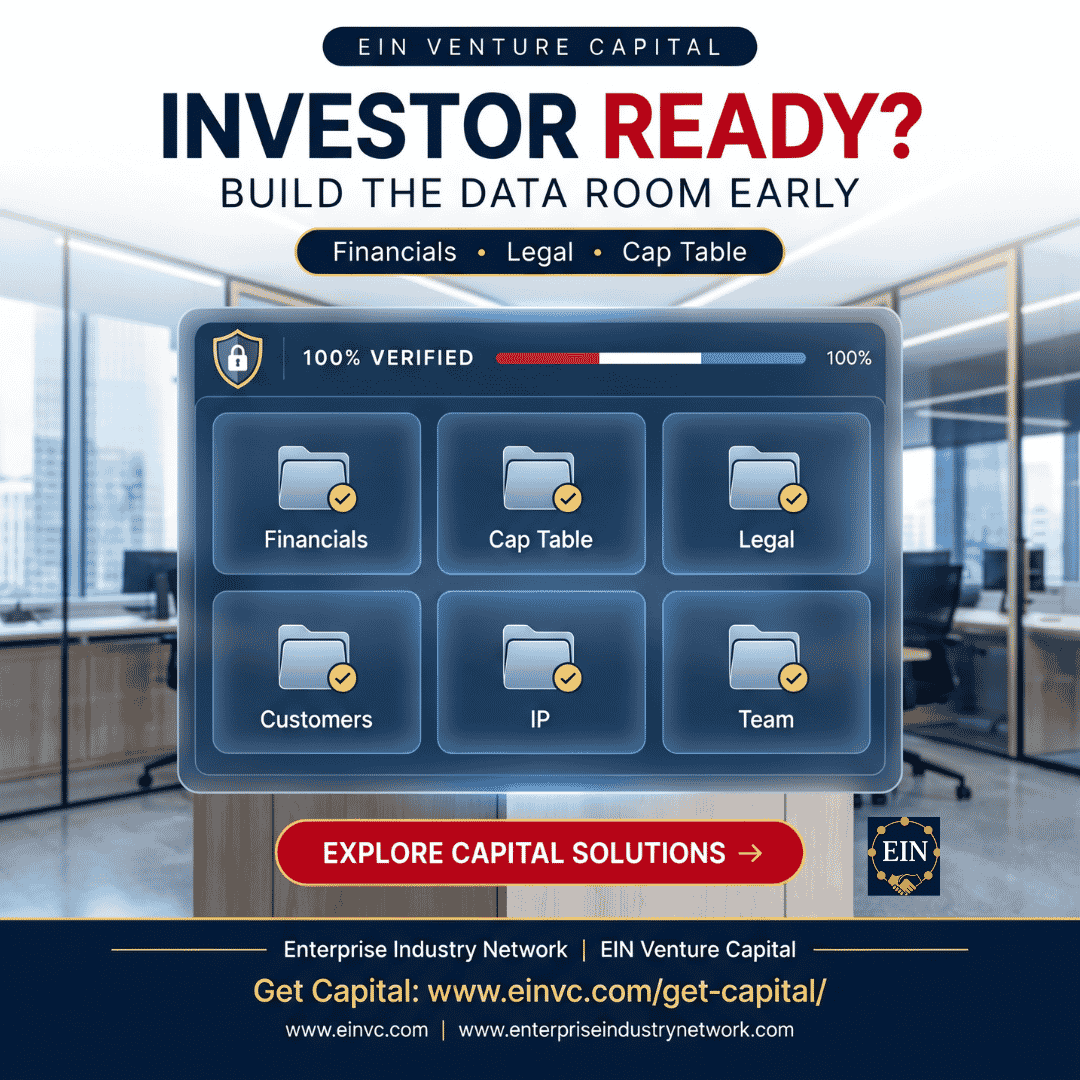 An organized data room can help founders respond clearly and consistently when investor diligence begins.