
Restaurant Franchise Financing With EIN: Fund the Franchise Fee, Build-Out, Equipment and Working Capital Separately
A restaurant franchise can appear to have one total startup cost, but the capital requirement usually consists of several very different expenses.
The franchise fee, leasehold improvements, kitchen equipment, furniture, signage, opening inventory and working capital do not necessarily need to be treated as one undifferentiated financing request.
If you have already selected a franchise opportunity or restaurant location and know the approximate project cost, complete the EIN Business Funding Quick Lead Pre-Qualification using the actual business and project information.
Start With the Franchise Fee
The initial franchise fee is the amount paid for the right to operate under the franchisor’s system, subject to the franchise agreement.
This is different from buying physical kitchen equipment or renovating a leased property.
Identify the franchise fee separately so the financing request clearly shows what portion of the capital is going toward an intangible contractual right.
Build-Out Can Become One of the Largest Costs
Restaurant locations frequently require substantial improvements before opening.
Build-out may include electrical work, plumbing, ventilation, HVAC, flooring, counters, accessibility improvements, dining-area construction and specialized kitchen infrastructure.
Do not rely only on an early estimate. Obtain realistic contractor information before finalizing the financing requirement.
Kitchen Equipment Is a Separate Asset Category
Commercial ovens, refrigeration, dishwashing systems, food-preparation equipment, freezers and other kitchen assets can represent a substantial portion of the project.
Because these are tangible business assets, equipment financing may be worth evaluating separately depending on the provider and borrower profile.
Separating the equipment budget can make the transaction easier to understand.
Furniture, Fixtures and Signage Also Add Up
Tables, chairs, counters, point-of-sale hardware, fixtures and exterior signage may appear small individually but become significant when combined.
Include them in the complete project budget rather than discovering the expense after the primary financing has already been committed.
Opening Inventory Requires Cash Before Revenue Begins
A restaurant needs food, beverages, packaging and operating supplies before the first customer is served.
Those costs are working-capital requirements rather than long-lived assets.
They should be calculated separately from kitchen equipment.
Payroll Can Begin Before the Restaurant Opens
Managers, kitchen staff and front-of-house employees may need training before the opening date.
That means payroll expenses can begin while the restaurant is still producing little or no revenue.
The opening budget should account for this timing gap.
Do Not Assume Opening Day Immediately Solves Cash Flow
A new restaurant may require time to establish normal customer volume.
Even an established franchise brand does not guarantee that a new location will immediately reach projected sales.
The business should therefore maintain enough liquidity to operate during the ramp-up period.
What if You Are Buying an Existing Franchise Location?
An acquisition creates a different financing structure from opening a new unit.
The buyer should review the purchase price, historical revenue, sustainable cash flow, existing debt, equipment condition and any renovation requirements.
Do not assume the existing restaurant’s historical performance automatically continues after ownership changes.
Does an EIN Mean the Restaurant Can Obtain EIN-Only Financing?
No.
An EIN identifies the company, but restaurant financing providers may still consider owner credit, operating experience, cash contribution, revenue for an existing operation, debt and the complete project.
The legal business identity is important, but it is only one part of the financing profile.
How Much Capital Should the Owner Keep Available?
Using all available cash for the franchise fee and build-out can leave the restaurant undercapitalized before opening.
The owner should estimate working capital for payroll, inventory, utilities, marketing, rent and unexpected operating costs.
The project should not depend on reaching full projected revenue immediately.
What Should Be Ready Before Funding Review?
- Franchise fee
- Total project or acquisition cost
- Build-out budget
- Kitchen equipment quotes
- Furniture, fixtures and signage budget
- Opening inventory
- Pre-opening payroll
- Working-capital reserve
- Owner contribution
- Current credit profile
- Existing business debt, if applicable
Separate the Costs Before Choosing the Financing
A $700,000 restaurant project may not actually be one $700,000 funding need.
Part may be a franchise fee, part a build-out, part equipment and part operating liquidity.
Once those categories are visible, the owner can evaluate which financing structures fit the individual costs and which expenses need to be supported by owner capital.
A Franchise Brand Does Not Replace Financial Preparation
A recognized brand and established operating model can be valuable, but the individual location still needs a realistic capital structure.
The stronger financing request explains where every major dollar is going and how the business will remain liquid while the location moves toward stable operations.
FAQs
Can restaurant equipment potentially be financed separately from the franchise project?
Potentially. Tangible kitchen and business equipment may fit an equipment-financing structure depending on the provider and borrower.
Should working capital be included in a restaurant franchise funding plan?
Yes. The business may need cash for payroll, inventory, rent, utilities and other expenses before operations reach stable revenue.
Does an EIN alone qualify a restaurant franchise for financing?
No. Financing providers may also evaluate the owner, contribution, credit, business economics, project cost and repayment ability.
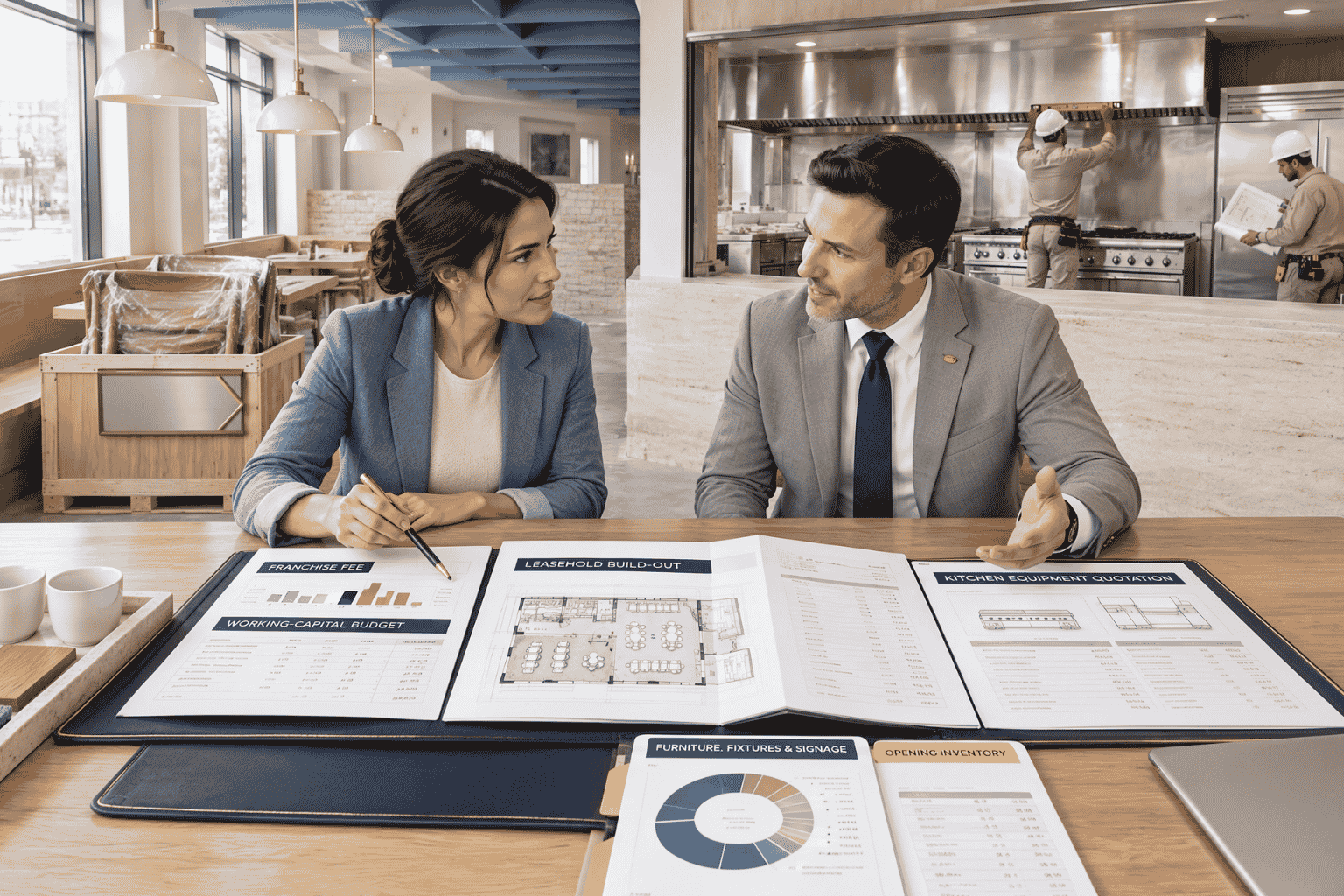 Restaurant franchise financing should distinguish the franchise fee, build-out, equipment and operating-capital requirements.