
Used Industrial Machinery Financing With EIN: Can a Business Finance Older Manufacturing Equipment?
Buying used machinery can allow a manufacturer to add production capacity for substantially less than the cost of new equipment. But financing older industrial equipment can require more analysis than simply presenting the purchase price.
The provider may need to understand what the machine is, how old it is, what condition it is in, how long it is expected to remain productive and whether the business can support the proposed financing.
Can Used Industrial Machinery Be Financed?
Potentially. Equipment-financing requirements vary by provider and transaction.
A used CNC machine, packaging system, fabrication machine, printing press, material-handling asset or other commercial equipment can still be a valuable revenue-producing asset if its condition and useful life support the purchase.
Does an EIN Make the Transaction EIN-Only?
No. Industrial machinery financing with an EIN still involves the business behind the equipment.
Providers may review credit, business history, annual revenue, cash flow, existing debt and the specific asset.
Why Equipment Age Matters
The financing term should make sense relative to the remaining useful life of the machine.
A business should be cautious about financing equipment over a long period if the asset may require replacement well before the financing is repaid.
Condition Can Matter More Than Age Alone
Two machines manufactured in the same year can have very different economic value depending on operating hours, maintenance history, upgrades and current condition.
A well-maintained industrial asset can remain productive for years, while neglected machinery can create expensive repair costs shortly after purchase.
What Should Be Included in the Equipment Information?
- Equipment type
- Manufacturer and model
- Year
- Purchase price
- Condition
- Operating hours where applicable
- Maintenance or service information if available
- Seller or dealer information
- Expected business use
Installation Can Change the Total Project Cost
Heavy machinery often requires freight, rigging, electrical work, foundations, ventilation, tooling or professional installation.
A $100,000 machine can become a materially larger project after those costs are included.
Prepare the complete installed budget rather than financing the equipment and discovering later that the business lacks cash to put it into production.
What if the Machine Requires Tooling?
Tooling, dies, molds, fixtures and other production-specific components may be essential to using the machine.
Identify those expenses separately from the core asset so the provider can understand the complete use of funds.
Why Revenue and Cash Flow Still Matter
The machine may be valuable, but the business still needs to support the financing payment.
A provider can evaluate annual revenue, operating history, cash flow and recent business activity when deciding whether the company can take on another fixed obligation.
What if Credit Is Around 600–680?
That range appears in common term-loan and alternative-financing profiles in the EIN Business Funding guidance.
Equipment financing has its own provider-specific underwriting, so 600 to 680 credit should not be treated as a guaranteed equipment-financing threshold.
Business revenue, equipment quality, existing debt and the overall transaction can also matter.
Existing Equipment Debt Must Be Included
Manufacturers often already finance machinery, vehicles or other production assets.
Prepare current balances and payments so the new purchase is evaluated against the complete debt structure of the business.
Should the Business Buy New Instead?
New equipment may offer newer technology, warranty coverage and a longer expected useful life, but it generally requires a larger investment.
Used machinery may produce a stronger return when it can reliably perform the required work at a lower acquisition cost.
The correct decision depends on production needs and total economics rather than financing availability alone.
Do Not Base the Purchase Only on a Low Price
An inexpensive machine that requires major repairs, produces excessive downtime or cannot support the required production tolerances may become more expensive than a higher-priced alternative.
The equipment purchase should make operational sense before it becomes a financing request.
What Should Be Ready Before Pre-Qualification?
- Equipment quote
- Machine age and condition
- Total installed project cost
- Tooling requirement
- Business formation date
- EIN
- Annual business revenue
- Current cash flow
- Current credit profile
- Existing equipment and business debt
If your manufacturing business has already identified a used machine and knows the complete purchase and installation cost, complete the EIN Business Funding Quick Lead Pre-Qualification using the real equipment and borrower information.
FAQs
Can used manufacturing equipment potentially be financed?
Potentially. Eligibility depends on the provider, equipment age and condition, purchase price, useful life and complete borrower profile.
Does an EIN alone qualify a company for machinery financing?
No. The provider may also review credit, revenue, operating history, cash flow, existing debt and the equipment.
Should installation costs be included in the machinery funding plan?
Yes. Freight, rigging, electrical work, tooling and installation can materially increase the complete project cost and should be identified before financing.
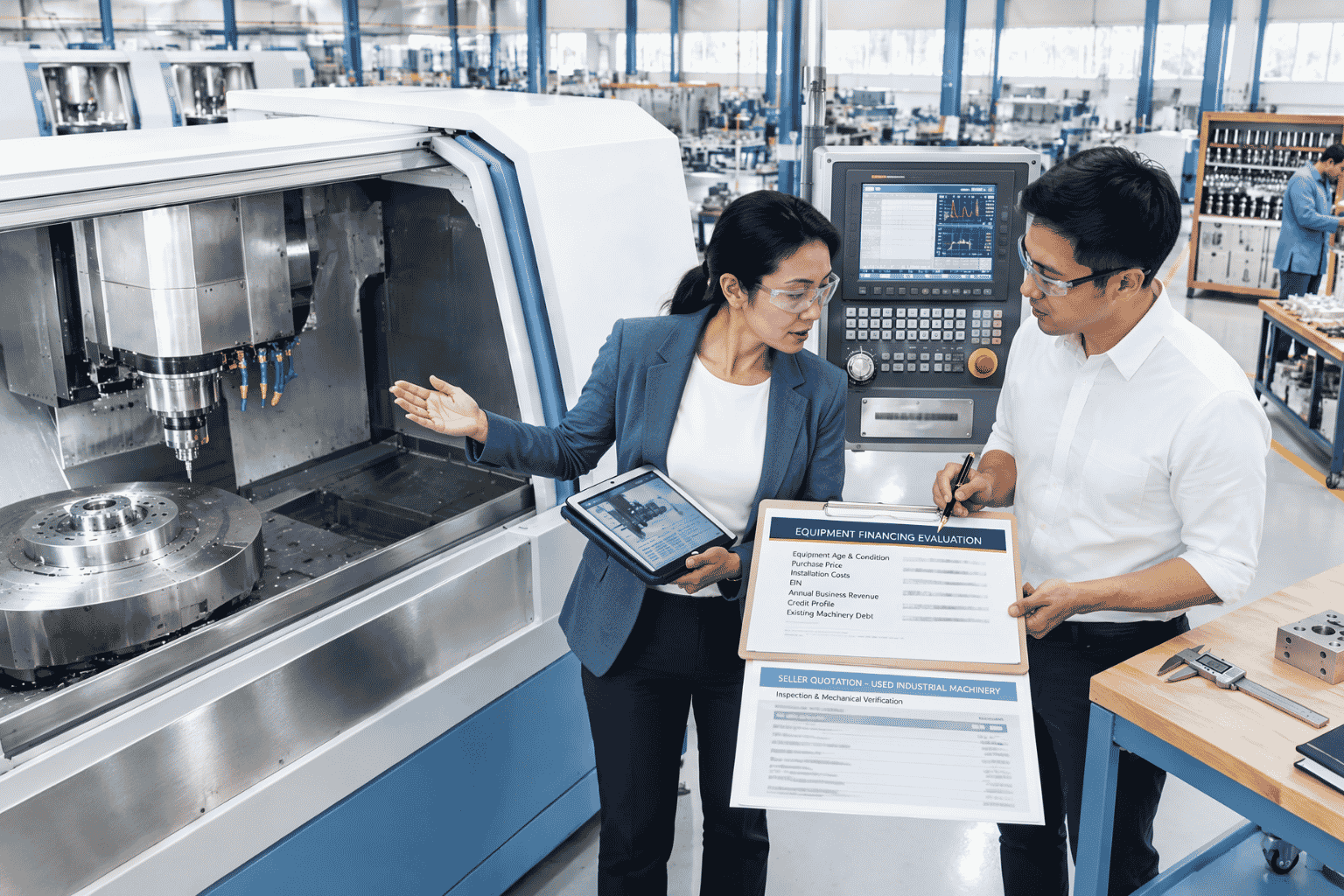 Used machinery financing can depend on both the business profile and the remaining economic life of the equipment.