
SBA Loan With EIN vs Online Term Loan: Which Fits a $100K–$250K Business Funding Need?
A business owner seeking $100,000 to $250,000 may have several financing categories available, but the best path depends on much more than the amount requested.
An SBA-backed loan and an online term loan can both provide substantial business capital, yet they commonly involve different qualification profiles, documentation levels and funding processes.
First: What Is the Money For?
The financing decision should begin with the business purpose.
- Expansion
- Working capital
- Equipment
- Business acquisition
- Renovation
- Inventory
- Another clearly defined business investment
A business asking for $200,000 for a defined expansion is easier to evaluate than one simply asking for the largest loan available.
Does an EIN Determine Which Loan You Can Get?
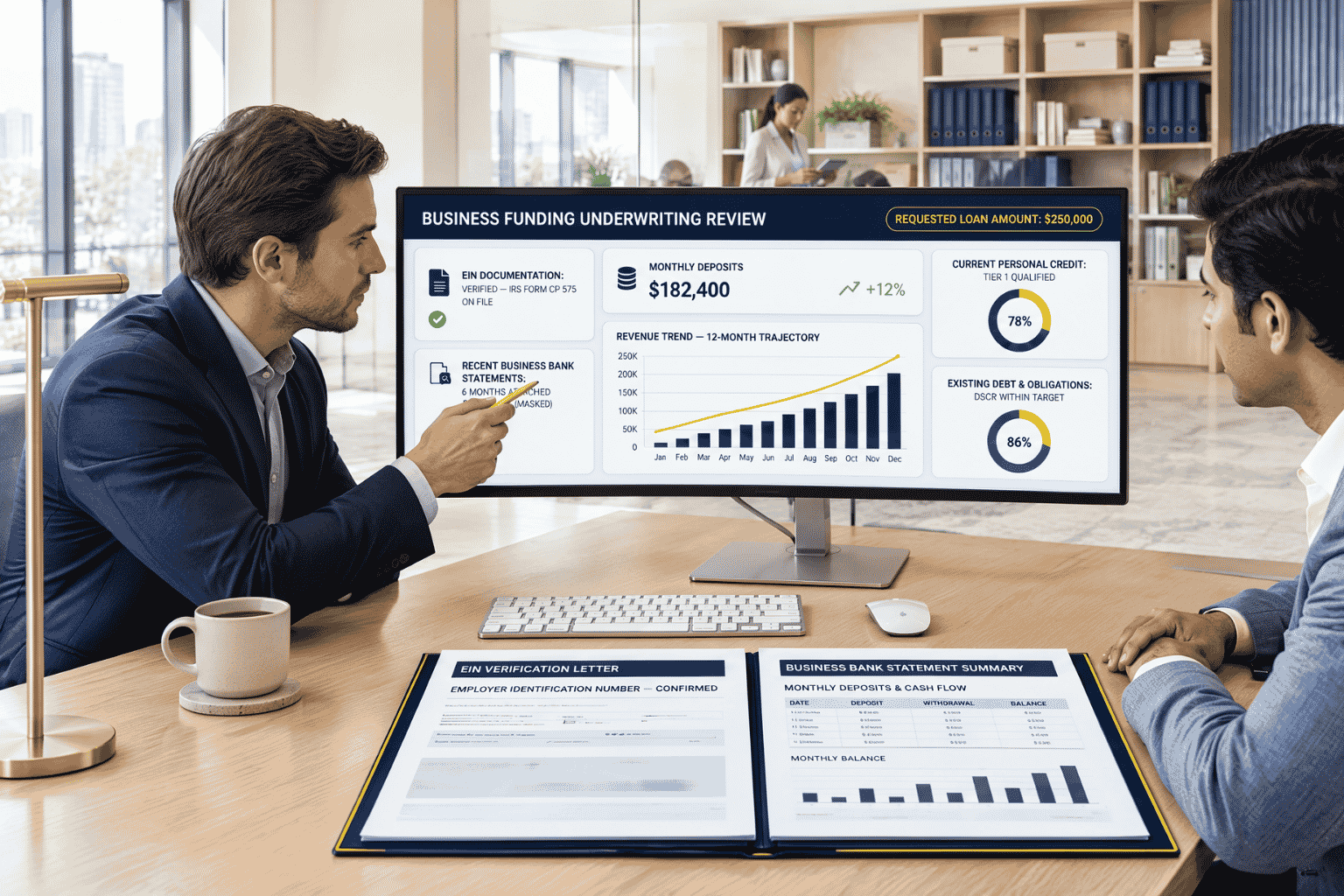
No. An Employer Identification Number identifies the business, but an SBA loan with an EIN or a term loan with an EIN can still involve credit, business history, revenue, cash flow, ownership and other underwriting factors.
The EIN is part of the business profile—not a substitute for repayment analysis.
What Is a Typical SBA 7(a) Profile?
The EIN Business Funding guidance identifies several common considerations for SBA 7(a) financing:
- For-profit U.S. business
- Applicable SBA size standards
- Reasonable owner equity investment
- Demonstrated repayment ability
- Personal credit often around 680 to 700+
- Additional lender requirements depending on the transaction
Owners with 20% or more ownership commonly provide a personal guarantee in an SBA 7(a) structure.
What Is a Common Term-Loan Profile?
For term loans, the EIN Business Funding guidance identifies approximately 600 to 680+ personal credit, one or more years in business, $100,000+ annual revenue and positive cash flow as common benchmarks.
Actual criteria vary by provider.
Which Option May Require More Documentation?
SBA-backed financing can involve more detailed underwriting and documentation because the participating lender must follow SBA program requirements in addition to its own lending process.
Online or alternative term financing may use a more streamlined documentation process in some cases.
Less documentation does not mean no underwriting. Revenue, deposits, credit, cash flow and existing obligations can still matter.
Which Option May Be Faster?
Timing depends on the provider, borrower and transaction.
A company with an urgent funding requirement may place greater value on a streamlined process, while another business with more time may be willing to complete a more detailed SBA process if the structure is appropriate.
Speed should not be considered separately from cost and repayment terms.
What if Your Credit Is Around 620–660?
A traditional SBA path may be more difficult depending on the lender and complete profile, while some online or alternative term-loan providers may consider borrowers in lower credit ranges.
That does not mean approval is guaranteed. Business age, revenue, cash flow, deposits and existing debt remain important.
What if Your Credit Is 700+?
A stronger credit profile may give the business more financing categories to compare.
The EIN Business Funding guidance describes a generally competitive borrower profile as approximately 700+ personal credit, two or more years in business, $250,000+ annual revenue and positive, consistent cash flow.
A stronger profile can improve choice, but it does not guarantee a particular loan amount or terms.
How Does Existing Business Debt Affect the Decision?
Prepare all business loans, credit lines and credit-card obligations.
A lender may evaluate how much current cash flow is already committed before considering another $100,000 to $250,000 obligation.
Do Not Choose Based Only on the Monthly Payment
Compare the complete financing structure:
- Loan amount
- Term
- Payment frequency
- Total financing cost
- Fees
- Collateral requirements where applicable
- Personal-guarantee requirements
- Prepayment terms
A lower payment can sometimes result from a longer repayment period rather than lower total financing cost.
What Should Be Ready Before Comparing Options?
- Exact amount needed
- Specific use of funds
- Business formation date
- EIN and entity information
- Annual revenue
- Current cash flow
- Recent business deposits
- Current credit score
- Existing business debt
- Ownership percentages
If your business needs approximately $100,000 to $250,000 and you want to understand which funding path better fits your current profile, complete the EIN Business Funding Quick Lead Pre-Qualification with current—not projected—numbers.
FAQs
Can I get an SBA loan with an EIN?
An EIN is part of the business information, but SBA financing can also involve credit, ownership, repayment ability, business eligibility and lender underwriting.
What credit score may be considered for a term loan?
The EIN Business Funding guidance identifies approximately 600 to 680+ personal credit as a common term-loan range, together with one or more years in business, $100,000+ annual revenue and positive cash flow.
Is an online term loan automatically better because it may be faster?
No. Businesses should compare timing together with repayment term, total financing cost, fees and overall fit for the funding need.
 SBA and online term financing can serve different borrower profiles even when the requested business funding amount is similar.