
Hospitality Operators

Hospitality Operators Rebalance Experience and Cost Efficiency

Hospitality and leisure businesses in 2026 are recalibrating operations to balance guest experience with margin control. Rising labor and operational costs are prompting tighter process management. Technology-driven booking systems and demand forecasting tools are helping operators protect profitability. Well-managed hospitality businesses continue to maintain strong strategic positioning. For owners evaluating exit or growth options, operational…


Read More
Digital Banking Infrastructure

Digital Banking Infrastructure Strengthens Business Liquidity Management

Banking and fintech platforms in 2026 are enhancing liquidity management for businesses of all sizes. Real-time visibility into cash positions and automated reconciliation tools are improving financial clarity. Rather than replacing traditional banks, fintech solutions are complementing institutional services. The integration of digital finance tools is helping companies reduce friction and improve decision speed. Businesses…

Read More
Modern Hybrid Workplace

Leadership Structure Defines the Modern Hybrid Workplace

The future of work continues to evolve as companies refine hybrid models. In 2026, the differentiator is not flexibility alone—but leadership structure and accountability. Organizations that establish clear communication frameworks and performance metrics are achieving higher workforce stability. Remote capability, digital collaboration, and talent retention strategies are being aligned with operational discipline. The modern workplace…

Read More
Corporate Energy Strategy

Corporate Energy Strategy Becomes a Financial Planning Variable

Energy and climate considerations are increasingly influencing financial planning decisions in 2026. Companies are evaluating energy sourcing, efficiency investments, and regulatory exposure as part of capital strategy. For U.S. enterprises, energy reliability and cost stability now factor directly into budgeting and expansion decisions. Boards are treating energy transition planning as a risk management function rather…

Read More
Ownership Planning

Ownership Planning Gains Importance as Capital Structures Evolve

Investing and ownership decisions in 2026 are increasingly shaped by long-term alignment. Founders and investors are designing structures that balance control, growth, and succession planning. Flexible ownership models—including minority investments and phased transitions—are becoming more common. Thoughtful ownership planning supports resilience and future exit optionality. For businesses evaluating ownership strategy, informed alignment is critical. Explore…

Read More
Valuation Outcomes

Strategic Value Creation Becomes Central to Valuation Outcomes

Valuation strategies in 2026 increasingly reflect long-term value creation rather than short-term performance spikes. Buyers are evaluating businesses through the lens of sustainability, governance, and scalability. Operational improvements, leadership continuity, and risk management now directly influence valuation multiples. Proactive strategy development supports stronger outcomes—whether or not a sale is imminent. For owners planning ahead, early…

Read More
Infrastructure Investment - Long-Term Growth

Infrastructure Investment Continues to Anchor Long-Term Growth

Infrastructure and development projects remain foundational to economic stability and long-term growth. Transportation, utilities, and digital infrastructure investments are shaping multi-year demand. Businesses tied to infrastructure benefit from predictable revenue cycles and extended project timelines. Operational discipline and project management excellence are critical success factors. For infrastructure-focused businesses, readiness enhances strategic optionality. Understand infrastructure business…

Read More
Infrastructure Investment Continues to Anchor Long-Term Growth

Market Positioning Reflects Heightened Sensitivity to Macro Trends

Financial markets in February 2026 continue to reflect sensitivity to macroeconomic indicators such as interest rates, sector rotation, and global capital flows. Investors are adjusting positions based on fundamentals rather than short-term sentiment, favoring sectors with predictable demand. For businesses planning funding or strategic moves, macro awareness remains critical. Market-aligned planning supports better timing and…

Read More
Innovation Strategies

Innovation Strategies Shift Toward Sustainable Business Models

Startup innovation in 2026 is increasingly centered on sustainability and execution clarity. Founders are refining products and aligning innovation efforts with measurable customer demand. Rather than prioritizing rapid scaling, startups are focusing on unit economics, customer retention, and operational maturity. This evolution is reshaping investor expectations and strengthening long-term viability. Innovation today is defined by…

Read More
Economic Signals - Strategic Discipline

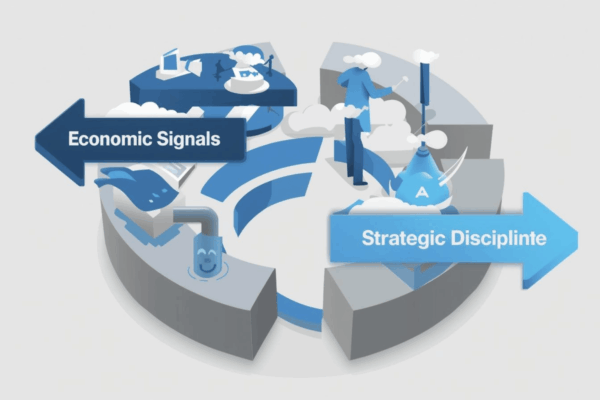
Economic Signals Encourage Strategic Discipline Over Expansion

Economic conditions entering mid-February 2026 suggest a continued emphasis on discipline rather than aggressive expansion. Businesses are responding to stable but measured growth signals by prioritizing efficiency and risk control. In the U.S., steady consumer activity and controlled inflation expectations are reinforcing cautious optimism among enterprise leaders. Rather than accelerating spending, organizations are strengthening core…

Read More