
Winter Business Equipment Financing: Fund HVAC, Refrigeration and Energy-Efficiency Upgrades Without Draining Holiday Cash
Winter can turn a deferred equipment issue into an urgent business expense.
A retailer may discover that an aging HVAC system cannot maintain comfortable temperatures during peak customer traffic. A grocery or food business may face refrigeration problems. A warehouse may need heating improvements. A manufacturer may be operating inefficient motors, compressors or other energy-intensive equipment.
Replacing or upgrading these systems can require significant capital at exactly the time the business is also funding holiday inventory, payroll and year-end operating expenses.
If your business already has an equipment or contractor quotation and knows the approximate project cost, complete the EIN Business Funding Quick Lead Pre-Qualification using the actual equipment requirement and current business profile.
Start With the Equipment That Creates Business Risk
Not every efficiency upgrade is equally urgent.
Prioritize equipment that directly affects the company’s ability to operate.
Examples can include:
- Commercial HVAC
- Refrigeration systems
- Walk-in coolers and freezers
- Boilers and heating systems
- Industrial motors
- Compressors
- Ventilation systems
- Building-control equipment
The financing request should be connected to a real operating need rather than a vague goal of making the business more energy efficient.
Why Winter Can Make Deferred Maintenance Expensive
An older system may continue operating during mild weather but struggle under heavy winter demand.
Breakdowns can create emergency repair costs, lost sales and customer disruption.
For businesses that depend on refrigeration or temperature control, equipment failure can also threaten inventory.
Replacing an asset before failure can sometimes be more predictable than financing an emergency replacement after operations have already been interrupted.
Equipment Financing Can Preserve Working Capital
Paying cash for a large HVAC or refrigeration system can reduce available liquidity.
During the holiday season, that same cash may be needed for inventory, payroll, freight, suppliers and January operating expenses.
Financing a productive long-lived asset can allow the business to preserve cash for shorter-term operating needs.
Prepare the Complete Installed Cost
The equipment price may not be the full project cost.
Installation can require electrical work, plumbing, ductwork, structural changes, controls, permits or removal of old equipment.
Owners should obtain a complete project quotation before deciding how much capital is required.
Energy Savings Should Be Treated Conservatively
Newer equipment may reduce utility consumption, but projected savings should not be treated as guaranteed cash flow.
The business should evaluate the investment based on current repayment capacity first.
Expected energy savings can strengthen the business case, but the financing should not depend entirely on an optimistic projection.
Separate Repairs From Replacement
A smaller repair may be more appropriate when the system still has meaningful useful life.
A complete replacement may make more economic sense when repair costs are recurring, the asset is unreliable or the existing system is no longer suitable for the business.
Financing should support the solution the business actually needs.
Refrigeration Deserves Special Attention During Holiday Demand
Food retailers, restaurants and specialty stores may carry unusually high inventory during the holiday period.
A refrigeration failure during peak season can therefore create a larger financial loss than the same failure during a quiet period.
Businesses should consider both the equipment cost and the value of inventory the system protects.
What About Solar or Other Energy Projects?
Some businesses may also consider solar, energy-storage or broader efficiency projects.
These projects can involve different economics, incentives, installation timelines and financing structures.
Owners should separate a strategic long-term energy project from an urgent operational equipment replacement.
Do Not Use Short-Term Capital for a Long-Lived Asset Without Comparing Options
An HVAC or refrigeration system may produce value for many years.
Using an extremely short repayment structure for a long-lived asset can create unnecessary cash-flow pressure.
Compare financing term, payment structure and total cost with the expected useful life of the equipment.
Existing Debt Still Matters
A company may already be financing vehicles, machinery or previous improvements.
Prepare those obligations before seeking additional equipment financing.
The new payment should fit alongside normal operating expenses and existing debt.
What Information Should the Business Prepare?
- Equipment or contractor quotation
- Installation cost
- Asset description
- Expected useful life
- Business formation date
- EIN
- Annual revenue
- Recent deposits
- Current cash flow
- Current credit profile
- Existing business debt
- Cash contribution available
Holiday Cash and Equipment Capital Serve Different Purposes
Cash used for payroll or inventory may return to the business quickly through normal sales.
Cash invested in a major HVAC or refrigeration system becomes tied up in an asset that produces value over many years.
That difference is one reason equipment financing can be worth evaluating during a period when operating liquidity is especially valuable.
January Operating Flexibility Matters
A company should not finish the holiday season with new equipment but no available cash.
January may bring slower sales while rent, payroll and other obligations continue.
A financing structure that preserves an appropriate operating reserve can help the business enter the new year with greater flexibility.
FAQs
Can HVAC or refrigeration equipment be financed for a business?
Potentially. Eligibility depends on the equipment, provider, business profile, credit, revenue, cash flow and other underwriting factors.
Should installation costs be included in the equipment budget?
Yes. The complete project may include installation, electrical work, controls, removal and other expenses beyond the equipment itself.
Why finance equipment instead of paying cash?
Financing may help preserve operating liquidity, although the business should compare the financing cost with the value of keeping cash available.
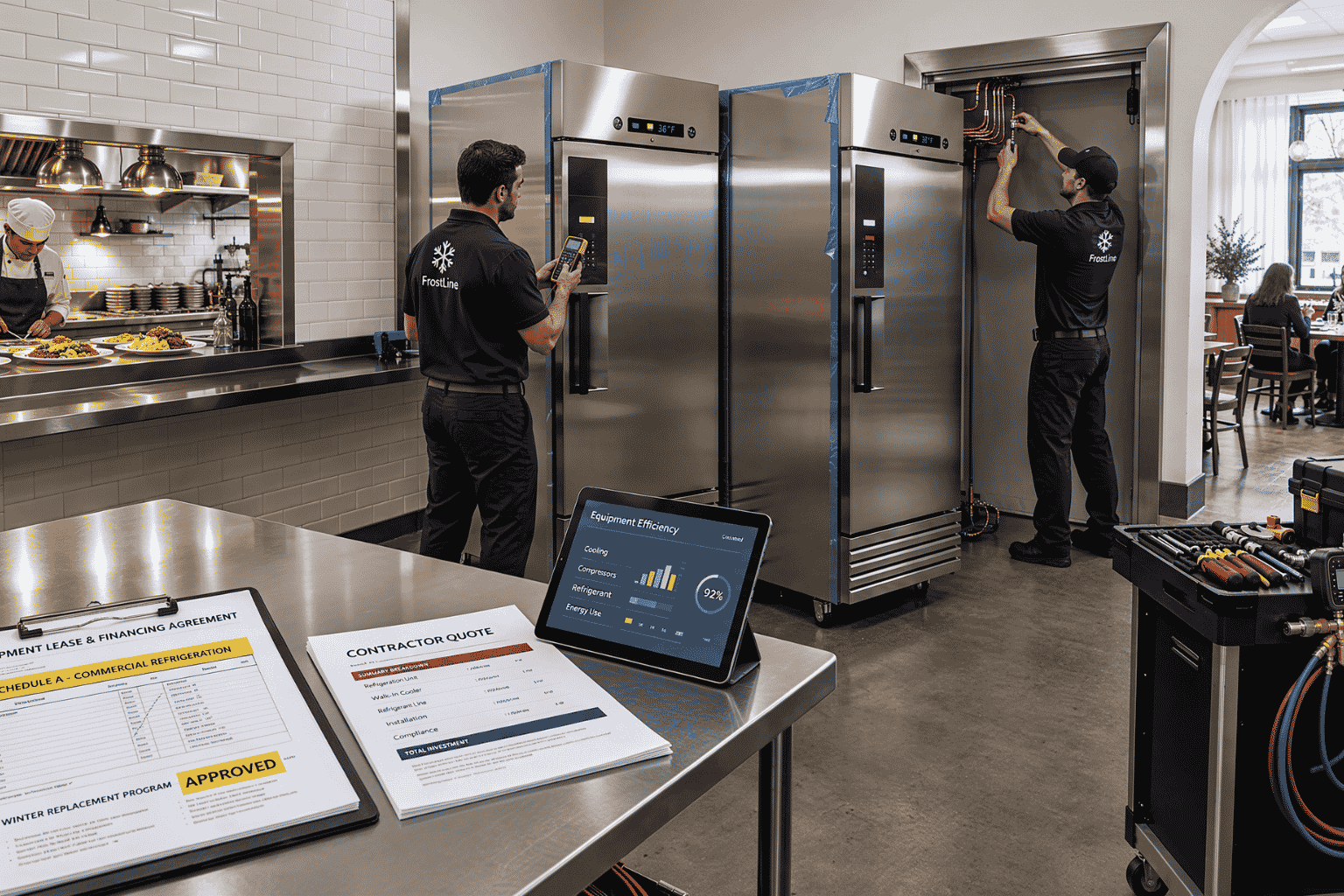 Financing long-lived HVAC, refrigeration and efficiency equipment can help businesses preserve holiday and January operating cash.