
Electric Delivery Van Financing With EIN: Separate the Vehicle, Charger and Working Capital Before You Apply
Holiday delivery demand can push a growing business to add another commercial vehicle sooner than expected.
For companies considering an electric delivery van, the purchase decision can involve more than the vehicle’s sticker price.
The business may also need charging equipment, electrical installation, insurance, shelving or vehicle upfitting, route technology and enough working capital to support additional drivers and operating expenses.
Treating all of those costs as one vague “vehicle purchase” can make the financing request harder to evaluate.
If your company has identified an electric or other commercial vehicle and has a defined financing requirement, complete the EIN Business Funding Quick Lead Pre-Qualification using the actual vehicle cost and business information.
Start With the Vehicle Itself
Know the make, model, purchase price and whether the vehicle is new or used.
Commercial vehicle financing can depend on the borrower, vehicle, intended business use and financing provider.
An EIN identifies the company, but it does not eliminate normal underwriting.
“With EIN” Does Not Automatically Mean EIN-Only
Business owners searching for electric delivery van financing with EIN or a business auto loan with EIN should understand that providers may evaluate additional factors.
Credit, operating history, revenue, existing debt and repayment ability can all matter.
The financing decision should therefore be based on the complete business profile.
Charging Equipment Is a Separate Asset
An electric commercial vehicle may require charging infrastructure at the company’s location.
The charger itself can represent one cost, while electrical upgrades and installation can create additional expenses.
Depending on the site, the business may need professional electrical work or other facility modifications.
Obtain actual quotations rather than estimating the complete charging cost from the equipment price alone.
Do Not Forget Vehicle Upfitting
A delivery van may require shelving, racks, partitions, refrigeration, graphics, security equipment or specialized storage.
Those additions can materially increase the project’s cost.
Separate factory vehicle cost from business-specific upfitting so the funding requirement reflects the real vehicle that will enter service.
Route Suitability Matters
An electric van can be appropriate for predictable routes where the business understands daily mileage and charging availability.
A company with highly variable long-distance routes may need a different operating analysis.
The vehicle should fit the actual delivery pattern rather than simply follow a technology trend.
Holiday Demand Should Not Be the Only Reason to Buy
Peak-season orders can make additional delivery capacity look immediately necessary.
But the financing obligation can continue long after holiday volumes decline.
Evaluate whether the business will still need the vehicle during normal months.
Compare Purchase With Existing Capacity
Before financing another van, determine whether the business can temporarily increase utilization of current vehicles, use third-party delivery partners or reorganize routes.
If the additional vehicle will remain productive after the holiday rush, ownership may make more strategic sense.
Vehicle Financing and Working Capital Solve Different Problems
The van is a long-lived asset.
Driver payroll, temporary labor and holiday inventory are shorter-term operating costs.
Using one financing structure for every expense may create a mismatch.
Calculate the vehicle requirement separately from the cash needed to operate the expanded delivery capacity.
Insurance Should Be Included in the Expansion Budget
Commercial vehicle insurance can increase when an additional vehicle and driver are added.
Obtain an insurance estimate before committing to the purchase.
The monthly economics should include more than the vehicle payment.
Technology Can Be Another Cost
A growing delivery operation may use route planning, dispatch, telematics, scanning or customer-notification systems.
These tools can improve utilization, but software subscriptions and hardware should be included in the operating budget.
Estimate the Revenue Supported by the Vehicle
The vehicle does not necessarily generate revenue by itself.
Its value may come from serving more customers, completing more routes, reducing outsourced delivery costs or supporting expansion into another service area.
The owner should be able to explain why the additional capacity is economically useful.
Existing Vehicle Debt Matters
A business expanding its fleet may already have loans or leases on other vehicles.
Prepare those balances and monthly payments before seeking another facility.
The company needs enough cash flow to support the full fleet, not simply the newest vehicle.
New Versus Used Can Change the Financing Discussion
Used electric commercial vehicles may offer lower purchase prices, but age, condition, battery health and remaining useful life deserve careful evaluation.
A lower purchase price does not automatically mean a better business investment.
Preserve Operating Cash
Paying cash for the vehicle and charger can significantly reduce liquidity.
During the holiday season, the company may still need money for inventory, payroll, suppliers and January expenses.
That is one reason vehicle and equipment financing can be worth comparing with an outright cash purchase.
What Should the Business Calculate?
- Vehicle purchase price
- Down payment or cash contribution
- Charging equipment
- Electrical installation
- Vehicle upfitting
- Insurance
- Additional driver cost
- Route technology
- Existing vehicle debt
- Working capital required
Build the Financing Request Around the Complete Mobility Project
The best financing decision begins with the real operating requirement.
If the company needs an electric van, charger and additional operating capital, identify those components separately instead of presenting one unexplained number.
That clarity can help the owner compare appropriate financing structures and determine whether the expansion remains affordable when holiday demand returns to normal.
FAQs
Can a business finance an electric delivery van with an EIN?
An EIN is part of the business profile, but financing providers may also consider credit, business history, revenue, debt and the vehicle itself.
Can charging equipment be financed with the vehicle?
Possibly, depending on the financing structure and provider. Businesses should still calculate the vehicle, charger and installation separately.
Should holiday delivery demand justify buying another vehicle?
Only if the vehicle is expected to remain economically useful beyond the seasonal peak and the business can support the financing obligation.
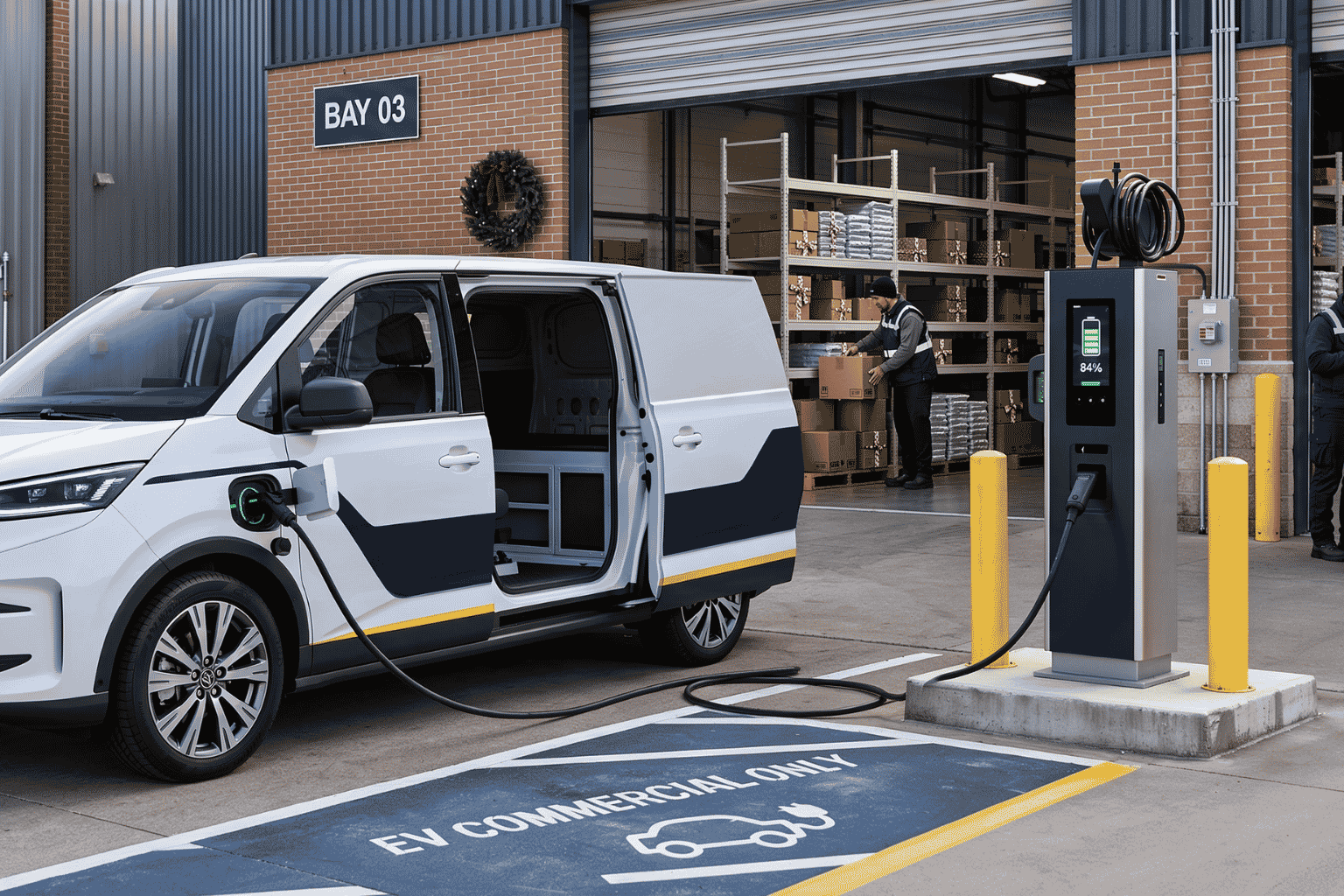 An electric delivery expansion can include vehicle financing, charging equipment, installation, upfitting and additional operating capital.