
Startup Equipment Financing With EIN: Can a 6–12 Month Business Finance Its First Major Asset?
A startup’s first major equipment purchase can mark the point where the business begins moving from experimentation into established operations. The asset might be a machine, commercial vehicle, production system, medical device, professional equipment or another tool needed to produce revenue.
The funding challenge is that a six- or twelve-month-old company does not yet have the financial history of a mature business. That does not automatically mean equipment financing is unavailable, but the founder needs to present the strongest real operating information the business has developed so far.
If your startup is already generating revenue and you have selected the equipment you need, complete the EIN Business Funding Quick Lead Pre-Qualification using the actual equipment quote, business age, revenue and current credit profile.
What Changes Once the Startup Has 6–12 Months of Revenue?
A pre-revenue company relies heavily on projections. Once real customers are paying the business, a funding provider can evaluate actual bank deposits, operating history and revenue.
That does not create automatic eligibility, but it gives the funding request more evidence than a business plan alone.
Why the First Major Asset Can Be Financeable in a Different Way
An equipment request is tied to a specific business asset.
The provider can understand what is being purchased, how much it costs and how the company expects to use it.
That can be more concrete than a startup requesting general growth capital with no specific purchase attached.
Does the Startup Need an EIN?
An EIN is part of the legal and tax identity of many businesses and can be relevant in financing applications.
But the EIN itself does not demonstrate repayment ability. The provider may still evaluate the founder’s credit, business revenue, operating history, bank deposits and other factors.
Does “With EIN” Mean the Financing Is EIN-Only?
No. Business owners often search using phrases such as equipment financing with EIN or business funding with EIN, but those search terms should not be confused with underwriting requirements.
A provider may still require owner information or personal credit depending on the financing structure.
What if the Founder Has Around 600–680 Credit?
The broader alternative-financing market can use credit ranges around 600 to 680+ for some products, together with approximately six to twelve months in business, real revenue and consistent deposits.
Equipment-financing providers can use their own underwriting standards, so those figures should be treated as a general funding-profile reference rather than an equipment-loan guarantee.
How Much Revenue Does the Startup Need?
There is no single universal revenue threshold for every equipment-financing provider.
What matters is whether the company has enough operating activity and cash flow to support the proposed repayment.
A startup generating $10,000 a month in consistent revenue may present differently from a company that has earned the same total amount through one isolated project.
Recent Deposits Can Tell an Important Story
For a young company, recent bank activity can be particularly important because there may be limited historical financial information.
Consistent business deposits help demonstrate that the company has moved beyond registration and is actually operating.
Choose the Asset Before Asking for Financing
Have an actual quotation whenever possible.
- Equipment description
- Purchase price
- Vendor
- New or used condition
- Delivery cost
- Installation requirements
- Expected business use
A defined purchase gives the financing request a clear purpose.
Why the Asset Should Produce Business Value
A startup should be able to explain why the equipment is necessary.
Will it increase capacity? Allow the company to perform work currently outsourced? Add a service customers are already requesting? Replace an unreliable asset?
The equipment should support a real operating need rather than be purchased simply because financing may be available.
Do Not Finance an Asset the Startup Cannot Yet Support
Projected revenue from the new asset can be part of the business case, but it should not be treated as guaranteed.
The founder needs to consider whether current business cash flow can handle the payment if expected growth takes longer than planned.
Separate Equipment From Working Capital
The first major asset may also create new operating expenses.
A startup buying machinery may need raw materials. A new vehicle may require insurance and fuel. New production equipment may require payroll or inventory.
Those expenses should be calculated separately from the physical asset.
What Existing Obligations Should Be Disclosed?
Young companies sometimes rely on business credit cards or other early financing before seeking equipment capital.
List current balances and obligations so the new financing request reflects the complete repayment picture.
What Should a 6–12 Month Startup Prepare?
- Business formation date
- EIN and legal entity information
- Equipment quotation
- Recent monthly revenue
- Business bank deposits
- Current personal credit profile
- Existing business debt
- Requested financing amount
- Installation expenses
- Separate working-capital requirement, if any
Revenue Changes the Startup Funding Conversation
A startup with real customers, deposits and a defined equipment purchase can present a fundamentally different request from a company that is still entirely pre-revenue.
The goal is not to pretend the young business has the history of an established company. It is to present the real operating progress accurately and match the financing request to an asset the business is ready to use.
FAQs
Can a 6–12 month startup seek equipment financing?
Potentially. Requirements vary by provider, and the review may include business age, revenue, deposits, credit, existing debt and the equipment being purchased.
Does an EIN alone qualify a startup for equipment financing?
No. The EIN identifies the business, but financing providers may also evaluate the founder and the company’s actual operating profile.
Should a startup include working capital in the equipment purchase price?
Not automatically. The physical asset and operating expenses such as inventory, payroll, insurance or fuel should be identified separately.
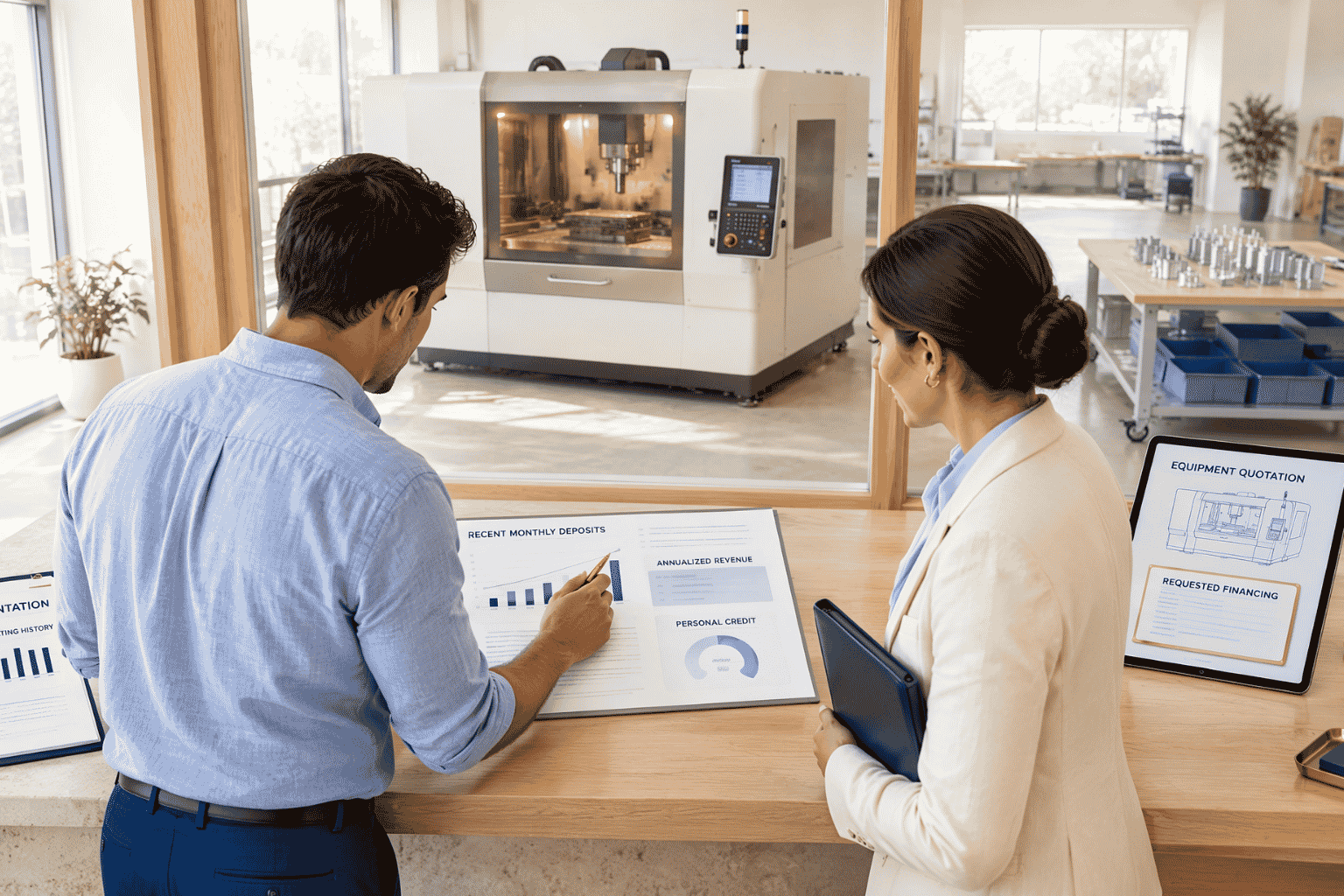 Real revenue and bank deposits can give a young business more operating information to present when financing its first major asset.