Won a Large Customer Order? Calculate the Cash-Flow Gap Before You Fund It
A large customer order can be good news—and still create a cash-flow problem.
The business may need to buy inventory, pay suppliers, schedule labor, arrange freight and cover operating expenses before the customer pays.
That timing difference can create a temporary funding need.
Before borrowing, calculate the actual cash-flow gap created by the order.
A Sale Is Not the Same as Cash in the Bank
A signed order, purchase order or customer commitment may increase expected revenue.
But the business may still have to spend money first.
Depending on the business, those upfront costs can include:
- Raw materials
- Finished inventory
- Supplier deposits
- Manufacturing costs
- Temporary labor
- Overtime
- Packaging
- Freight and delivery
- Insurance
- Other operating expenses
The customer payment may arrive only after production, delivery, acceptance or an agreed invoice period.
Map the Order From Start to Payment
Start with a simple timeline.
When does the business have to pay suppliers?
When does inventory arrive?
When will the order be completed?
When will the customer be invoiced?
And when is payment actually expected?
The longer the distance between the first cash outflow and final customer payment, the larger the potential working-capital requirement can become.
Calculate the Direct Cost of the Order
Estimate the costs directly connected to fulfilling the customer order.
For example:
- Inventory or materials
- Production costs
- Labor
- Packaging
- Shipping
- Subcontractors
- Other order-specific expenses
Do not assume the selling price tells you how much capital is required.
A $200,000 order does not necessarily require $200,000 of financing.
The relevant number is the amount of cash the business must deploy before it is paid.
Do Not Forget Normal Business Expenses
The new order does not stop the rest of the business.
While fulfilling the order, the company may still need to pay:
- Regular payroll
- Rent
- Utilities
- Existing suppliers
- Insurance
- Taxes
- Loan payments
- Other recurring operating costs
Funding only the direct order cost can leave the business short elsewhere.
Account for Customer Payment Terms
Payment timing can materially affect the financing need.
A customer that pays a deposit before production creates a different cash-flow profile from one that pays after delivery.
Likewise, an invoice payable several weeks after delivery may extend the period during which the business has to finance the order itself.
Understand the actual contract and payment terms before estimating the gap.
Ask Whether Suppliers Offer Terms
The business may not have to pay every supplier immediately.
Some suppliers may provide payment terms, deposits or staged payments.
That can reduce the amount of external financing required.
Before borrowing, understand:
- What must be paid upfront
- What can be paid later
- Whether deposits are required
- Whether volume changes supplier terms
Build in a Reasonable Cushion
Orders do not always proceed exactly as expected.
Materials can cost more.
Freight can change.
Production can take longer.
A customer can delay acceptance or payment.
That does not mean a business should automatically borrow far more than it needs.
But a plan with no room for normal execution risk may be too tight.
Consider the Right Type of Financing
The appropriate funding solution depends on the timing and nature of the need.
Potential options may include working-capital financing, a business line of credit, short-term financing, invoice-related financing after eligible receivables exist, or another structure depending on the business and transaction.
Not every product fits every situation.
Eligibility, costs and repayment structures vary significantly.
A Line of Credit May Fit Differently Than a Term Loan
If the business repeatedly experiences timing gaps between supplier payments and customer collections, a revolving business line of credit may be worth exploring.
If the financing need is tied to a specific larger event, another structure may be more appropriate.
The financing should match the actual business need rather than simply choosing the first product available.
Do Not Assume the Purchase Order Guarantees Financing
A customer order can help explain why the business needs capital.
But it does not automatically qualify the company for financing.
A lender or funding provider may still evaluate factors such as:
- Business revenue
- Cash flow
- Time in business
- Credit profile
- Existing debt
- Customer quality
- Use of funds
- Repayment ability
Requirements vary by financing source.
Understand the Customer Risk Too
A large order can create concentration risk if the business commits significant cash to one customer.
Before taking on financing, ask:
- Is the order confirmed?
- Are the payment terms documented?
- Can the customer cancel?
- What happens if quantities change?
- Is acceptance required before payment?
- How reliable is the expected payment timeline?
The strength of the order matters because the business may be borrowing against the expectation that the customer will ultimately pay.
Calculate the Peak Cash Need
One useful way to think about the financing requirement is to identify the point where the business will have the most cash committed before customer collections arrive.
That is often more useful than simply adding every cost together.
The business may receive deposits, supplier terms or partial customer payments that reduce the peak requirement.
Know How the Financing Will Be Repaid
Before accepting financing, understand how repayment fits the transaction.
Will the customer payment arrive before major financing payments become due?
Can the business still support the obligation if payment takes longer than expected?
What happens if the order produces a lower margin than planned?
A financing solution should not turn a profitable order into a cash-flow problem.
Growth Can Create a Funding Need
Businesses sometimes experience financing pressure precisely because sales are increasing.
More orders can require more inventory, labor and supplier payments before the resulting revenue is collected.
That is why growth and cash flow are not the same thing.
A growing business can still need working capital.
Start With the Gap, Not the Loan Amount
Before asking for a specific amount of financing, calculate:
- Upfront order costs
- Ongoing operating expenses
- Supplier payment timing
- Customer payment timing
- Available business cash
- Existing available credit
- A reasonable execution cushion
The difference can help define the actual funding need.
EIN Business Funding provides a starting point for U.S. business owners exploring funding solutions for working capital, inventory, orders and other business needs.
Funding availability, eligibility, limits, costs, collateral, personal guarantees and repayment terms vary by lender, product and applicant circumstances. A customer order, inquiry, prequalification or application does not guarantee financing.
Frequently Asked Questions
Can a large customer order create a working-capital need?
Yes. A business may need to pay for inventory, suppliers, labor, freight and other expenses before it receives payment from the customer, creating a temporary cash-flow gap.
How much funding does a business need to fulfill a large order?
The funding need depends on the order’s direct costs, normal operating expenses, available cash, supplier terms, customer payment timing and other factors. The order value itself is not necessarily the amount that needs to be financed.
Can a purchase order guarantee business financing?
No. A purchase order can help explain the use of funds, but financing eligibility still depends on the lender or provider, business condition, cash flow, credit, repayment ability and other underwriting factors.
What type of financing can help with a large order?
Potential solutions may include working-capital financing, a business line of credit, certain short-term products or invoice-related financing after eligible receivables exist. Availability and suitability vary by business and provider.
Take the Next Step
Subscribe on YouTube:
https://www.youtube.com/@enterpriseindustrynetwork
Explore EIN Business Funding:
https://www.einbf.com/get-funded/
Exit. Acquire. Invest.
Explore Enterprise Industry Network
https://enterpriseindustrynetwork.com/
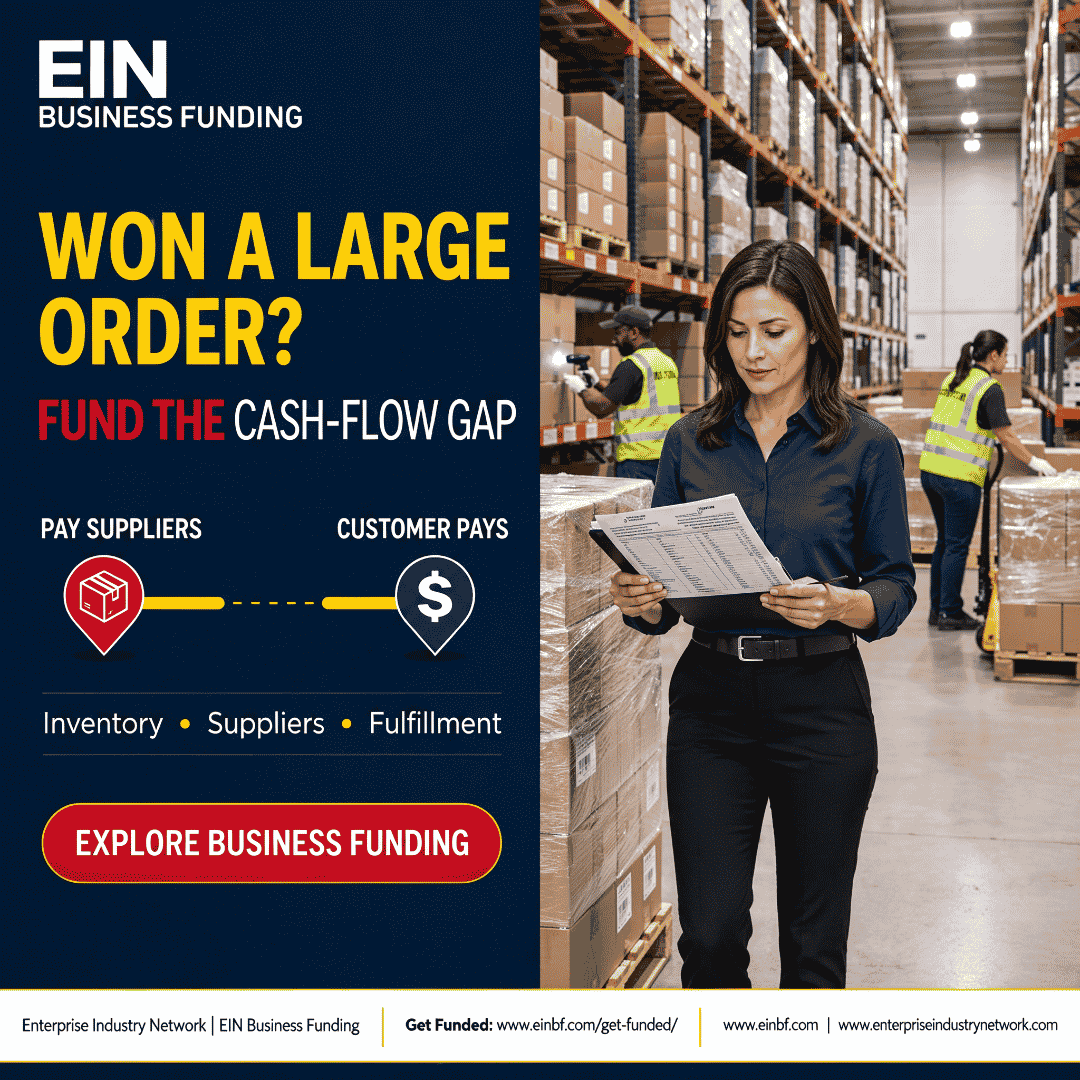 Large customer orders can require inventory, labor and supplier payments before the customer pays, creating a temporary business funding need.