
Business Sale Under Contract? Track the Closing Conditions Before You Assume the Deal Is Done
Your business sale is under contract.
That is an important milestone.
But it does not necessarily mean the transaction is finished.
Between signing a purchase agreement and actually closing, buyers and sellers may still need to satisfy a number of conditions.
Those conditions can determine whether the transaction reaches the finish line.
Signing and Closing Are Not Always the Same Event
Some transactions sign and close at the same time.
Others have a period between signing the definitive agreement and completing the ownership transfer.
During that period, certain obligations or conditions may still need to be completed.
The exact structure depends on the transaction.
Understand the Closing Conditions
A purchase agreement may identify conditions that have to be satisfied before closing.
Depending on the deal, those could involve:
- Buyer financing
- Landlord or lease approval
- Third-party contract consents
- Licenses or permits
- Final legal documents
- Required corporate approvals
- Transfer of certain assets
- Completion of agreed due diligence matters
- Other transaction-specific requirements
Not every transaction includes every condition.
Buyer Financing Can Remain a Major Closing Item
If the buyer is using outside financing, the funding process may continue even after a purchase agreement is signed.
The lender may still require:
- Additional documents
- Updated financial information
- Appraisals or valuations where applicable
- Insurance
- Collateral documentation
- Final underwriting approval
- Other lender conditions
A signed business purchase agreement does not automatically mean the buyer’s financing is complete.
Lease Approval Can Be Critical
For businesses operating from leased premises, the lease can become one of the most important transaction items.
The buyer may need:
- A lease assignment
- A new lease
- Landlord consent
- Changes to guarantees or deposits
- Other occupancy-related approvals
If the business depends on its location, delays in lease approval can affect the closing timeline.
Third-Party Contracts May Require Consent
Some important contracts cannot simply be transferred automatically.
Depending on the agreement, consent may be required from:
- Customers
- Vendors
- Franchisors
- Licensors
- Equipment lessors
- Other counterparties
Buyers and sellers should identify these requirements early rather than discovering them immediately before closing.
Licenses and Permits Need Attention
Certain businesses rely on licenses, permits or regulatory approvals.
Those rights may not always transfer automatically with ownership.
The buyer may need to obtain new approvals or complete required filings before operating the business.
The parties should understand those requirements in advance.
Final Documents Still Matter
The purchase agreement is usually not the only document involved in a closing.
Depending on the transaction, additional documents may address:
- Asset transfers
- Bills of sale
- Assignments
- Promissory notes
- Security agreements
- Employment or consulting arrangements
- Non-compete or restrictive covenants where legally permitted
- Closing statements
- Other transaction-specific matters
Qualified legal counsel should prepare or review the documents appropriate to the transaction.
Track Who Is Responsible for Each Item
A closing condition is easier to manage when responsibility is clear.
For each open item, identify:
- What needs to be completed
- Who is responsible
- What documentation is required
- Whether a third party is involved
- The target completion date
- What happens if the item is delayed
A simple closing checklist can prevent important tasks from being overlooked.
Watch the Deadlines
Transaction agreements may include important dates.
Those may relate to:
- Financing
- Due diligence
- Consent requests
- Document delivery
- Closing
- Other negotiated milestones
Missing a deadline can create legal or negotiating consequences depending on the agreement.
Do Not Treat the Closing Date as Automatic
A target closing date is important.
But it may depend on whether the outstanding conditions are actually completed.
If several third parties are involved, one unresolved item can delay the transaction.
That is why both buyer and seller should monitor the closing process actively.
Keep Operating the Business Until Closing
A signed deal should not cause the seller to stop running the company properly.
The business still needs to serve customers, manage employees, pay vendors and maintain normal operations until ownership legally transfers.
Unexpected deterioration in performance before closing can create additional issues.
Be Careful With Major Changes
Transaction agreements may limit certain actions before closing.
Depending on the deal, the seller may need to avoid unusual decisions without buyer consent.
Examples could include major asset purchases, new debt, unusual distributions, significant contract changes or other material actions.
The specific restrictions depend on the agreement.
Confirm the Funds Flow
Before closing, the parties should understand how money will move.
That may include:
- Purchase price
- Buyer deposits
- Lender proceeds
- Seller financing
- Payoffs
- Escrow amounts
- Professional fees
- Other closing adjustments
A closing statement or settlement schedule can help the parties understand the final financial mechanics.
Resolve Open Issues Before the Closing Table
The closing day should not be the first time major unresolved issues are discussed.
If a consent is missing, a financing condition remains open or a material document is incomplete, address it as early as possible.
Leaving substantial issues until the last minute can increase the risk of delay.
Closing Is a Process, Not Just a Date
It can be useful to think of closing as a coordinated process.
Legal counsel, accountants, lenders, landlords, brokers, buyers, sellers and other parties may all have responsibilities.
Successful coordination requires communication and clear tracking.
Do Not Announce the Sale Too Early
Until the transaction has actually closed, confidentiality may still matter.
A premature announcement can create unnecessary uncertainty with employees, customers, vendors or other stakeholders.
Communication should follow the transaction plan and advice of the professionals involved.
Know What Happens if a Condition Cannot Be Satisfied
The purchase agreement should address the parties’ rights and obligations if certain conditions are not met.
The outcome may depend on:
- The language of the agreement
- Which condition failed
- Which party was responsible
- Whether extensions are available
- Whether termination rights exist
- Other negotiated provisions
These are legal questions and should be reviewed with qualified counsel.
The Deal Is Done When the Closing Is Done
An accepted offer is progress.
A signed LOI is progress.
A completed due-diligence phase is progress.
A signed purchase agreement is significant progress.
But the transaction is not complete until the required conditions are satisfied and the closing actually occurs.
EIN Business Brokers provides a starting point for business owners and buyers navigating the business sale and acquisition process.
Closing conditions, financing, consents, legal requirements, transaction documents, timing and outcomes vary by business and transaction. Buyers and sellers should obtain appropriate legal, accounting, tax and financing advice. A signed LOI, agreement or scheduled closing date does not guarantee a completed transaction.
Frequently Asked Questions
What are closing conditions in a business sale?
Closing conditions are requirements that may need to be completed before ownership transfers. They can include financing, third-party consents, lease approvals, legal documents and other transaction-specific items.
Can a business sale fall apart after the purchase agreement is signed?
Potentially. The outcome depends on the agreement and whether required conditions are satisfied. Financing problems, missing consents or other unresolved issues can affect closing.
Why can landlord approval matter in a business acquisition?
If the business operates from leased premises, the buyer may need a lease assignment, new lease or landlord consent before continuing operations at the location.
Should a seller stop operating normally after signing the agreement?
Generally, the business should continue operating appropriately until closing, subject to any specific restrictions or obligations contained in the transaction documents.
Take the Next Step
Subscribe on YouTube:
https://www.youtube.com/@enterpriseindustrynetwork
Get Started with EIN Business Brokers:
https://www.einbb.com/get-started/
Exit. Acquire. Invest.
Explore Enterprise Industry Network
https://enterpriseindustrynetwork.com/
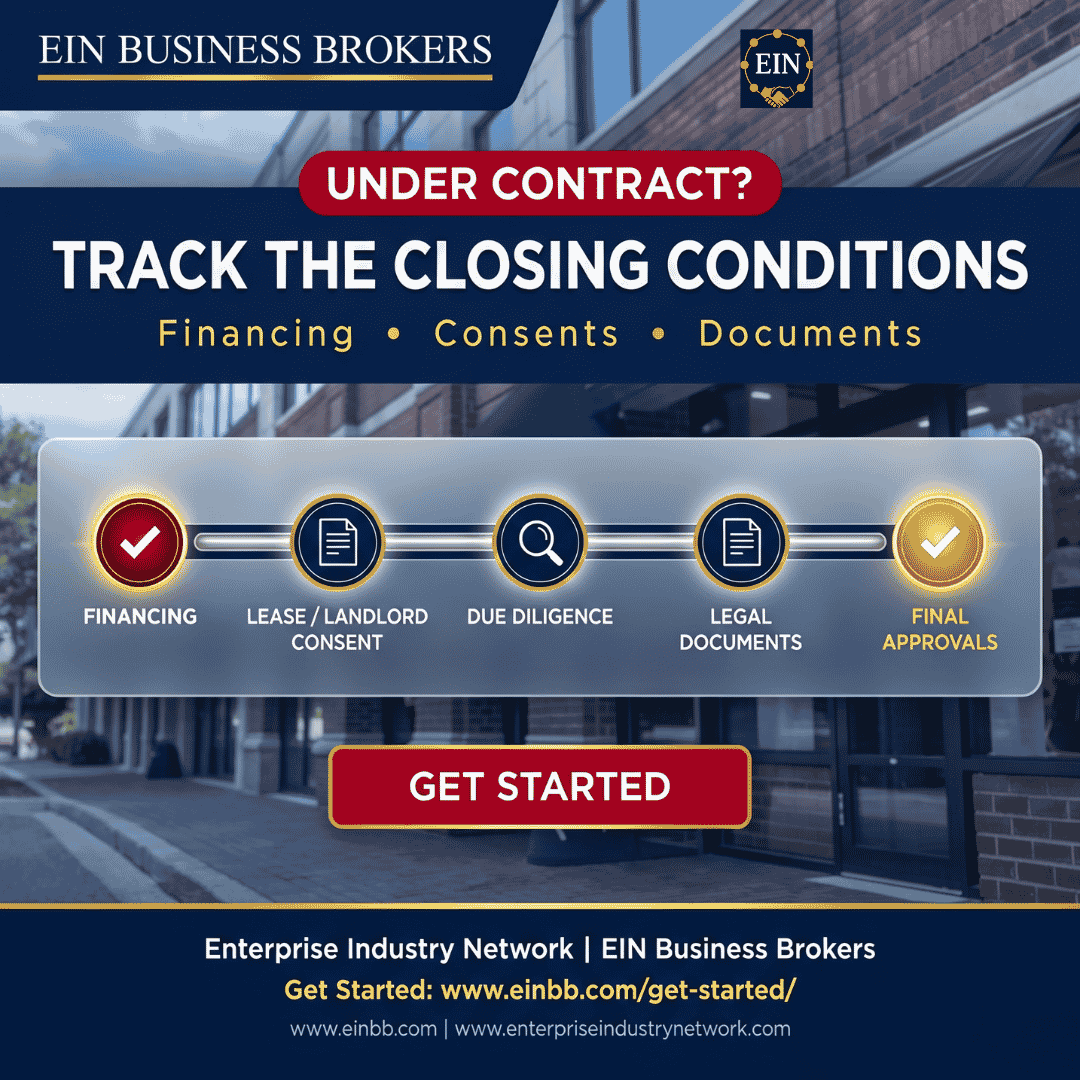 A signed agreement may still require financing, consents, lease approvals and final documents before a business sale can close.