
Commercial Solar Equipment Financing With EIN: What Businesses Should Prepare Before Installing Solar
A commercial solar project can be both an energy decision and a major capital expenditure. The financing requirement often extends beyond the price of the solar panels themselves.
Inverters, mounting systems, electrical work, engineering, installation and optional battery storage can materially increase the complete project cost.
Can Commercial Solar Be Financed as Business Equipment?
Potentially. Physical solar equipment can represent a long-term business asset, although the appropriate financing structure depends on the project, borrower and provider.
The first step is to separate the equipment from the other costs required to make the system operational.
Start With a Complete Contractor Quote
The business should know the complete installed project cost rather than only the panel price.
- Solar panels
- Inverters
- Racking and mounting
- Electrical work
- Engineering
- Installation
- Permitting-related project costs where applicable
- Battery storage if included
A detailed quote gives the financing request a specific purpose and amount.
Does “Solar Financing With EIN” Mean EIN-Only Financing?
No. The EIN identifies the company, but a provider can still evaluate the broader business and borrower profile.
Credit, time in business, annual revenue, cash flow, existing debt and the project itself may be relevant.
Why Cash Flow Matters
Even when the business expects energy savings, the financing payment begins according to the loan or financing agreement.
The company should be able to support that payment based on a reasonable financial profile rather than assuming projected savings will automatically cover every obligation.
Should the Company Pay Cash Instead?
Paying cash avoids financing cost but reduces liquidity.
If a solar installation consumes a large portion of available cash, the business may have less flexibility for payroll, inventory, expansion or unexpected expenses.
Financing may be worth evaluating when preserving operating capital has meaningful value to the business.
Separate Solar Equipment From Battery Storage
If the project includes battery storage, identify that portion of the cost separately.
The physical characteristics, useful life and economics of solar generation and battery equipment are not identical.
A clear project budget helps the funding provider understand exactly what is being financed.
What if the Building Is Leased?
A tenant considering rooftop solar should understand whether the lease and property owner permit the installation and what happens to the equipment if the business relocates.
Those are project and contractual issues that should be addressed before financing a long-lived asset attached to property the company does not own.
What if the Business Owns the Property?
Property ownership may change the broader project economics and financing discussion, especially when solar improvements are part of a larger real-estate or facility investment.
The appropriate financing category depends on the complete project rather than simply on the presence of solar panels.
How Should a Business Evaluate Expected Savings?
Use reasonable energy-consumption assumptions and the contractor’s project information, but avoid treating every projected saving as guaranteed.
Weather, utility rates, operating hours, system performance and future business energy usage can affect actual economics.
Do Not Ignore Existing Debt
Prepare current business loans, lines of credit and other obligations.
A solar project may reduce operating costs over time, but it still adds another financing payment if debt is used to fund the installation.
What Should Be Ready Before Funding Review?
- Complete solar project quotation
- Equipment and installation breakdown
- Battery cost if applicable
- Business formation date
- EIN and entity information
- Annual revenue
- Current cash flow
- Current credit profile
- Existing business debt
- Requested financing amount
Finance the Project That Actually Exists
A general plan to install solar someday is different from a business that has selected a contractor, received a quote and knows the amount that must be financed.
A defined project lets the funding discussion focus on the actual asset and the actual borrower profile.
If your business has a commercial solar quotation and is ready to evaluate financing, complete the EIN Business Funding Quick Lead Pre-Qualification with the project cost, business revenue and current credit information.
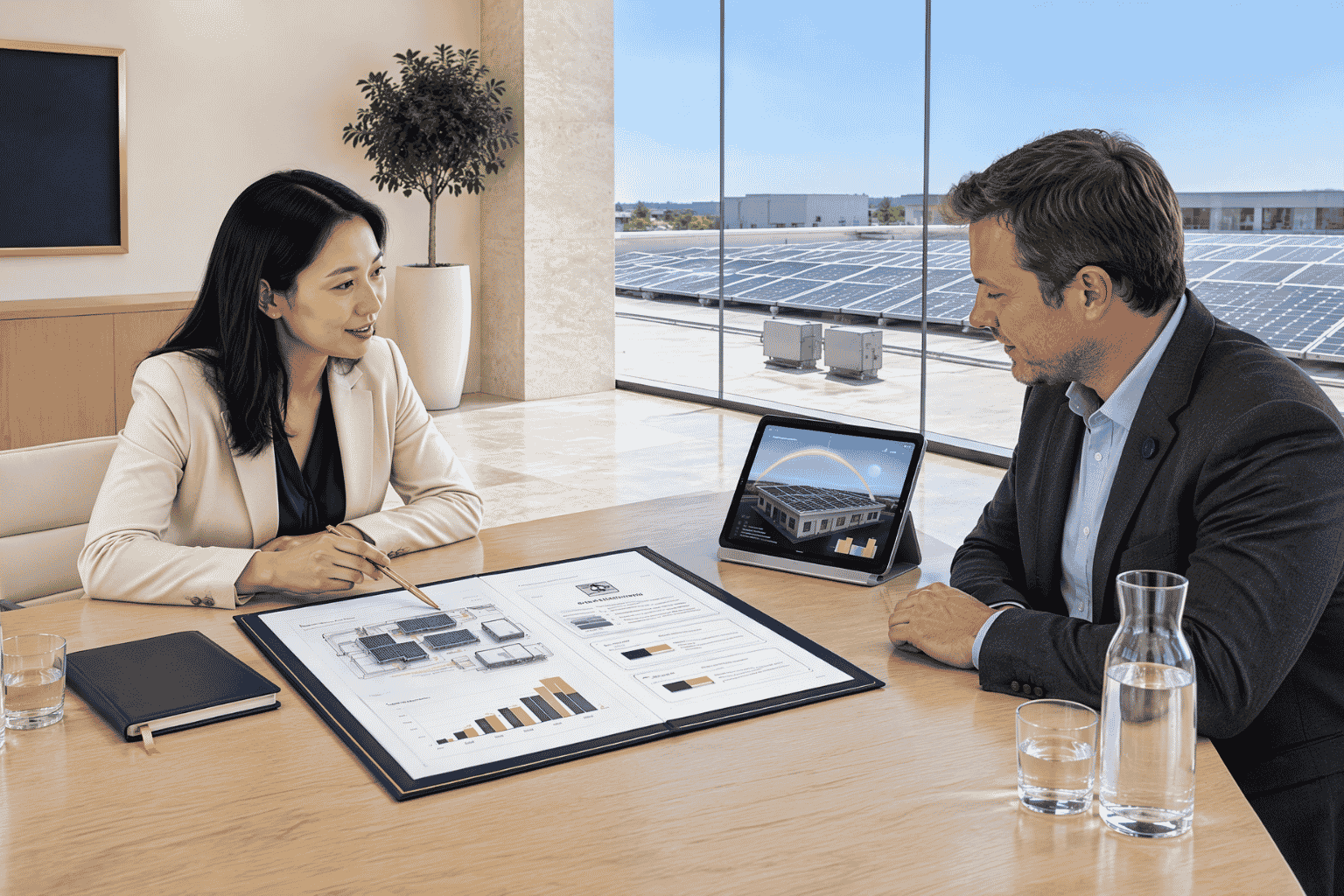 A commercial solar financing request should include the complete installed project cost—not only the price of the panels.