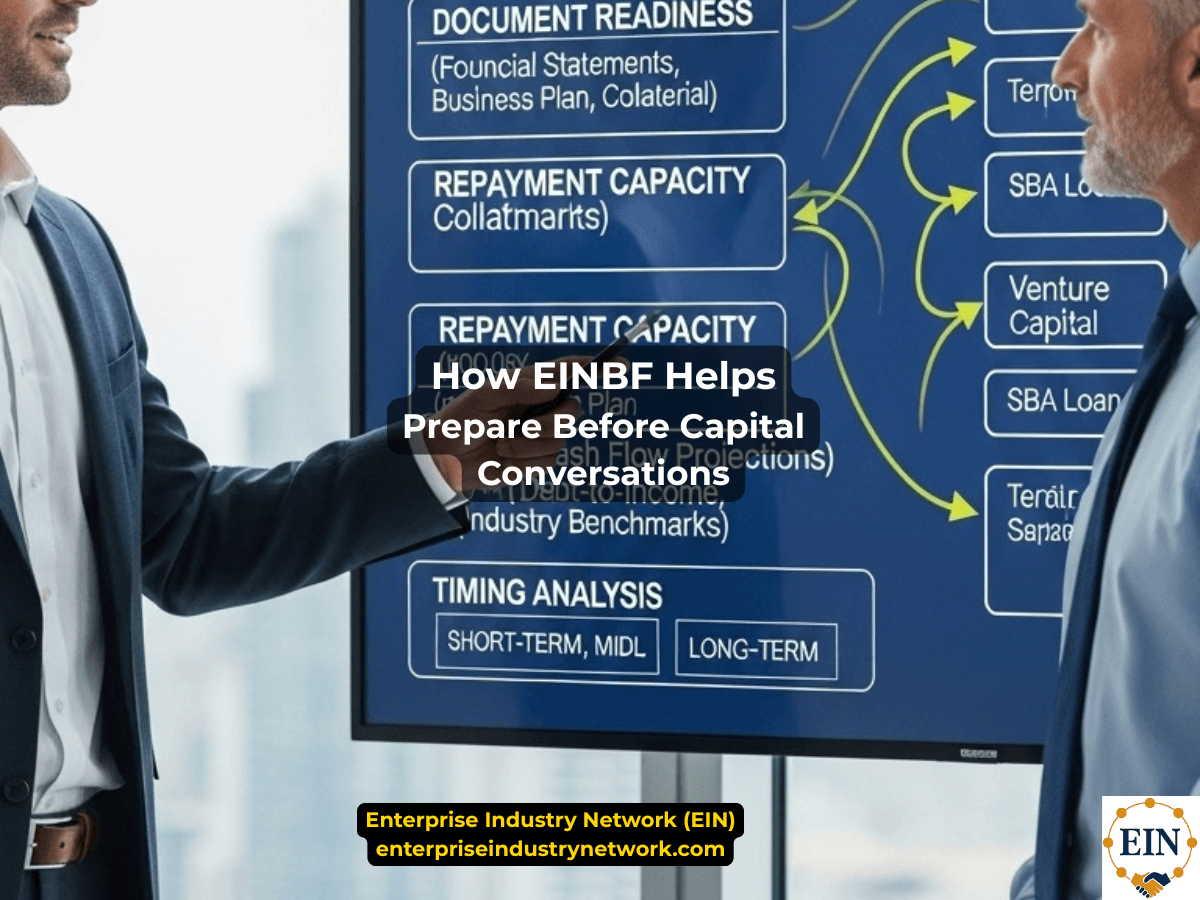
How to Finance a Business Acquisition: Funding Options for Buying an Existing Business
How do you finance the purchase of an existing business? Business acquisition financing can involve several sources of capital, including buyer equity, bank financing, SBA-style financing, seller financing, investor or partner capital, asset-based financing, and working capital for the business after closing.
The right acquisition funding structure depends on the purchase price, buyer contribution, business cash flow, repayment capacity, collateral, seller terms, transaction structure, and the amount of liquidity the company may need after the acquisition is completed.
In this short educational video, EIN Business Funding (EINBF), part of Enterprise Industry Network (EIN), explains the basic funding options business buyers may consider when acquiring an existing company.
What Is Business Acquisition Financing?
Business acquisition financing is capital used to help purchase an existing business. Unlike general working capital, acquisition financing is typically structured around a specific transaction involving a buyer, seller, agreed purchase price, and transfer of ownership.
A transaction may use one funding source or a combination of several sources depending on the size of the acquisition, buyer qualifications, business performance, seller flexibility, collateral, and financing requirements.
Common Ways to Finance a Business Purchase
Business buyers may explore several potential sources of capital when structuring an acquisition.
- Buyer cash or equity contribution.
- Bank acquisition financing.
- SBA-style acquisition financing where available and appropriate.
- Seller financing or seller notes.
- Investor or partner capital.
- Asset-based financing.
- Equipment financing when significant equipment is part of the transaction.
- Working-capital financing for post-closing operations.
The final capital structure should support both the purchase itself and the financial needs of the business after ownership changes.
Why Buyer Equity Matters
Many acquisition transactions require the buyer to contribute some amount of personal or business capital toward the purchase.
The required contribution can vary based on the financing source, transaction structure, buyer profile, business performance, purchase price, collateral, and other underwriting factors.
Buyer equity can also reduce the amount of outside financing required and may demonstrate financial commitment to the transaction.
How Seller Financing Can Support an Acquisition
Seller financing may allow the seller to finance part of the purchase price through a note or other agreed payment structure.
This can sometimes help bridge a gap between the buyer’s available capital, lender financing, and the total purchase price.
Seller financing terms can vary significantly and may include negotiated repayment schedules, interest, security, subordination, or other conditions depending on the transaction.
Business Cash Flow Is Critical
One of the most important questions in acquisition financing is whether the acquired business appears capable of supporting the proposed debt and operating requirements after closing.
Funding providers may review:
- Historical revenue.
- Profitability and earnings.
- Cash flow.
- Existing business debt.
- Owner compensation.
- Working-capital needs.
- Customer concentration.
- Business stability.
- Financial statements and tax records.
The purchase price alone does not determine whether an acquisition financing structure is sustainable.
Do Not Forget Working Capital After Closing
A buyer may be able to finance the purchase price and still face cash-flow problems if the acquired business does not have enough liquidity after closing.
Post-closing capital may be needed for payroll, inventory, rent, marketing, equipment maintenance, seasonal expenses, customer payment delays, or other operating requirements.
For that reason, acquisition planning should consider both how to fund the purchase and how to operate the business after the purchase.
What Lenders May Review for Acquisition Financing
Depending on the financing product and provider, acquisition funding may require review of both the buyer and the target business.
Information may include:
- Buyer financial profile.
- Buyer experience and management capability.
- Purchase price and deal structure.
- Target-company financial statements.
- Business tax returns.
- Cash flow and debt-service capacity.
- Seller financing terms.
- Collateral or business assets.
- Acquisition documents.
- Planned working-capital requirements.
How to Prepare for Business Acquisition Financing
Before seeking capital for a business purchase, buyers should understand the complete transaction and prepare the information needed to evaluate the financing structure.
- Know the purchase price and proposed deal terms.
- Understand how much buyer equity is available.
- Review the target business’s financial performance.
- Evaluate post-closing working-capital needs.
- Understand any seller-financing component.
- Identify assets that may support financing.
- Organize transaction and financial documents.
- Consider whether the business can support the proposed repayment obligations.
Explore Acquisition Financing with EIN Business Funding
EIN Business Funding (EINBF), part of Enterprise Industry Network, helps business buyers explore acquisition financing and other capital options based on the transaction, buyer profile, funding need, business cash flow, and overall financing readiness.
The goal is not simply to fund the purchase price. A well-structured acquisition should also consider the financial stability and operating needs of the business after closing.
Explore Business Acquisition Financing
Planning to buy an existing business? Understand the purchase structure, buyer contribution, cash flow, seller terms, and post-closing capital needs before arranging financing.
Frequently Asked Questions
How can I finance the purchase of an existing business?
Potential sources may include buyer equity, bank financing, SBA-style financing, seller financing, investor or partner capital, asset-based financing, and other transaction-specific funding structures.
How much money does a buyer need to contribute to a business acquisition?
The buyer contribution varies by financing source, transaction structure, purchase price, buyer profile, collateral, and the financial performance of the business being acquired.
Can seller financing be used to buy a business?
Yes. In some transactions, the seller may finance a portion of the purchase price through a seller note or another negotiated payment arrangement.
Why is business cash flow important for acquisition financing?
Cash flow can help indicate whether the acquired business appears capable of supporting operating expenses, existing obligations, and the proposed acquisition financing after closing.
Should acquisition financing include working capital?
Post-closing working capital may be important because the buyer still needs sufficient liquidity to operate the business after the purchase is completed.
 Business acquisition financing may combine buyer equity, lender financing, seller financing, and post-closing working capital to support the purchase and continued operation of an existing business.