Business Funding Lifecycle Framework: From Financial Readiness to Capital Matching
What should happen before a business starts approaching lenders or capital providers? Business funding is not simply an application or a single financing event. A stronger process begins earlier—with understanding the business need, evaluating financial readiness, organizing information, comparing capital structures, and preparing for the conversations that follow.
The funding process can be viewed as a lifecycle. It begins with readiness, moves through diagnosis and preparation, progresses into capital matching and lender review, and continues after funding through repayment, financial monitoring, and future capital planning.
In this long-form educational video, EIN Business Funding (EINBF), part of Enterprise Industry Network (EIN), explains a practical business funding lifecycle framework designed to help owners, buyers, and sellers approach capital more systematically.
Business Funding Is a Process, Not Just an Application
Many business owners begin thinking about financing only when they are ready to submit an application.
But several important decisions should generally happen before that point:
- Understand why capital is needed.
- Review the company’s financial position.
- Identify existing obligations.
- Determine the required amount.
- Evaluate repayment capacity.
- Prepare financial documentation.
- Compare possible capital structures.
Only after these issues are understood does lender or capital-source matching become meaningful.
Stage 1: Funding Readiness
The first stage is understanding whether the business is financially and operationally prepared to pursue additional capital.
Funding readiness may include reviewing:
- Revenue.
- Cash flow.
- Profitability.
- Existing debt.
- Business bank activity.
- Credit profile where relevant.
- Financial statements.
- Tax information.
- Ownership structure.
- Time in business.
The purpose is not to guarantee approval. It is to understand the company’s current position before making a financing request.
Review Revenue and Cash Flow Separately
Revenue and cash flow are related but different.
A business may generate substantial sales while still experiencing liquidity pressure because:
- Customers pay slowly.
- Margins are thin.
- Inventory consumes cash.
- Debt service is high.
- Operating expenses are increasing.
Understanding both revenue and available cash is important before deciding what financing structure the business can support.
Review Existing Obligations
The funding lifecycle should include a complete view of current debt.
Owners should understand:
- Outstanding balances.
- Monthly payments.
- Payment frequency.
- Interest or financing costs.
- Collateral.
- Liens.
- Maturity dates.
- Personal guarantees where applicable.
A new financing decision should be evaluated alongside all existing obligations rather than independently.
Stage 2: Diagnose the Capital Need
After readiness comes diagnosis.
The core question is:
What does the business actually need capital for?
Potential needs may include:
- Working capital.
- Payroll.
- Inventory.
- Equipment.
- Growth.
- Receivables timing.
- Business acquisition.
- Debt refinancing.
- Bridge funding.
- Recapitalization.
- Pre-exit preparation.
Different needs may require very different financing structures.
Determine Whether the Need Is Temporary or Structural
One of the most important diagnostic questions is whether the funding need is temporary or reflects a deeper financial issue.
A temporary need may result from:
- Seasonality.
- Slow receivables.
- A large customer order.
- Inventory timing.
- A short operating-cycle gap.
A structural issue may involve:
- Persistent operating losses.
- Excessive debt.
- Insufficient margins.
- Ongoing working-capital shortages.
- A financing structure that no longer fits the business.
The financing solution should address the actual problem rather than only the immediate symptom.
Determine the Required Amount
A funding request should be based on a realistic calculation.
Owners may need to consider:
- Direct business need.
- Working-capital requirement.
- Available cash.
- Operating reserves.
- Expected transaction costs.
- Contingency needs.
- Repayment capacity.
The objective is to avoid both underfunding and unnecessary overborrowing.
Determine the Timing
Timing can affect which financing structures are practical.
Business owners should understand:
- When the capital is needed.
- How urgent the need is.
- How long the business expects to use it.
- When the economic benefit is expected.
- When repayment can realistically occur.
Identify the Repayment Source
Before pursuing financing, the business should understand what will support repayment.
Potential sources may include:
- Normal operating cash flow.
- Customer receivables.
- Seasonal revenue.
- Revenue generated by new equipment.
- Post-acquisition business cash flow.
- Another defined liquidity event.
A clear repayment source can help connect the financing structure to the underlying business economics.
Stage 3: Prepare the Funding Request
Preparation turns the business need into a financing request that lenders or capital providers can evaluate.
The goal is to present one consistent financial story.
That story should explain:
- What the business does.
- Why capital is needed.
- How much is required.
- How the funds will be used.
- How repayment is expected to occur.
- What risks or obligations already exist.
Prepare Financial Statements
Depending on the financing request, lenders or funding providers may review:
- Profit-and-loss statements.
- Balance sheets.
- Cash-flow information.
- Business tax returns.
- Bank statements.
Current and internally consistent records can make the request easier to understand.
Build a Complete Debt Schedule
A debt schedule can help show the company’s existing financing obligations.
It may include:
- Lender name.
- Original balance.
- Current balance.
- Monthly payment.
- Interest rate or financing cost.
- Maturity date.
- Collateral.
Prepare a Clear Use-of-Funds Explanation
A vague request for “business capital” may be less useful than a specific funding plan.
For example:
- Inventory purchase.
- Equipment acquisition.
- Payroll during a seasonal cycle.
- Business acquisition.
- Debt refinancing.
- Expansion costs.
The use of funds should connect directly to the amount requested.
Stage 4: Evaluate the Capital Structure
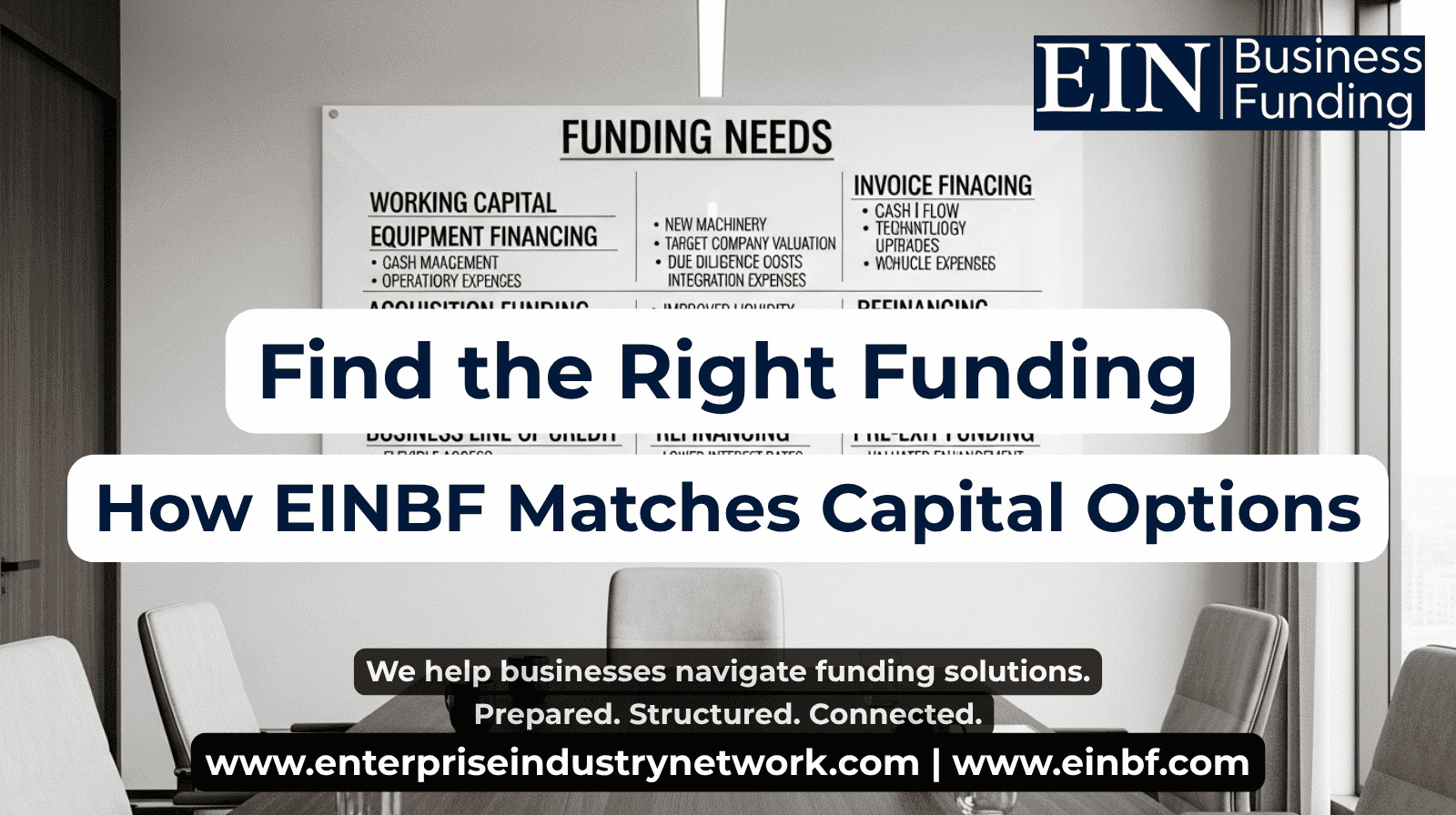
Once the need is understood and documentation is organized, the next stage is determining what type of financing may fit.
The objective is not to force every business into the same product.
Potential structures may include:
- Working-capital financing.
- Business lines of credit.
- Equipment financing.
- Invoice financing.
- Term financing.
- Acquisition financing.
- SBA-related financing.
- Seller financing.
- Bridge financing.
- Refinancing.
- Recapitalization.
- Pre-exit funding.
Working Capital Financing
Working capital may fit short-term operating needs such as payroll, inventory, suppliers, seasonal demand, or other day-to-day business expenses.
Business Line of Credit
A business line of credit may fit recurring or variable short-term needs where flexible access to capital is more useful than receiving one fixed amount.
Equipment Financing
Equipment financing may be appropriate when the business is purchasing a defined productive asset such as machinery, vehicles, medical equipment, technology, or construction equipment.
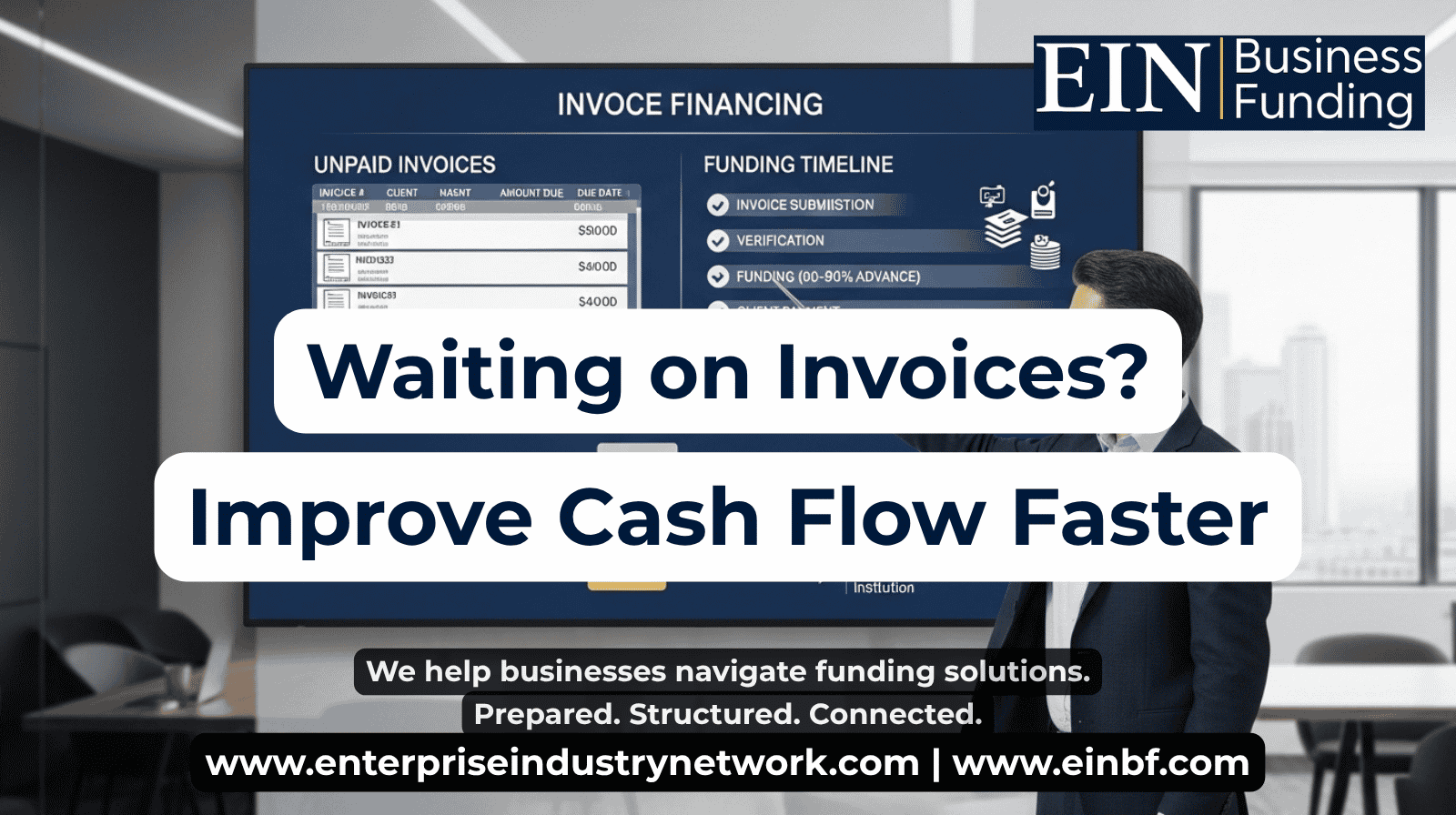
Invoice Financing
Invoice financing may fit businesses whose primary cash-flow problem results from waiting for customers to pay eligible commercial receivables.
Acquisition Financing
Buying an existing company may require a broader capital stack involving:
- Buyer equity.
- Lender financing.
- SBA-related financing.
- Seller financing.
- Working capital.
- Other qualified capital.
Refinancing
Refinancing may be appropriate when the main problem lies in the company’s current debt structure rather than a new operating need.
Bridge Funding
Bridge financing may fit a temporary capital need connected to a reasonably identifiable future repayment event.
Recapitalization
Recapitalization can involve broader changes to debt, equity, ownership, or working capital when the company’s existing financial structure no longer fits its objectives.
Pre-Exit Funding
A business preparing for sale may use capital for legitimate operating or financial improvements before going to market.
That financing should support the exit rather than create unnecessary new transaction risk.
Stage 5: Capital Matching
Only after the business need and financing structure are understood does capital matching become useful.
Capital matching involves evaluating which funding sources may fit:
- The financing structure.
- Requested amount.
- Industry.
- Business age.
- Revenue.
- Cash flow.
- Credit profile.
- Collateral.
- Documentation.
- Repayment capacity.
Why One Lender May Not Fit Every Business
Different lenders and financing providers use different underwriting standards.
They may vary by:
- Industry preference.
- Minimum revenue.
- Time in business.
- Credit requirements.
- Collateral expectations.
- Loan size.
- Repayment structure.
Capital matching therefore involves more than submitting the same application everywhere.
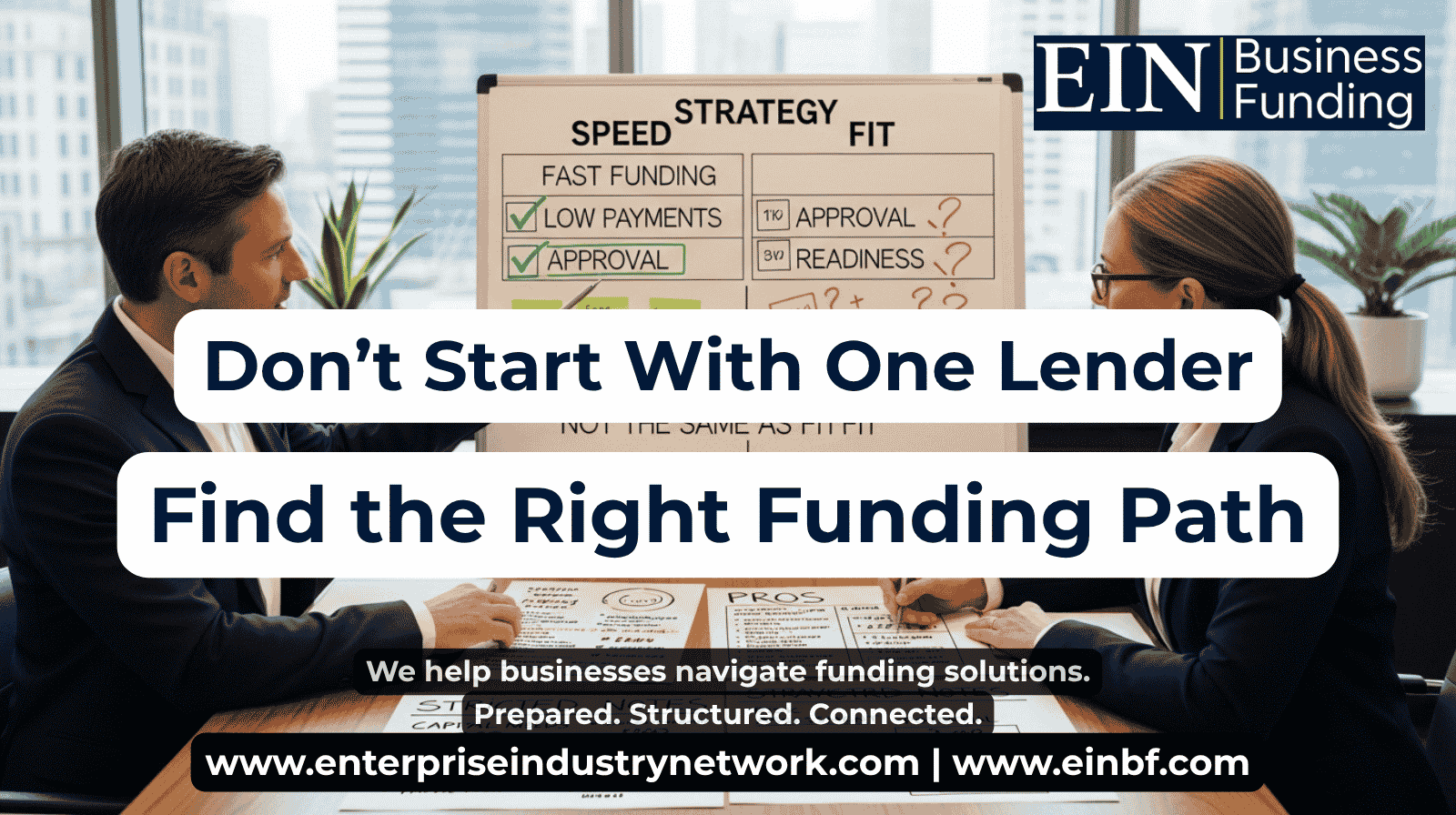
Approval and Funding Fit Are Different
A financing provider may be willing to offer capital, but the business should still evaluate whether the structure is appropriate.
Approval answers:
Can the business obtain this financing?
Funding fit asks:
Should the business use this financing for this particular need?
Stage 6: Compare Financing Terms
Once potential options are identified, owners should compare the complete financing structure.
Important factors may include:
- Funding amount.
- Interest or financing cost.
- Origination fees.
- Repayment term.
- Payment frequency.
- Collateral.
- Personal guarantees.
- Prepayment provisions.
- Use-of-funds restrictions.
Compare Total Cost, Not Only Rate
A stated rate does not always tell the complete economic story.
Owners should evaluate:
- Total interest.
- Fees.
- Repayment period.
- Total repayment amount.
- Cash-flow burden.
Payment Frequency Matters
Daily, weekly, and monthly repayment schedules can have very different effects on business cash flow.
The repayment structure should align as closely as practical with the company’s operating cycle.
Collateral and Liens
Some financing may involve liens on:
- Equipment.
- Accounts receivable.
- Inventory.
- Real estate.
- Other business assets.
Owners should understand both existing and proposed collateral obligations.
Stage 7: Underwriting and Lender Review
After an application or funding request is submitted, the lender or financing provider may begin a deeper review.
Depending on the financing structure, underwriting may evaluate:
- Business financial performance.
- Cash flow.
- Bank activity.
- Credit.
- Existing obligations.
- Use of funds.
- Collateral.
- Repayment ability.
- Management experience.
Consistency Matters During Underwriting
The financial information presented across documents should tell a consistent story.
Large unexplained differences between:
- Tax returns.
- Financial statements.
- Bank activity.
- Debt schedules.
- Funding applications.
may require additional explanation.
Respond Clearly to Lender Questions
Funding review may involve follow-up requests.
Owners should be prepared to explain:
- Revenue trends.
- Recent expenses.
- Existing debt.
- Use of funds.
- Customer concentration.
- Seasonality.
- Business changes.
Stage 8: Funding Decision
If financing is approved, the business should still review the final structure carefully before accepting capital.
Important questions include:
- Does the approved amount solve the business need?
- Can cash flow support repayment?
- Is the total cost acceptable?
- Are there collateral or guarantee requirements?
- Are there prepayment restrictions?
- Does the term match the business purpose?
Do Not Borrow Simply Because Capital Is Available
Approval should not automatically become acceptance.
The business should still determine whether the financing creates sufficient economic value relative to its cost and risk.
Stage 9: Deploy the Capital
After funding, capital should be used according to the intended business purpose.
Owners should monitor:
- Actual use of funds.
- Project progress.
- Cash-flow impact.
- Operating results.
- Unexpected expenses.
Track Whether the Capital Creates the Expected Benefit
Depending on the funding purpose, the business may measure:
- Revenue growth.
- Inventory turnover.
- Production capacity.
- Reduced downtime.
- Cash-flow improvement.
- Debt-service reduction.
- Customer delivery.
Stage 10: Repayment and Financial Monitoring
Funding does not end when capital reaches the business.
The company should continue monitoring:
- Loan balance.
- Payment history.
- Cash flow.
- Debt-service coverage.
- Working capital.
- Future capital requirements.
Avoid Funding Dependency
Financing should support the business rather than become a permanent substitute for sustainable operations.
Repeatedly borrowing to cover persistent operating losses may signal a deeper issue involving:
- Margins.
- Pricing.
- Expenses.
- Debt burden.
- Business model.
Stage 11: Reassess Future Capital Needs
Business funding is a lifecycle because the company’s needs can change.
A business may later need capital for:
- Growth.
- New equipment.
- Acquisition.
- Refinancing.
- Expansion.
- Exit preparation.
The next funding decision should begin again with readiness and diagnosis rather than automatically repeating the previous financing structure.
The Funding Lifecycle for Growing Businesses
A growing company may move through several funding stages over time.
For example:
- Working capital for early growth.
- A line of credit for recurring liquidity.
- Equipment financing for capacity expansion.
- Refinancing as the balance sheet evolves.
- Acquisition financing for strategic growth.
The appropriate capital structure can change as the business changes.
The Funding Lifecycle for Business Buyers
A buyer acquiring a company may move through:
- Buyer financial readiness.
- Acquisition diagnosis.
- Deal-structure planning.
- Capital matching.
- Lender underwriting.
- Closing.
- Post-closing working-capital management.
The Funding Lifecycle for Business Sellers
A seller preparing for exit may need to consider:
- Financial cleanup.
- Debt restructuring.
- Pre-exit funding.
- Bridge financing.
- Recapitalization.
- Buyer due diligence.
- Debt payoff at closing.
Why Readiness Comes Before Capital Matching
Capital matching is more useful when the business already understands its own financial position.
Without readiness, the business may not know:
- How much it can support.
- Which documents are missing.
- Whether existing debt creates a problem.
- Which financing structure is appropriate.
- Whether the funding need is temporary or structural.
Why Diagnosis Comes Before Product Selection
Different financing structures solve different problems.
A business with unpaid receivables does not necessarily have the same need as a company buying equipment or acquiring another business.
The product should follow the diagnosis.
Why Capital Matching Comes Before Lender Selection
Once the financing structure is understood, the business can compare funding sources that actually offer a relevant solution.
This avoids beginning with one lender and attempting to reshape the business need around that lender’s available product.
The EIN Business Funding Lifecycle
A practical funding lifecycle can be summarized as:
- 1. Readiness: Understand the financial position.
- 2. Diagnosis: Define the real capital need.
- 3. Preparation: Organize documentation and use of funds.
- 4. Structure: Identify appropriate financing types.
- 5. Capital Matching: Identify relevant funding sources.
- 6. Comparison: Evaluate terms, cost, and risk.
- 7. Underwriting: Support lender or provider review.
- 8. Decision: Confirm the financing still makes sense.
- 9. Deployment: Use capital for the intended purpose.
- 10. Monitoring: Track repayment and business impact.
- 11. Reassessment: Revisit capital needs as the business changes.
How EIN Business Funding Supports the Funding Lifecycle
EIN Business Funding (EINBF), part of Enterprise Industry Network, helps business owners, buyers, and sellers think through funding needs from readiness and diagnosis through potential capital matching.
Depending on the business situation, potential funding paths may include working capital, business lines of credit, equipment financing, invoice financing, acquisition financing, SBA-related financing, seller financing, bridge funding, refinancing, recapitalization, pre-exit funding, and other qualified business financing structures.
The objective is not to force every business into one lender or one financing product. It is to evaluate the company’s need, financial position, timing, repayment ability, documentation, and available funding paths before determining which structure may be worth pursuing.
Where Are You in the Business Funding Lifecycle?
Start with financial readiness, define the real capital need, prepare your documentation, evaluate the appropriate financing structure, and then explore potential funding paths that fit the business.
Frequently Asked Questions
What is the business funding lifecycle?
The business funding lifecycle is the process that can begin with financial readiness and diagnosis, continue through documentation, financing-structure evaluation, capital matching, lender review, and funding, and then continue through repayment, monitoring, and future capital planning.
What should a business do before approaching lenders?
A business should understand its funding purpose, required amount, cash flow, existing debt, repayment capacity, documentation, timing, and the financing structures that may fit the need before narrowing the search to specific funding providers.
Why is funding readiness important?
Funding readiness helps the business understand its financial position, identify documentation gaps, review existing obligations, and determine whether additional capital can realistically be supported.
What does capital matching mean?
Capital matching means identifying financing sources and structures that align with the business purpose, amount, financial position, timing, repayment capacity, industry, documentation, and other relevant factors.
Does funding end once a loan or financing facility is approved?
No. After funding, businesses should track how capital is used, monitor repayment, evaluate whether the financing produces the expected benefit, and reassess future capital needs as the company changes.
Does EIN Business Funding work with only one type of financing?
EIN Business Funding helps evaluate a range of potential financing paths depending on the business need, including working capital, business lines of credit, equipment financing, invoice financing, acquisition financing, refinancing, bridge funding, pre-exit financing, and other qualified structures.
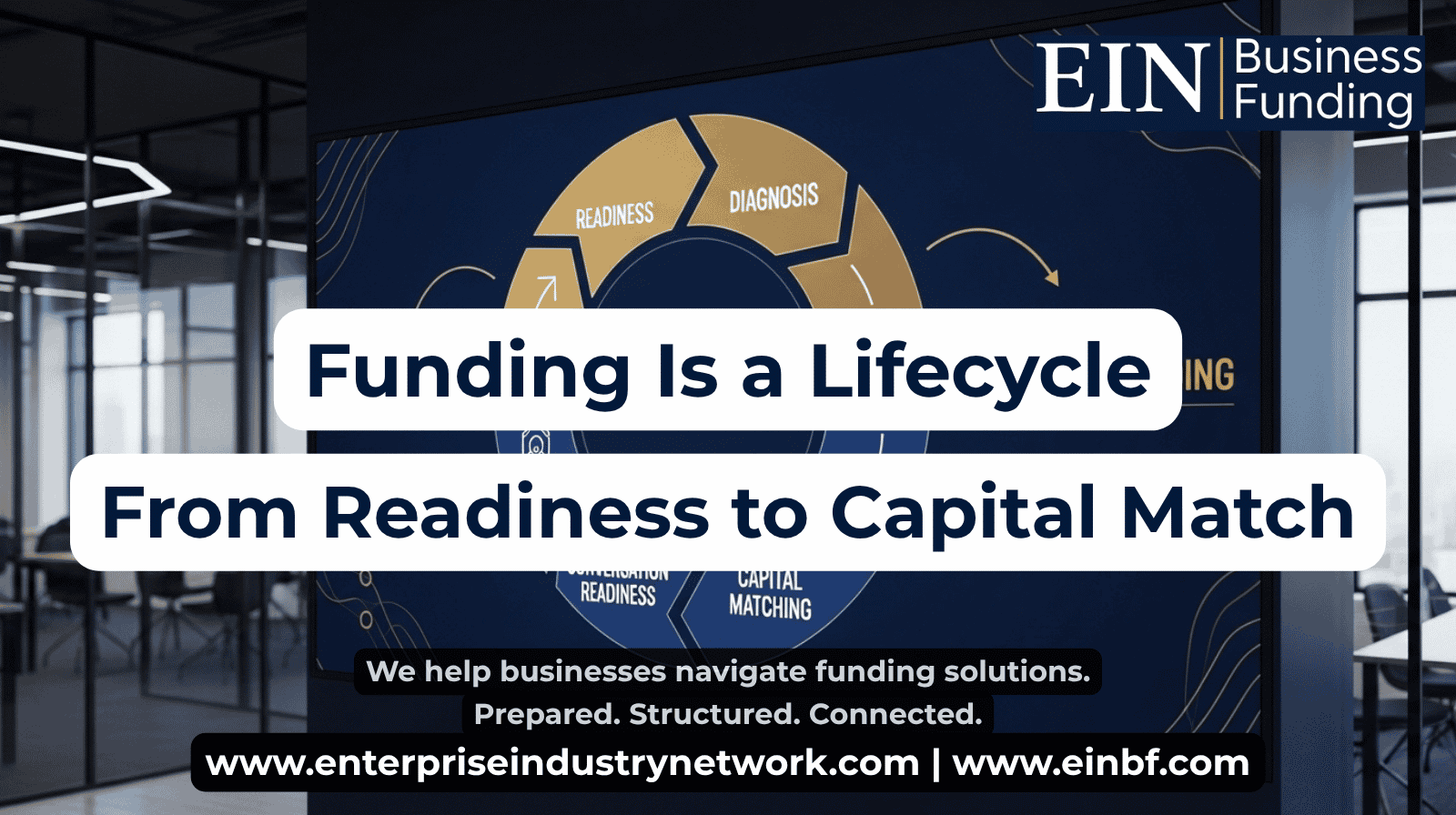 The business funding lifecycle begins with financial readiness and diagnosis, moves through documentation and capital-structure evaluation, and continues through capital matching, lender review, funding, repayment, and future planning.