Business Funding Fit Framework: How to Match Capital to the Right Business Need
How do you determine which business funding option actually fits your company? Finding capital is not simply about identifying a lender or choosing the first financing product that appears available.
A stronger starting point is understanding why the capital is needed, how much is required, when it is needed, what the business can realistically support, and which financing structure aligns with the underlying business objective.
In this long-form educational video, EIN Business Funding (EINBF), part of Enterprise Industry Network (EIN), explains how business owners and buyers can evaluate funding needs before selecting a financing path.
Start With the Business Need, Not the Product
A business owner may initially think, “I need a loan,” but the more useful question is:
What business problem am I trying to solve with capital?
Different needs can require very different financing structures.
For example:
- A temporary payroll gap may require short-term working capital.
- Recurring seasonal needs may be better suited to a business line of credit.
- Machinery may be better aligned with equipment financing.
- Slow-paying customers may point toward invoice financing.
- Buying an existing company may require acquisition financing.
- Existing debt pressure may call for refinancing.
Starting with the underlying business need can help prevent the company from forcing the wrong financing product into the situation.
Define Why the Capital Is Needed
The funding purpose should be specific.
Potential business needs may include:
- Working capital.
- Payroll.
- Inventory.
- Equipment.
- Expansion.
- Receivables timing.
- Business acquisition.
- Debt refinancing.
- Pre-exit preparation.
- Technology.
- Marketing.
- Other qualified business purposes.
The clearer the purpose, the easier it becomes to compare funding structures.
Determine How Much Capital Is Actually Required
Business owners should avoid selecting a funding amount arbitrarily.
A more disciplined calculation may consider:
- Project cost.
- Operating expenses.
- Available internal cash.
- Working-capital cushion.
- Unexpected costs.
- Expected repayment capacity.
Borrowing too little may leave the problem unresolved, while borrowing too much may create unnecessary financing cost and repayment pressure.
Understand When the Capital Is Needed
Timing can influence the financing structure.
A company needing capital immediately for a temporary operational gap may have a different financing need than a company planning an equipment purchase six months from now.
Owners should ask:
- When will the money be used?
- How urgent is the need?
- How long will the business need the capital?
- When is repayment expected to begin?
- When should the business benefit from the financing?
Match the Financing Term to the Business Purpose
A short-term business need generally should not be financed automatically with long-term debt.
Likewise, a long-lived asset may not be well matched with financing that must be repaid extremely quickly.
The financing term should make sense relative to:
- The life of the asset.
- The operating cycle.
- The expected return period.
- The company’s repayment ability.
Working Capital Financing
Working capital financing may be appropriate when the business needs short-term operating liquidity.
Potential uses can include:
- Payroll.
- Inventory.
- Vendor payments.
- Seasonal expenses.
- Short-term operating needs.
The key question is whether the need is temporary and whether the business has a realistic repayment source.
Business Line of Credit
A business line of credit may be appropriate when the company needs recurring or variable access to capital rather than one fixed amount.
Potential use cases include:
- Seasonal inventory.
- Receivables timing.
- Payroll gaps.
- Vendor payments.
- Short-term opportunities.
The revolving structure can provide flexibility, but business owners should still monitor utilization and repayment carefully.
Equipment Financing
Equipment financing may make sense when capital is needed for a defined productive asset.
Potential assets may include:
- Machinery.
- Vehicles.
- Technology.
- Medical equipment.
- Construction equipment.
- Manufacturing assets.
The financing term should generally align with the asset’s useful life and expected economic benefit.
Invoice Financing
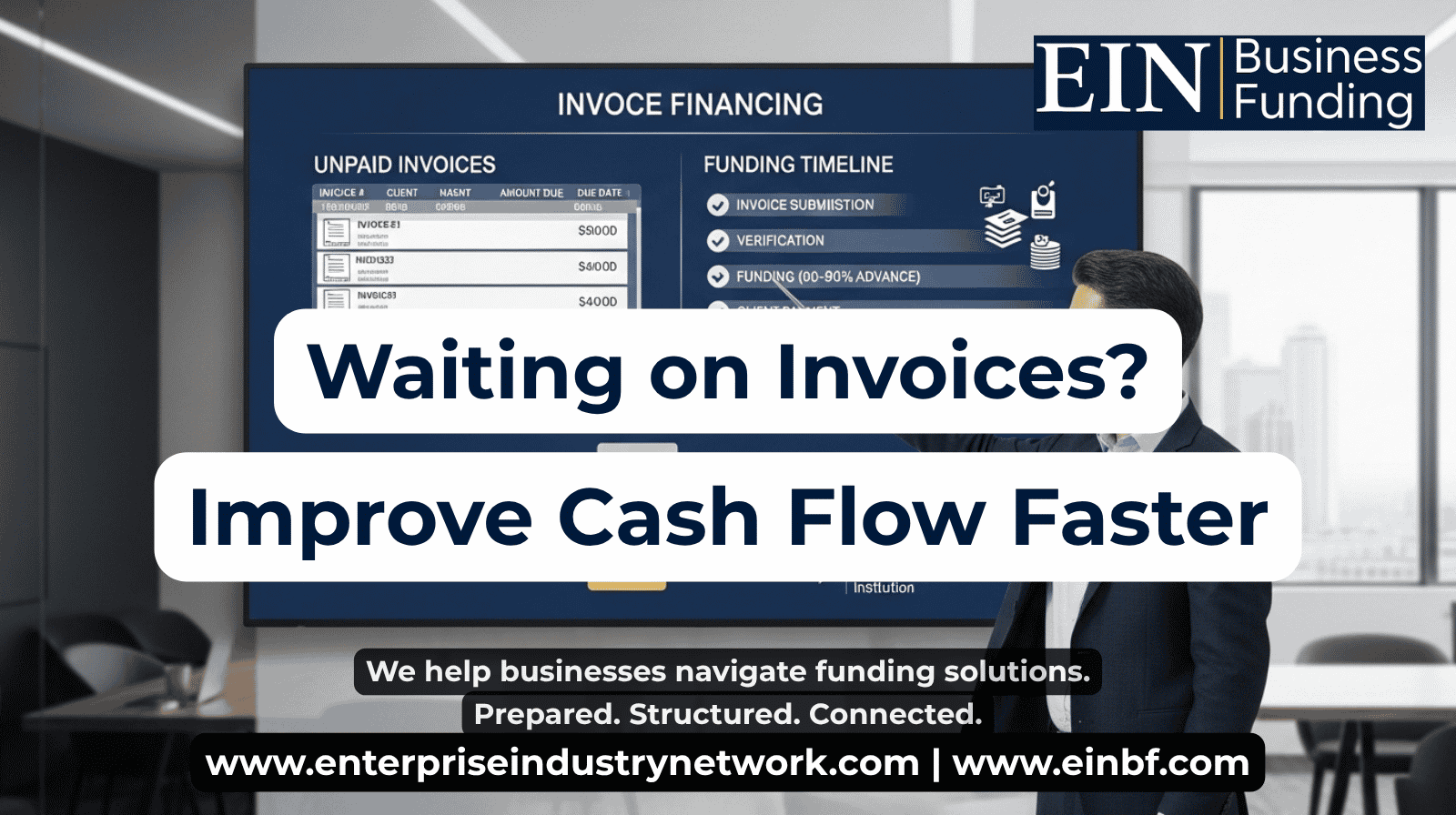
Invoice financing may be appropriate when the primary financial problem comes from slow-paying customers.
A company may have completed the work and issued valid invoices but still wait 30, 60, or 90 days for payment.
Financing eligible receivables can potentially help bridge that timing gap.
Business Acquisition Financing
Acquisition financing is designed around the purchase of an existing business.
A transaction may involve:
- Buyer equity.
- Bank financing.
- SBA-related financing.
- Seller financing.
- Working capital.
- Other capital sources.
The purchase price is only one part of the total capital requirement.
Business Refinancing
Refinancing may make sense when existing debt no longer fits the company’s financial position.
Potential objectives can include:
- Reducing repayment pressure.
- Consolidating obligations.
- Improving cash-flow predictability.
- Replacing unfavorable financing.
- Simplifying the debt structure.
Refinancing should improve the underlying structure rather than simply move debt from one lender to another.
Pre-Exit Funding
A company preparing for a future sale may have capital needs that differ from those of a business focused purely on growth.
Pre-exit funding may support:
- Working capital.
- Equipment upgrades.
- Deferred maintenance.
- Technology improvements.
- Debt cleanup.
- Operational stabilization.
The financing should support measurable improvement without unnecessarily complicating the future transaction.
Compare Financing Structures, Not Just Lenders
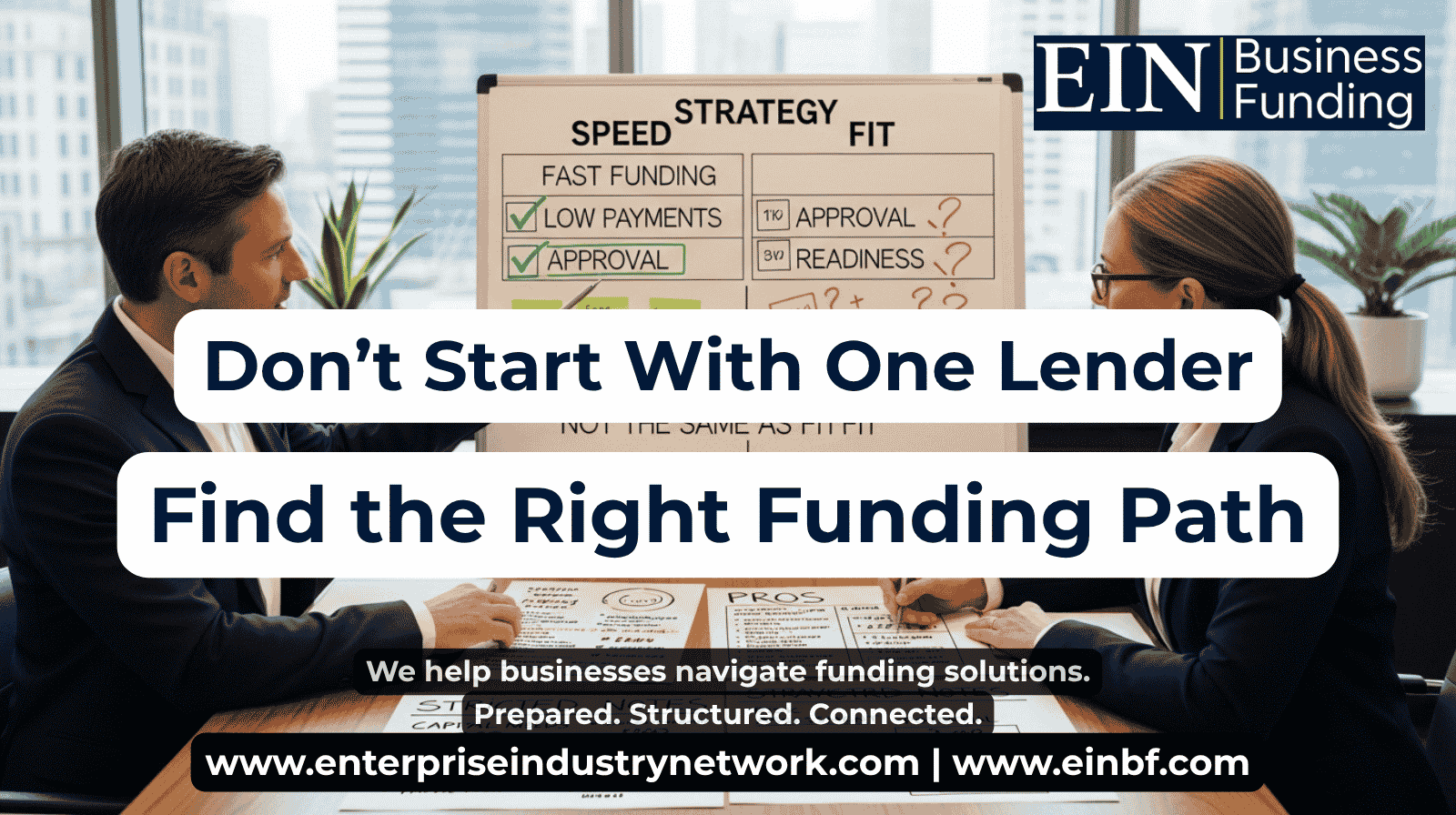
One of the most important distinctions in business funding is the difference between choosing a lender and choosing a financing structure.
Two lenders may offer very different products.
Likewise, two products may have completely different:
- Repayment schedules.
- Collateral requirements.
- Terms.
- Fees.
- Use-of-funds restrictions.
- Cash-flow impact.
The product structure should be evaluated before comparing individual sources.
Evaluate Repayment Capacity
Funding availability does not automatically mean the business should take the financing.
Owners should determine whether cash flow can support:
- Normal operating expenses.
- Payroll.
- Existing debt.
- Taxes.
- Supplier obligations.
- The proposed new financing payment.
Review Existing Obligations
A financing decision should be made in the context of the company’s entire debt picture.
Owners should understand:
- Outstanding loan balances.
- Monthly payments.
- Lines of credit.
- Equipment financing.
- Leases.
- Collateral.
- Existing liens.
A new financing facility should not create excessive leverage or repayment stress.
Understand the Business Cash-Flow Cycle
The correct funding path often depends on how money moves through the company.
Owners should understand:
- When customers pay.
- When vendors are paid.
- When payroll is due.
- When inventory is purchased.
- When seasonal expenses occur.
- When revenue is expected.
A financing structure that matches the operating cycle can be more manageable than one that conflicts with it.
Revenue Alone Does Not Determine Funding Fit
A business may have strong revenue but limited available cash after expenses.
Owners should consider:
- Operating margins.
- Debt service.
- Receivables.
- Inventory requirements.
- Working-capital needs.
- Seasonality.
The financing structure should fit the actual financial condition rather than a single revenue number.
Documentation Readiness Matters
Different funding products may require different documentation.
Potential records may include:
- Business bank statements.
- Profit-and-loss statements.
- Balance sheets.
- Business tax returns.
- Debt schedules.
- Accounts receivable aging.
- Equipment quotes.
- Acquisition documents.
- Ownership records.
The financing path should also reflect what the business can document effectively.
Consider Collateral Requirements
Some financing structures may require collateral.
Potential collateral can include:
- Equipment.
- Accounts receivable.
- Inventory.
- Real estate.
- Other business assets.
Owners should understand what is already pledged and how new liens may affect future financing flexibility.
Personal Guarantees
Depending on the financing product and provider, business owners may be asked to provide personal guarantees.
The existence and scope of any personal obligation should be understood before accepting financing.
Compare Total Cost, Not Just the Payment
A lower periodic payment does not necessarily mean lower-cost financing.
Owners should evaluate:
- Interest.
- Origination fees.
- Closing costs.
- Other financing charges.
- Repayment term.
- Total repayment amount.
Payment Frequency Matters
Daily, weekly, and monthly repayment structures can affect business cash flow very differently.
The payment frequency should align with the company’s collection cycle and financial capacity.
Fixed vs Flexible Capital
Some businesses need one defined funding amount.
Others need ongoing access to capital as operating conditions change.
A fixed loan may be more appropriate for:
- A specific expansion.
- A defined equipment purchase.
- A one-time project.
Flexible revolving capital may be more appropriate for:
- Seasonality.
- Receivables timing.
- Recurring inventory needs.
- Variable working-capital requirements.
Short-Term vs Long-Term Capital
Owners should align the expected benefit period with the financing term.
Short-term capital may be appropriate for temporary operating needs.
Longer-term capital may be more appropriate for assets or projects expected to generate value over several years.
Secured vs Unsecured Financing
Some products may require specific collateral while others may be underwritten differently.
Owners should compare:
- Collateral requirements.
- Personal guarantees.
- Pricing.
- Available limits.
- Repayment terms.
Do Not Start With Approval Speed Alone
Speed can matter when capital is needed urgently, but it should not be the only factor.
Owners should also evaluate:
- Total cost.
- Repayment pressure.
- Product fit.
- Collateral.
- Term.
- Long-term financial impact.
Do Not Start With the Largest Available Amount
More capital is not always better.
The appropriate amount should reflect the actual business requirement and repayment capacity.
Excess borrowing can create unnecessary cost and financial pressure.
Do Not Choose Funding Based Only on Rate
Interest rate is important, but financing should be evaluated as a complete structure.
Other considerations may include:
- Term.
- Payment schedule.
- Fees.
- Collateral.
- Prepayment provisions.
- Use-of-funds restrictions.
- Funding speed.
Funding Fit for Seasonal Businesses
Seasonal companies may benefit from financing that can expand and contract with predictable operating cycles.
Potential structures may include:
- Working-capital financing.
- Business lines of credit.
- Inventory financing where appropriate.
Historical seasonal patterns should guide the funding decision.
Funding Fit for Growing Businesses
Growth can require capital for:
- Inventory.
- Employees.
- Equipment.
- Marketing.
- New locations.
- Technology.
The appropriate funding structure depends on what specifically is driving the growth requirement.
Funding Fit for Businesses With Slow Receivables
When customer payment timing is the central issue, owners may compare:
- Invoice financing.
- Business lines of credit.
- Working-capital financing.
The decision should consider cost, customer concentration, invoice aging, and expected repayment timing.
Funding Fit for Equipment Purchases
A company acquiring a productive asset may be better served by equipment financing than by consuming revolving working capital.
The financing term can then be aligned more closely with the asset’s useful life.
Funding Fit for Business Acquisitions
Buying an existing company typically requires a broader capital structure than ordinary working-capital financing.
The acquisition may involve:
- Buyer equity.
- Lender financing.
- Seller financing.
- Working capital.
- Other sources.
Funding Fit for Existing Debt Pressure
When the main issue is an inefficient existing debt structure, adding another unrelated loan may not solve the problem.
Refinancing or recapitalization may be more appropriate depending on the situation.
Funding Fit Before a Business Sale
A business preparing for exit may need capital for legitimate pre-sale improvements.
At the same time, new debt can affect:
- Buyer due diligence.
- Liens.
- Seller proceeds.
- Acquisition financing.
- Transaction flexibility.
The capital structure should support the exit rather than complicate it unnecessarily.
Compare the Economic Benefit With the Financing Cost
A financing decision should have a clear economic rationale.
Owners should ask whether the capital is expected to:
- Generate additional revenue.
- Improve margins.
- Reduce operating costs.
- Prevent disruption.
- Improve cash-flow timing.
- Support a strategically important transaction.
The expected benefit should justify the financing cost and risk.
Build a Funding Decision Framework
Before pursuing capital, business owners can work through a structured process.
- Step 1: Define the business need.
- Step 2: Calculate the required amount.
- Step 3: Determine the timing.
- Step 4: Identify the repayment source.
- Step 5: Review existing debt.
- Step 6: Evaluate cash-flow capacity.
- Step 7: Compare financing structures.
- Step 8: Review cost, collateral, and terms.
- Step 9: Prepare documentation.
- Step 10: Compare appropriate funding sources.
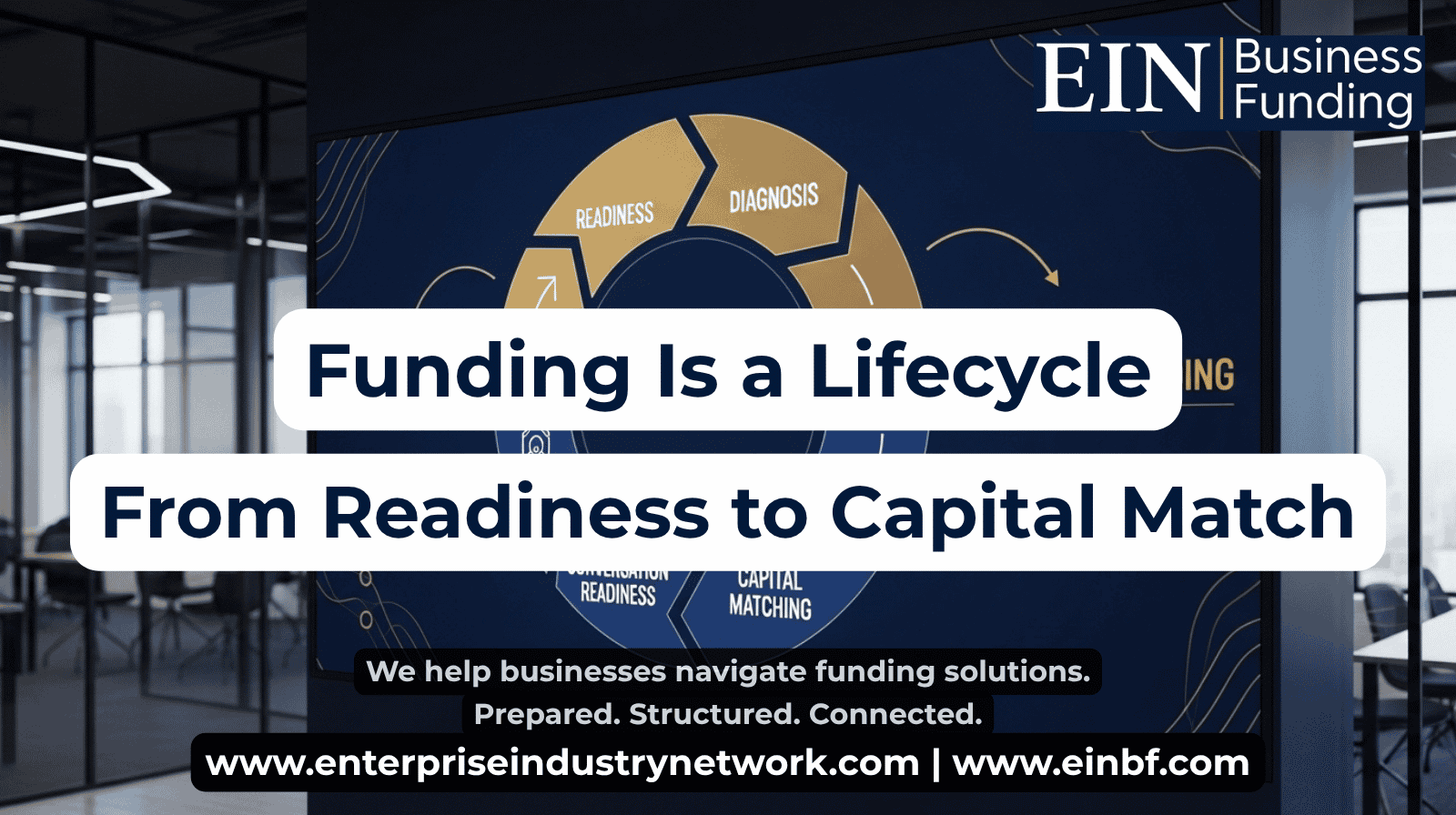
Why Funding Fit Matters More Than Funding Availability
A business may qualify for several financing options, but qualification does not mean each option is equally appropriate.
The strongest funding decision is generally one that aligns:
- Business purpose.
- Funding amount.
- Repayment term.
- Cash-flow cycle.
- Risk tolerance.
- Existing obligations.
- Future business goals.
How EIN Business Funding Approaches Funding Fit
EIN Business Funding (EINBF), part of Enterprise Industry Network, helps business owners and buyers think through the funding need before pursuing a specific financing structure.
Depending on the situation, potential funding paths may include working capital, business lines of credit, equipment financing, invoice financing, acquisition financing, refinancing, pre-exit funding, and other qualified business financing solutions.
The goal is not simply to identify available money. It is to evaluate which capital structure may best align with the company’s actual need, financial position, timing, and repayment capacity.
Not Sure Which Business Funding Option Fits?
Start with the business need, funding amount, timing, cash flow, repayment capacity, and existing obligations before comparing lenders or financing products.
Frequently Asked Questions
How do I know which business funding option is right for my company?
Start by identifying why the capital is needed, how much is required, when it is needed, how long the business will use it, what repayment source exists, and how the financing will affect cash flow and existing obligations.
Should I choose a lender before deciding what type of financing I need?
It can be more useful to determine the appropriate financing structure first. Once the business need is clear, owners can compare lenders or providers that offer products aligned with that need.
What is the difference between working capital and a business line of credit?
Working-capital financing can provide funding for short-term operating needs, while a business line of credit may provide revolving access to capital for recurring or variable needs, subject to the facility terms.
When is equipment financing better than using working capital?
Equipment financing may be more appropriate when purchasing a defined productive asset because the financing term can often be aligned more closely with the useful life of the equipment while preserving operating cash.
When should a business consider invoice financing?
Invoice financing may be worth evaluating when the main cash-flow problem comes from valid customer invoices that will not be paid until later while the business needs operating capital sooner.
Does EIN Business Funding work with only one financing product?
EIN Business Funding helps business owners evaluate the underlying capital need and explore potential financing paths that may include working capital, lines of credit, equipment financing, invoice financing, acquisition financing, refinancing, and other qualified funding structures.
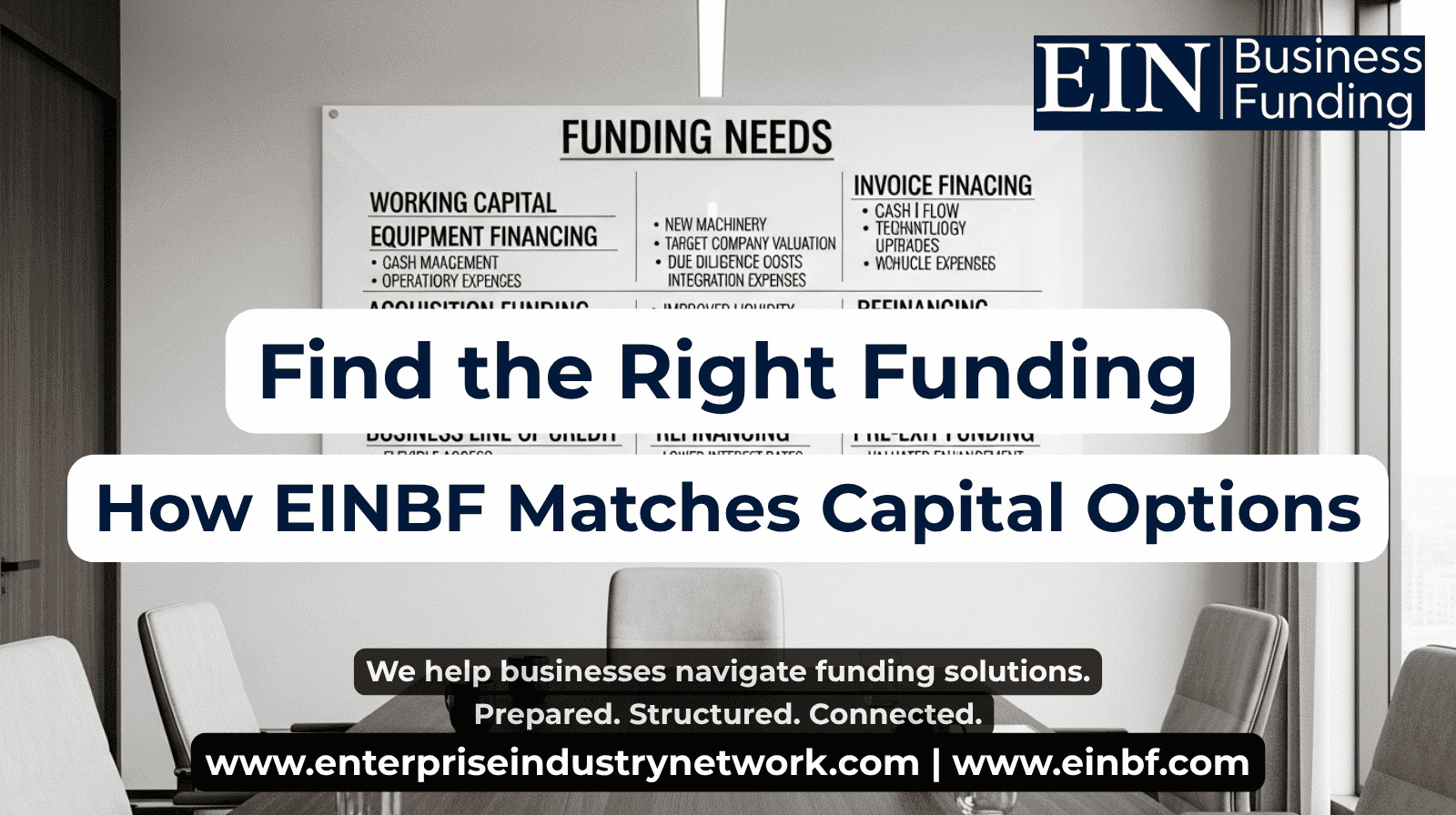 The right business funding path depends on the purpose, amount, timing, cash flow, repayment capacity, existing obligations, and whether the financing structure actually matches the company’s need.