How EIN Business Funding Connects Funding, Advisory, Brokerage, Legal, and Capital Support Across the EIN Ecosystem
Where does EIN Business Funding (EINBF) fit within the broader Enterprise Industry Network (EIN) ecosystem? EIN is structured around the idea that business advisory, brokerage, consulting, legal support, funding, business listings, and capital relationships can become more useful when they operate as parts of a connected business network.
Within that structure, EIN Business Funding provides the funding and capital-readiness layer. EINBF helps business owners, buyers, sellers, and growing companies think through financing needs, documentation, cash flow, repayment capacity, funding structure, and lender expectations.
The objective is not simply to identify capital. It is to help determine how funding fits within a broader business objective that may also involve an acquisition, a business sale, operational improvement, legal readiness, consulting support, investor preparation, or another strategic initiative.
What Is the Enterprise Industry Network Ecosystem?
Enterprise Industry Network is designed as a connected business ecosystem rather than a single-service platform.
Its broader structure can include support relating to:
- Business advisory.
- Business brokerage.
- Business consulting.
- Business funding.
- Legal support.
- Business listings.
- Capital and investor relationships.
Each area may address a different part of the business lifecycle, but those needs can often overlap.
Where EIN Business Funding Fits
EIN Business Funding provides the financing and capital-readiness layer within the broader network.
That role can include helping business owners and buyers think through:
- Why capital is needed.
- How much funding may be required.
- When the capital is needed.
- What financing structure may fit.
- How repayment may be supported.
- What documentation may be relevant.
- How existing debt affects the request.
- How funding connects to the broader business objective.
Funding Is Often Part of a Larger Business Decision
A funding need frequently does not exist in isolation.
For example:
- A buyer acquiring a company may need acquisition financing and transaction guidance.
- A seller preparing for exit may need pre-sale capital and business brokerage support.
- A growing company may need financing and consulting support.
- A company preparing for outside investors may need capital planning and legal readiness.
- A business with debt pressure may need refinancing as part of a broader financial restructuring.
The connected ecosystem becomes relevant when several of these needs exist at the same time.
Funding Readiness Comes Before Capital
EINBF’s role can begin before a business ever approaches a funding source.
Funding readiness may include reviewing:
- Revenue.
- Cash flow.
- Existing obligations.
- Business bank activity.
- Financial statements.
- Tax information.
- Credit profile where relevant.
- Use of funds.
- Repayment capacity.
The goal is to understand whether the business is prepared to pursue additional capital and what structure may be appropriate.
Capital Needs Can Vary by Business Situation
Different companies can require very different forms of financing.
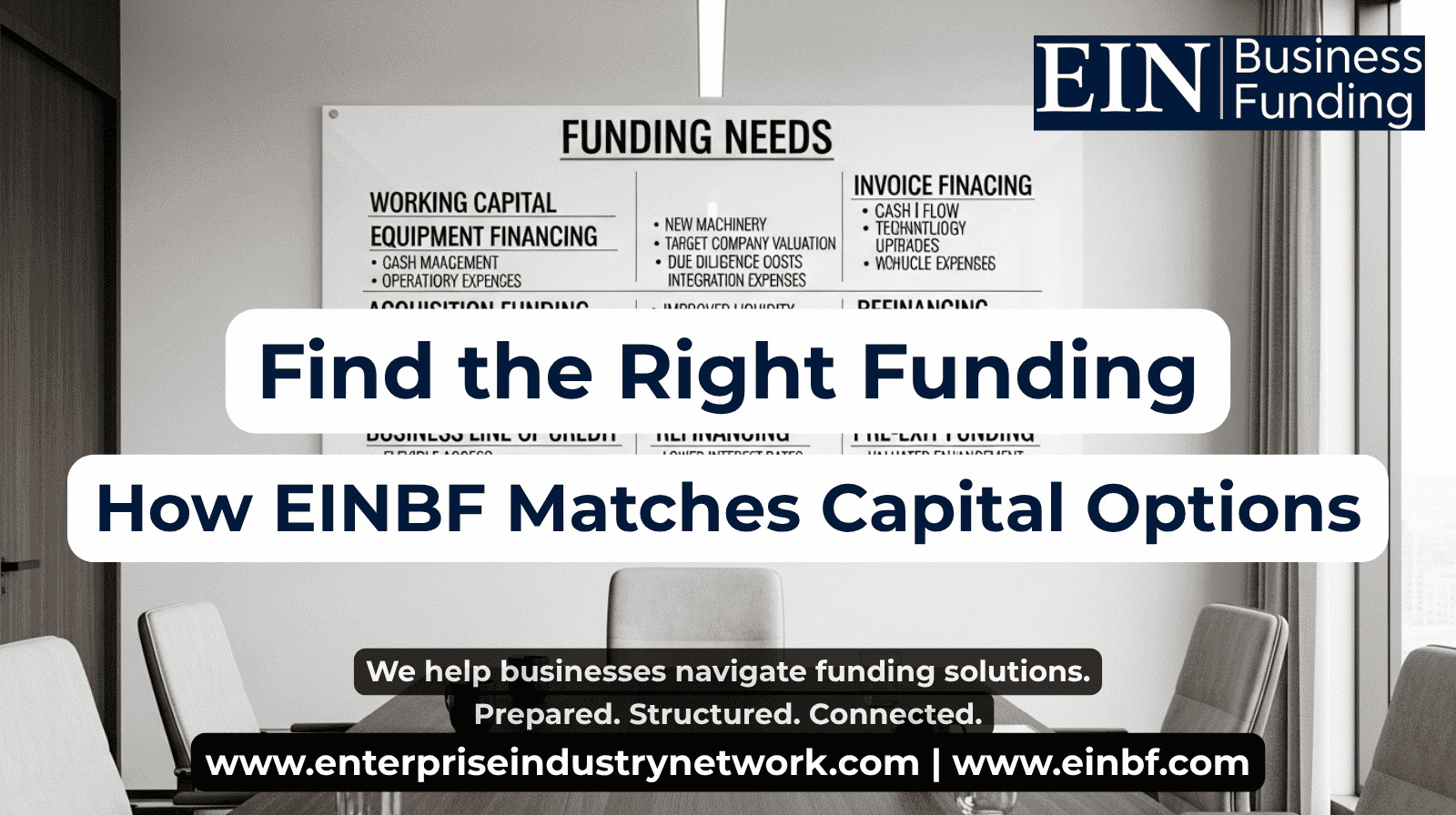
Potential funding needs may include:
- Working capital.
- Business lines of credit.
- Equipment financing.
- Invoice financing.
- Acquisition financing.
- SBA-related financing.
- Seller financing.
- Bridge financing.
- Refinancing.
- Recapitalization.
- Pre-exit funding.
- Other qualified business financing structures.
The correct path depends on the business need rather than a single universal funding product.
EINBF and Business Advisory
Funding decisions can be stronger when they are connected to the business objective.
Advisory support may become relevant when owners need to evaluate:
- Growth plans.
- Capital priorities.
- Exit preparation.
- Strategic timing.
- Business risk.
- Ownership objectives.
The funding layer can then be evaluated in the context of those broader strategic decisions.
EINBF and Business Brokerage
Business brokerage and funding can intersect in both buyer and seller situations.
A business buyer may need to understand:
- Purchase price.
- Buyer equity.
- Acquisition financing.
- Seller financing.
- Working capital after closing.
- Transaction expenses.
A seller may need to consider:
- Pre-exit financing.
- Debt cleanup.
- Bridge financing.
- Recapitalization.
- How existing obligations may affect the transaction.
Funding and brokerage can therefore become connected parts of the same transaction.
EINBF and Business Consulting
Some funding needs arise because the company is changing operationally.
Consulting support may become relevant when capital is being used for:
- Expansion.
- Process improvement.
- Technology implementation.
- Operational restructuring.
- Cost reduction.
- Growth planning.
The financing decision should reflect whether the underlying business plan is realistic and financially supportable.
EINBF and Legal Support
Legal considerations can become important in many financing and transaction situations.
Examples may include:
- Business acquisitions.
- Seller financing.
- Security agreements.
- Ownership restructuring.
- Recapitalization.
- Investor transactions.
- Business sales.
Funding may solve the capital requirement, while legal support may help address the agreements, rights, obligations, and transaction structure associated with that capital.
EINBF and Business Listings
Business listings can become relevant when owners are preparing to sell or when buyers are searching for acquisition opportunities.
A listed business may eventually generate a financing need involving:
- Buyer acquisition financing.
- Seller financing.
- Post-closing working capital.
- Equipment financing.
- Bridge capital.
The funding layer can support the capital side of transactions connected to listed businesses.
EINBF and Capital Relationships
Some businesses may need capital strategies beyond ordinary working-capital or asset financing.
Depending on the business stage and objective, broader capital relationships may become relevant when a company is:
- Preparing for major growth.
- Seeking strategic investment.
- Considering a recapitalization.
- Exploring investor relationships.
- Evaluating a larger transaction.
The broader EIN ecosystem allows funding needs to be considered alongside those other capital objectives.
A Business Acquisition Can Require Multiple EIN Layers
Consider a buyer acquiring an existing company.
The buyer may potentially need:
- Business brokerage or transaction support.
- Acquisition financing.
- Seller-financing analysis.
- Legal transaction support.
- Post-closing consulting.
- Working-capital planning.
What appears initially to be a simple business purchase can therefore involve several connected needs.
A Business Sale Can Require Multiple EIN Layers
A seller may begin with the objective of selling a company but discover that preparation is required first.
Potential needs can include:
- Business valuation preparation.
- Pre-exit funding.
- Debt restructuring.
- Operational improvement.
- Legal readiness.
- Business listing visibility.
- Brokerage support.
Funding may be one part of a broader exit-readiness process.
A Growing Business May Need More Than Financing
A company pursuing expansion may need capital, but capital alone does not guarantee successful growth.
The company may also need:
- Strategic planning.
- Operational consulting.
- Legal review.
- Technology support.
- Capital structure planning.
The broader ecosystem is designed to recognize that business growth can involve several interconnected disciplines.
The Funding Layer Begins With Diagnosis
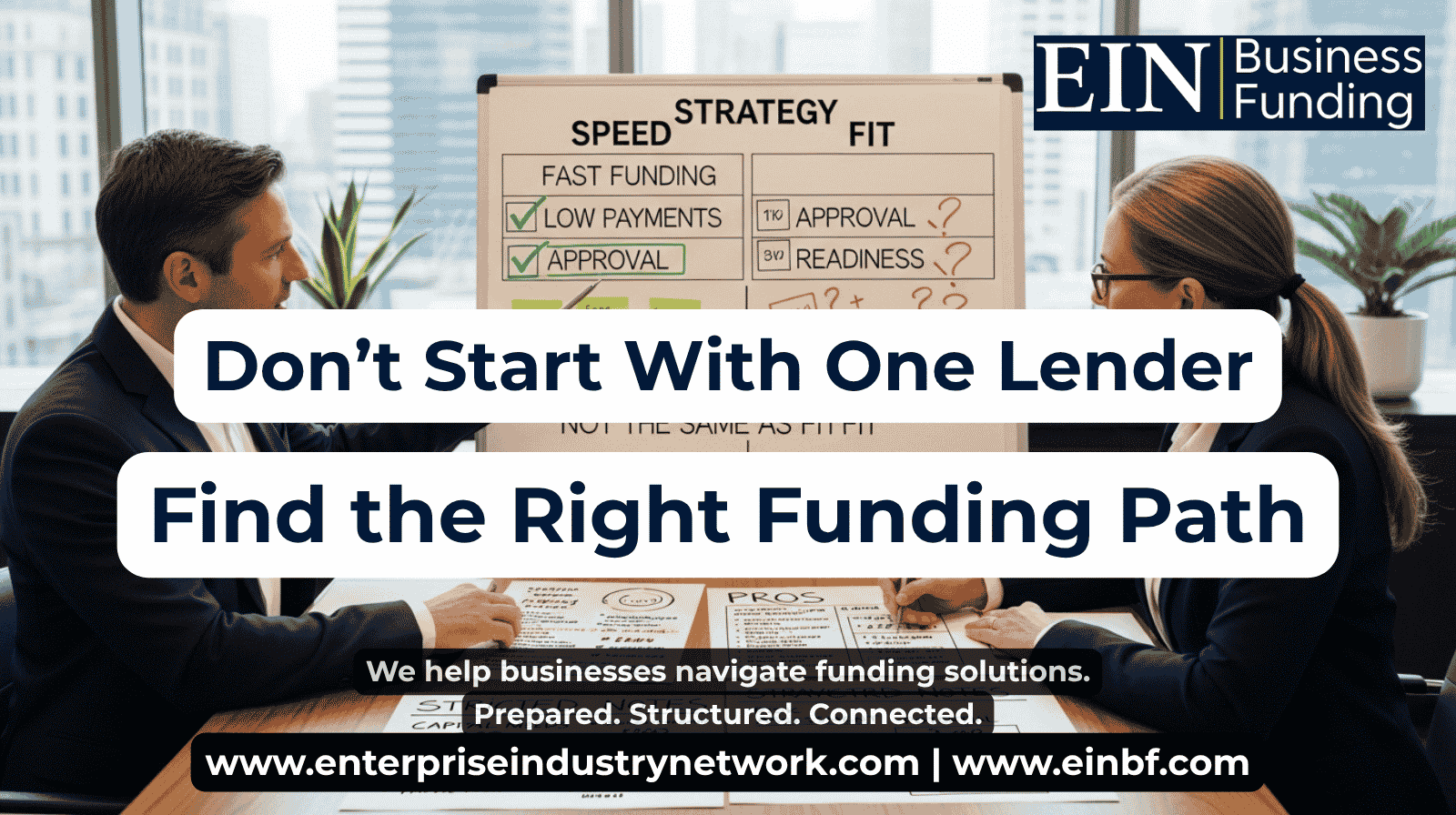
EINBF does not begin only with the question, “Which lender should we use?”
The first questions are more fundamental:
- What does the business need?
- Why is capital required?
- How much is required?
- When is it needed?
- How will repayment be supported?
- What existing obligations already exist?
- What broader business objective does the capital support?
Working Capital Within the Ecosystem
Working capital may support ordinary operating needs such as:
- Payroll.
- Inventory.
- Supplier payments.
- Seasonality.
- Large customer orders.
- Short-term operating expenses.
For a growing company, working capital may connect directly with consulting or strategic growth planning.
Business Lines of Credit Within the Ecosystem
A business line of credit may provide flexible access to capital for recurring or variable short-term needs.
The financing decision may connect with:
- Cash-flow planning.
- Seasonality.
- Inventory management.
- Receivables management.
- Growth strategy.
Equipment Financing Within the Ecosystem
A business purchasing productive assets may need both capital and operational planning.
Equipment financing may support:
- Machinery.
- Vehicles.
- Technology.
- Medical equipment.
- Construction equipment.
- Manufacturing assets.
The business may also need consulting support to understand how the new asset fits into production, expansion, or growth.
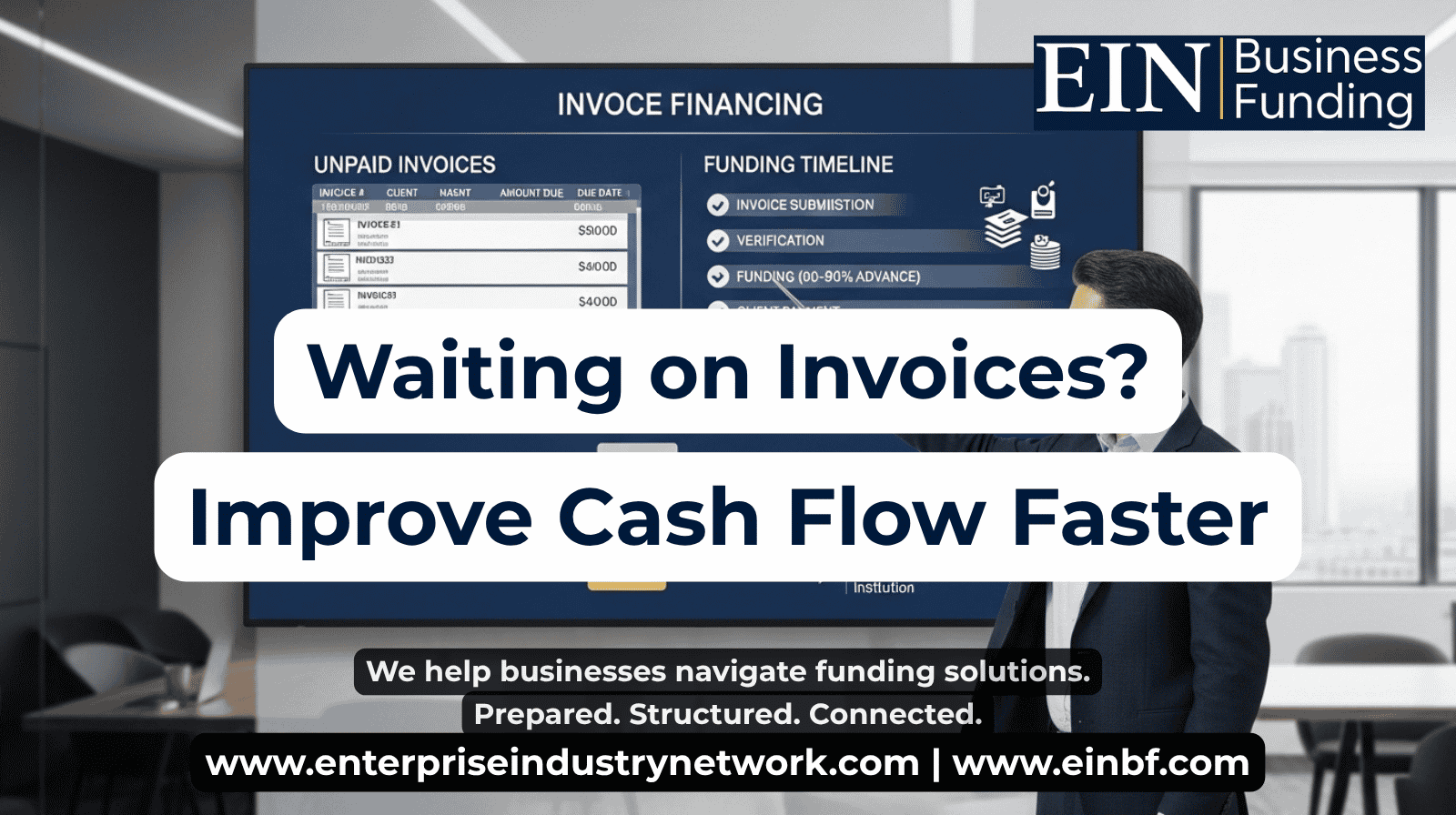
Invoice Financing Within the Ecosystem
A business with slow-paying customers may use receivables financing to improve liquidity timing.
At the same time, the company may need broader help with:
- Collections.
- Cash-flow management.
- Customer concentration.
- Working-capital strategy.
Acquisition Financing Within the Ecosystem
Acquisition financing can be one of the clearest examples of multiple EIN functions working around the same transaction.
The buyer may need:
- Business opportunity identification.
- Brokerage support.
- Financing.
- Legal review.
- Transaction structure.
- Post-closing working capital.
Seller Financing Within the Ecosystem
Seller financing may form part of an acquisition when the seller agrees to receive part of the purchase price over time.
That arrangement can involve:
- Buyer financing.
- Seller-note terms.
- Legal documentation.
- Cash-flow analysis.
- Transaction negotiation.
SBA-Related Acquisition Financing
A buyer using SBA-related acquisition financing may need to coordinate:
- Buyer equity.
- Lender financing.
- Seller financing where applicable.
- Business cash flow.
- Legal transaction documentation.
- Working capital after closing.
The financing is only one component of the acquisition structure.
Refinancing Within the Ecosystem
Refinancing may help a company replace or restructure existing debt.
That decision can connect with broader goals such as:
- Growth.
- Financial cleanup.
- Recapitalization.
- Exit preparation.
- Investor readiness.
Bridge Financing Within the Ecosystem
Bridge capital may support a temporary need while the business approaches another event such as:
- A sale.
- A refinance.
- A receivables collection.
- A larger transaction.
The broader transaction context matters because short-term financing can affect liens, repayment, buyer due diligence, and closing.
Recapitalization Within the Ecosystem
Recapitalization may involve changing:
- Debt.
- Equity.
- Ownership.
- Working capital.
- Investor relationships.
Because recapitalization can involve both financial and ownership changes, funding, advisory, legal, and capital-strategy support may all become relevant.
Pre-Exit Funding Within the Ecosystem
A company preparing for sale may use financing to support:
- Working capital.
- Equipment replacement.
- Technology.
- Debt restructuring.
- Operational stabilization.
The seller may simultaneously need brokerage, legal, advisory, and transaction preparation support.
Why Connected Business Support Can Matter
Business decisions often create secondary needs.
For example:
- A financing decision can create legal documentation requirements.
- An acquisition can create post-closing working-capital needs.
- A sale can create debt payoff and restructuring issues.
- Growth financing can require operational planning.
- Investor preparation can require both capital and legal readiness.
A connected ecosystem can help business owners recognize those dependencies earlier.
The Objective Is Coordination, Not Duplication
The purpose of an ecosystem is not to provide the same service through multiple divisions.
Each area can address a different part of the business need.
For example:
- Funding addresses capital.
- Brokerage addresses business transactions.
- Consulting addresses operational or strategic issues.
- Legal support addresses agreements and legal readiness.
- Listings support business-sale visibility.
- Capital relationships may support broader investment objectives.
EINBF as the Capital-Readiness Layer
Within this structure, EINBF can be viewed as the funding and capital-readiness layer.
Its role may include:
- Understanding the funding objective.
- Reviewing readiness.
- Evaluating possible financing structures.
- Helping organize the funding request.
- Understanding repayment capacity.
- Exploring potential capital paths.
Funding Readiness for Business Owners
Business owners seeking capital may need to prepare:
- Financial statements.
- Business bank statements.
- Tax information.
- Debt schedules.
- Use-of-funds explanation.
- Ownership information.
- Other relevant documents.
The specific requirements depend on the financing structure and provider.
Funding Readiness for Business Buyers
A buyer pursuing an acquisition may need to evaluate:
- Personal financial strength.
- Available equity.
- Credit profile.
- Industry or management experience.
- Target-business cash flow.
- Purchase price.
- Seller financing.
- Post-closing working capital.
Funding Readiness for Business Sellers
Sellers may need to understand how existing financing affects:
- Buyer due diligence.
- Liens.
- Debt payoff.
- Seller proceeds.
- Transaction structure.
Pre-exit funding decisions should therefore be evaluated within the broader sale process.
Funding Readiness for Growing Companies
Growing companies should understand whether capital is needed for:
- Working capital.
- Inventory.
- Equipment.
- Technology.
- Staff.
- New locations.
- Acquisitions.
The financing structure should align with the specific growth driver.
The EIN Ecosystem and the Business Lifecycle
A business can move through multiple stages over time:
- Startup and early growth.
- Expansion.
- Operational improvement.
- Acquisition.
- Recapitalization.
- Exit preparation.
- Business sale.
Different EIN functions may become relevant at different stages.
From Funding to Acquisition
A company may initially seek growth capital and later use acquisition financing to purchase another business.
That transition can introduce:
- Brokerage.
- Legal support.
- Due diligence.
- Post-closing consulting.
- Working-capital planning.
From Growth to Exit
A business may use financing for growth and later begin preparing for sale.
The needs can then shift toward:
- Pre-exit funding.
- Refinancing.
- Recapitalization.
- Business brokerage.
- Legal readiness.
- Listing visibility.
From Listing to Buyer Financing
A listed business may attract a buyer who needs acquisition financing.
That transaction may create a natural connection between:
- Business listings.
- Brokerage.
- Funding.
- Legal support.
- Seller financing.
Capital Should Fit the Broader Business Objective
A financing decision should not be evaluated only by whether capital is available.
Owners should also ask:
- What larger business objective does this capital support?
- What other services or disciplines are connected to that objective?
- Will the financing create legal or transaction issues?
- How does the capital affect future growth, acquisition, or exit plans?
EINBF Does Not Replace Other EIN Functions
The purpose of EINBF is not to perform brokerage, legal, consulting, or listing functions.
Its role is to address the capital side of the business need while existing within a network where other specialized support may also become relevant.
Why This Structure Matters for Business Buyers
A buyer may need more than financing approval.
A successful acquisition can require coordination around:
- The target business.
- Purchase price.
- Financing.
- Transaction structure.
- Legal documentation.
- Working capital.
- Post-closing operations.
Why This Structure Matters for Sellers
A seller may need to prepare both the company and the transaction.
That can involve:
- Operational readiness.
- Debt cleanup.
- Pre-exit capital.
- Business marketing.
- Brokerage.
- Legal support.
- Buyer financing considerations.
Why This Structure Matters for Growing Businesses
Growth may require capital, but it may also create operational, legal, or strategic complexity.
A connected structure can help identify when the company needs support beyond financing alone.
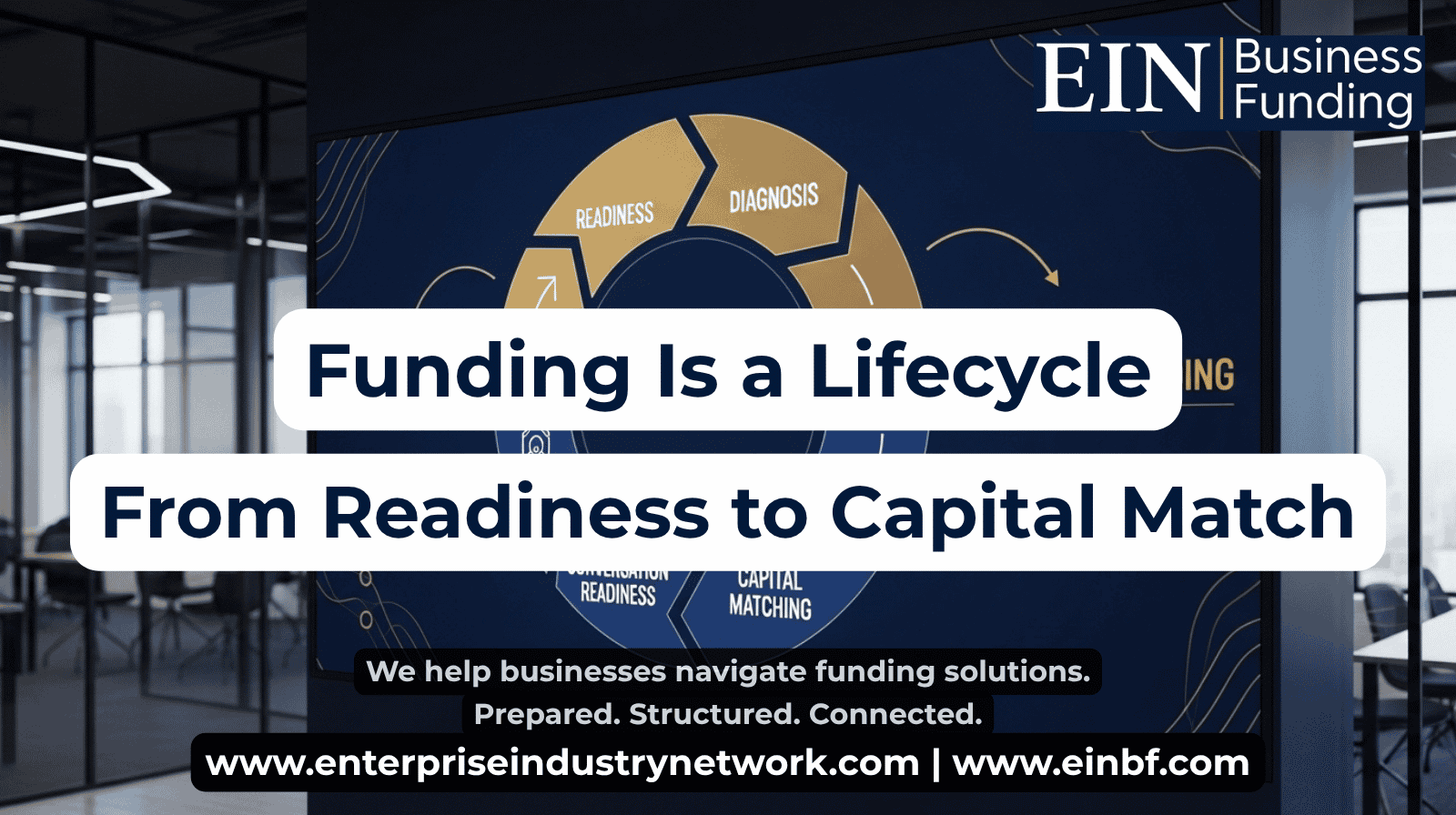
The EINBF Funding Process Within the Ecosystem
A practical EINBF funding process can include:
- Step 1: Understand the business objective.
- Step 2: Diagnose the capital need.
- Step 3: Review financial readiness.
- Step 4: Organize documentation.
- Step 5: Evaluate appropriate financing structures.
- Step 6: Explore relevant funding paths.
- Step 7: Identify whether broader EIN support may also be relevant.
Funding as One Layer of a Connected Business Strategy
The core idea behind EINBF’s role inside Enterprise Industry Network is straightforward:
Funding is often one part of a larger business objective.
Capital can support growth, acquisitions, refinancing, equipment, working capital, or exit preparation, but the surrounding business decision may also require advisory, brokerage, consulting, legal, listing, or investor-related support.
Explore Business Funding Through EIN Business Funding
EIN Business Funding (EINBF) helps business owners, buyers, sellers, and growing companies evaluate capital needs and explore potential business funding structures.
Depending on the situation, potential financing paths may include working capital, business lines of credit, equipment financing, invoice financing, acquisition financing, SBA-related financing, seller financing, bridge funding, refinancing, recapitalization, pre-exit funding, and other qualified business financing solutions.
Within Enterprise Industry Network, the funding layer can connect with a broader ecosystem that may also include business advisory, brokerage, consulting, legal support, business listings, and capital relationships when those services are relevant to the business objective.
Need Capital as Part of a Bigger Business Plan?
Start by identifying the business objective, funding requirement, financial readiness, repayment capacity, and broader transaction or growth needs before choosing a capital path.
Frequently Asked Questions
What is EIN Business Funding?
EIN Business Funding (EINBF) is the business funding and capital-readiness layer within Enterprise Industry Network, helping business owners, buyers, sellers, and growing companies evaluate funding needs, documentation, repayment capacity, and potential financing structures.
How does EINBF fit into Enterprise Industry Network?
EINBF focuses on business funding and capital readiness while the broader Enterprise Industry Network can include business advisory, brokerage, consulting, legal support, business listings, and capital relationships.
What types of business funding can EINBF help businesses explore?
Depending on the situation, potential funding paths may include working capital, business lines of credit, equipment financing, invoice financing, acquisition financing, SBA-related financing, refinancing, bridge funding, recapitalization, pre-exit financing, and other qualified business funding structures.
Can a business acquisition involve more than EIN Business Funding?
Yes. An acquisition may involve financing, brokerage or transaction support, legal services, seller financing, working-capital planning, and other business needs depending on the transaction.
How can the EIN ecosystem support a business preparing for sale?
A business preparing for a sale may potentially need funding, debt restructuring, business brokerage, legal readiness, consulting, business listing visibility, or other transaction-related support depending on its circumstances.
Does EINBF replace legal, brokerage, or consulting services?
No. EINBF focuses on funding and capital readiness. Other specialized EIN functions can address separate business needs such as brokerage, consulting, legal support, listings, and broader strategic or capital relationships.
 EIN Business Funding provides the funding and capital-readiness layer within Enterprise Industry Network, connecting business financing needs with broader advisory, brokerage, consulting, legal, listing, and capital support.