
Invoice Financing With EIN: Can Unpaid Customer Invoices Help Support Business Cash Flow?
Waiting for customers to pay outstanding invoices?
A business can have revenue on paper and still experience a cash-flow problem.
The work may already be completed. The customer may already have been invoiced. But payroll, suppliers and other operating expenses can become due before the invoice is actually paid.
For eligible businesses, invoice financing may be one potential way to address that timing gap.
What Is Invoice Financing?
Invoice financing generally allows a business to seek financing based in part on eligible unpaid customer invoices or accounts receivable.
The exact structure varies by provider.
Rather than waiting until the customer pays under normal invoice terms, the business may be able to access a portion of the invoice value earlier, subject to eligibility, verification, fees and other provider requirements.
Why Businesses Explore Invoice Financing
Invoice financing can be relevant when the business has already earned revenue but has not yet collected the cash.
That timing difference can affect:
- Payroll
- Supplier payments
- Inventory
- Operating expenses
- New customer work
- Other short-term business needs
The issue is often not a lack of sales. It is the delay between generating the invoice and receiving the payment.
The Invoice Itself Matters
Invoice financing is different from simply applying for a general-purpose business loan.
Depending on the provider, the financing review may consider the receivable itself, including factors such as the invoice, customer, payment terms and whether the underlying goods or services have been delivered or completed.
Not every invoice or customer will necessarily qualify.
Business Information May Still Be Reviewed
Having an unpaid invoice does not automatically create a financing approval.
Requirements differ by provider, and the broader business profile may still be relevant.
Providers may request information about the business, its operating history, revenue, cash flow, existing obligations or other financial circumstances.
What About Invoice Financing With an EIN?
Business owners sometimes search for “invoice financing with EIN” because they want financing connected to their business entity and receivables.
An Employer Identification Number can help identify the business during an application.
However, an EIN alone does not determine whether invoice financing is available.
Eligibility may depend on the business, the invoice, the customer and the financing provider’s requirements.
Understand the Cost
Accessing money before the invoice is paid comes with a financing cost.
Before proceeding, understand:
- How much of the invoice may be advanced
- Fees or financing costs
- How repayment or collection works
- What happens if the customer pays late
- Any recourse or other obligations
Terms and structures can differ substantially among providers.
Invoice Financing Is About Cash-Flow Timing
A useful way to think about invoice financing is:
The business has generated a receivable, but the cash has not arrived yet.
If that delay is creating an operating constraint, invoice financing may be worth exploring among the available funding options.
EIN Business Funding provides a starting point for U.S. businesses exploring invoice financing and other potential funding solutions.
Funding availability, invoice eligibility, advance amounts, fees, recourse requirements and terms vary by provider and applicant circumstances. An inquiry, application or initial review does not guarantee financing.
Frequently Asked Questions
Can I finance an unpaid business invoice?
Potentially. Some financing providers offer invoice-based financing for qualifying receivables, but eligibility depends on the invoice, customer, business and provider requirements.
Can I get invoice financing with an EIN?
An EIN may be used to identify the business during an application, but an EIN alone does not establish eligibility. The provider may also evaluate the invoice, customer and broader business circumstances.
Does the customer have to pay the invoice eventually?
Yes. Invoice financing is based on an underlying receivable. The specific collection process, responsibilities and consequences of late or unpaid invoices depend on the financing structure and provider.
Is invoice financing the same as a traditional business loan?
Not necessarily. Invoice financing is generally connected to qualifying accounts receivable, while traditional loans may be evaluated primarily against the broader credit and financial profile of the borrower.
Take the Next Step
Subscribe on YouTube:
https://www.youtube.com/@enterpriseindustrynetwork
Explore EIN Business Funding:
https://www.einbf.com/get-funded/
Exit. Acquire. Invest.
Explore Enterprise Industry Network
https://enterpriseindustrynetwork.com/
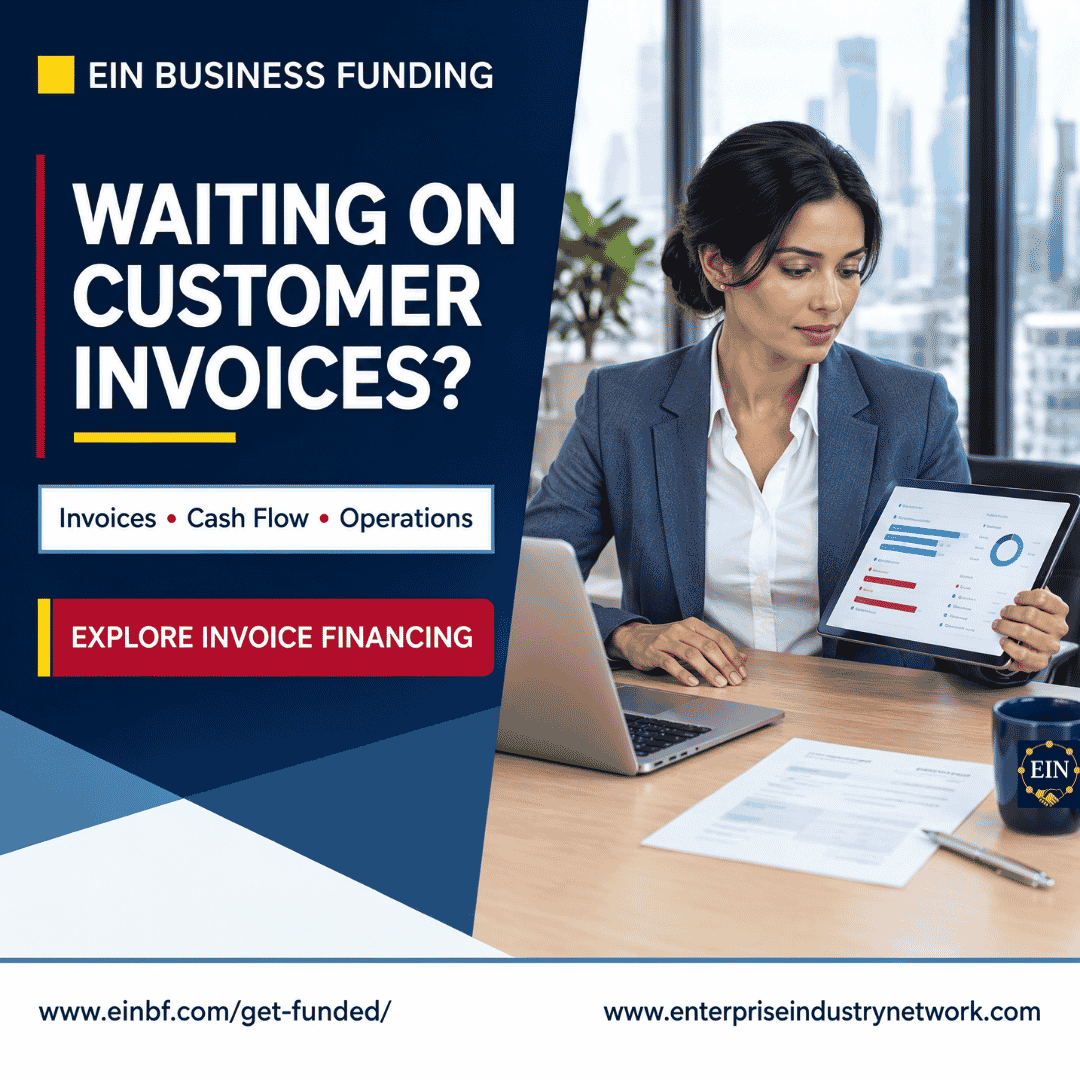 Invoice financing may help eligible businesses address the timing gap between issuing an invoice and receiving customer payment.