Before You Apply for Business Funding: A Funding Readiness Checklist for Business Owners
Before applying for business funding, owners should understand exactly how much capital they need, how the funds will be used, what their current cash flow looks like, and which financial documents can support the request.
Funding readiness matters because lenders and financing providers typically evaluate much more than the requested amount. Revenue history, time in business, cash flow, existing obligations, use of funds, financial documentation, and the overall strength of the business can all influence which funding options may be available.
In this short educational video, EIN Business Funding (EINBF), part of Enterprise Industry Network (EIN), explains what business owners should prepare before starting the business funding process.
What Should You Prepare Before Applying for Business Funding?
A clear and organized funding request can help create a stronger starting point when exploring financing. Business owners should be prepared to provide important information about both the company and the capital being requested.
- The approximate amount of business funding needed.
- A clear explanation of how the funds will be used.
- Current monthly or annual business revenue.
- Recent business cash-flow performance.
- Time in business.
- Existing business debt or financial obligations.
- Business bank statements and available financial records.
- Supporting information relevant to the funding request.
Why Does Funding Readiness Matter?
Business funding is not simply about submitting an application and requesting capital. Funding providers generally need enough information to understand the business, assess financial performance, evaluate repayment capacity, and determine whether a particular financing structure may be appropriate.
When financial records are incomplete, the requested amount is unclear, or the business owner cannot explain how the capital will be used, the funding review process may become more difficult.
Preparing in advance can help owners communicate their funding needs more clearly and understand what information may be required before a financing decision can be made.
Know How Much Capital You Need and Why You Need It
One of the first questions in any business funding discussion is usually straightforward: how much funding does the business need, and what will the money be used for?
Common funding purposes may include:
- Working capital and operating expenses.
- Business expansion or growth initiatives.
- Equipment purchases or upgrades.
- Inventory purchases.
- Business acquisition financing.
- Refinancing existing business obligations.
- Hiring or workforce expansion.
- Marketing and sales growth.
- Cash-flow support.
A well-defined use of funds can make it easier to determine which type of financing may be worth exploring.
Understand Your Business Cash Flow and Revenue
Revenue alone does not tell the complete financial story of a business. Funding providers may also examine cash flow, operating performance, recurring obligations, debt commitments, and the consistency of revenue over time.
Business owners should have a realistic understanding of how money moves through the company and whether current cash flow can support additional financing obligations.
Organized financial information can also help owners compare funding options more effectively instead of focusing only on the amount of capital available.
Organize Your Financial Records Before Applying
Business bank statements and financial records are frequently part of the funding review process. The exact documents required can vary depending on the financing product, lender, funding provider, requested amount, and business profile.
Preparing records in advance may help reduce delays and make the funding request easier to evaluate.
- Business bank statements.
- Profit-and-loss statements when available.
- Balance-sheet information when applicable.
- Business tax returns when requested.
- Debt schedules or information about existing obligations.
- Documentation related to equipment, acquisitions, contracts, or other specific funding purposes.
Different Business Profiles May Qualify for Different Funding Options
There is no single funding solution that is appropriate for every business. Financing options can vary based on revenue, time in business, cash flow, credit profile, industry, requested amount, funding purpose, collateral, documentation, and other factors.
Depending on the business profile and financing need, owners may explore options such as:
- Working capital.
- Business lines of credit.
- Equipment financing.
- Business acquisition financing.
- Growth capital.
- Refinancing.
- Other business financing structures.
The objective should be to identify financing that fits the actual business need rather than pursuing capital without understanding the structure, cost, obligations, and intended use.
How EIN Business Funding Helps Business Owners Explore Financing
EIN Business Funding (EINBF), part of Enterprise Industry Network, helps business owners take the next step toward exploring business funding based on their company profile, financing needs, requested amount, use of funds, and overall funding readiness.
The process begins by understanding the business and the purpose of the capital request before determining which financing pathways may be worth exploring.
Preparing before applying can help business owners approach the funding process with clearer expectations, stronger information, and a better understanding of the financing options that may fit their situation.
Explore Business Funding Options
Know what your business needs before you apply. Start with a quick pre-qualification or submit your business funding request to EIN Business Funding.
Frequently Asked Questions
What should I prepare before applying for business funding?
Business owners should generally be prepared to explain the amount of capital needed, the intended use of funds, current business revenue, cash flow, time in business, existing financial obligations, and the financial records available to support the request.
Why do lenders review business cash flow?
Cash flow can help funding providers understand how the business generates and uses money and whether its financial performance may support additional financing obligations.
Do I need business bank statements to apply for funding?
Many business financing providers request recent business bank statements, although documentation requirements can vary depending on the financing product, provider, requested amount, and business profile.
How do I know which type of business funding is right for my company?
The appropriate financing option depends on factors such as the amount needed, use of funds, revenue, cash flow, time in business, existing obligations, financial profile, and the specific purpose of the capital.
Can preparing before applying improve the funding process?
Preparation can make the funding request clearer, reduce problems caused by missing information, and help business owners better understand which financing options may fit their needs.
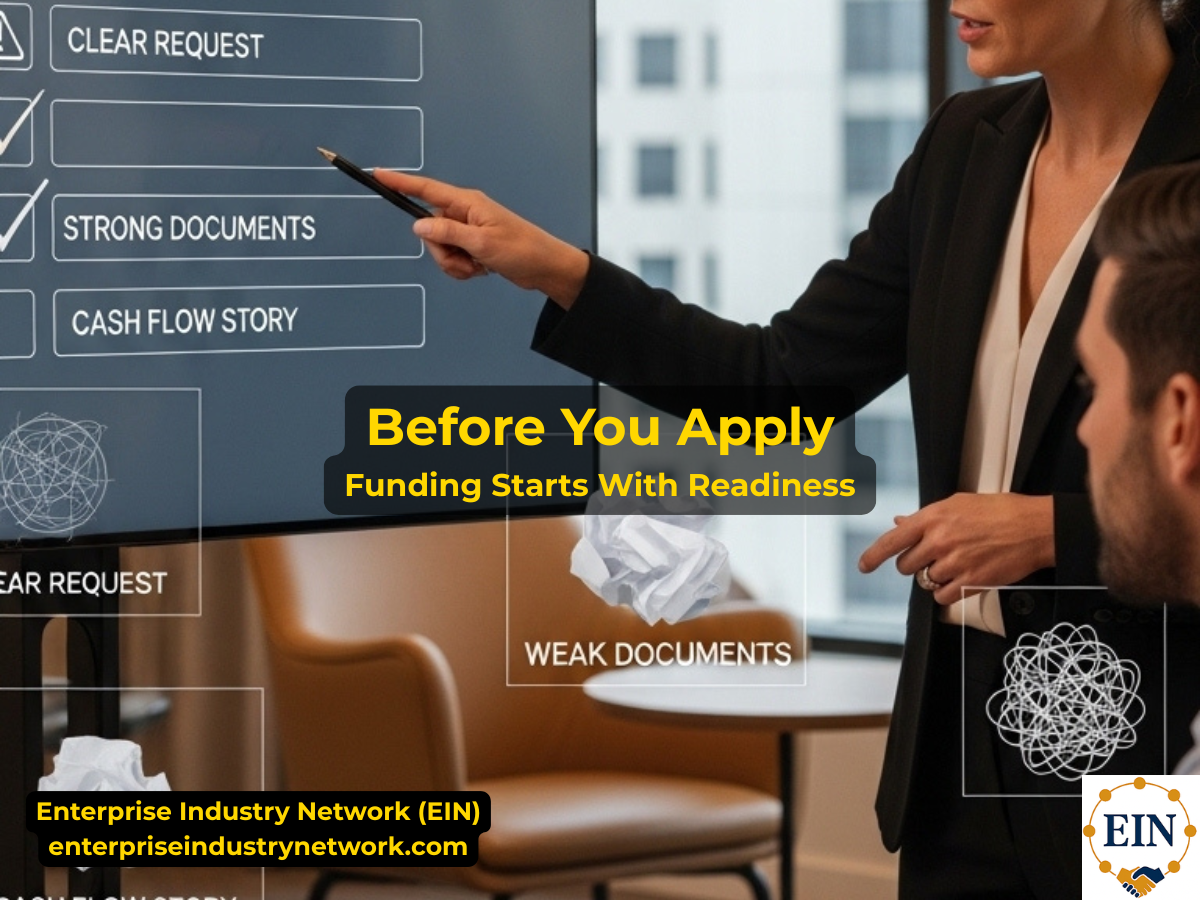 Before applying for business funding, business owners should clarify their funding need, understand cash flow, organize financial records, and prepare supporting documentation.