What Lenders Check Before Approving Business Funding
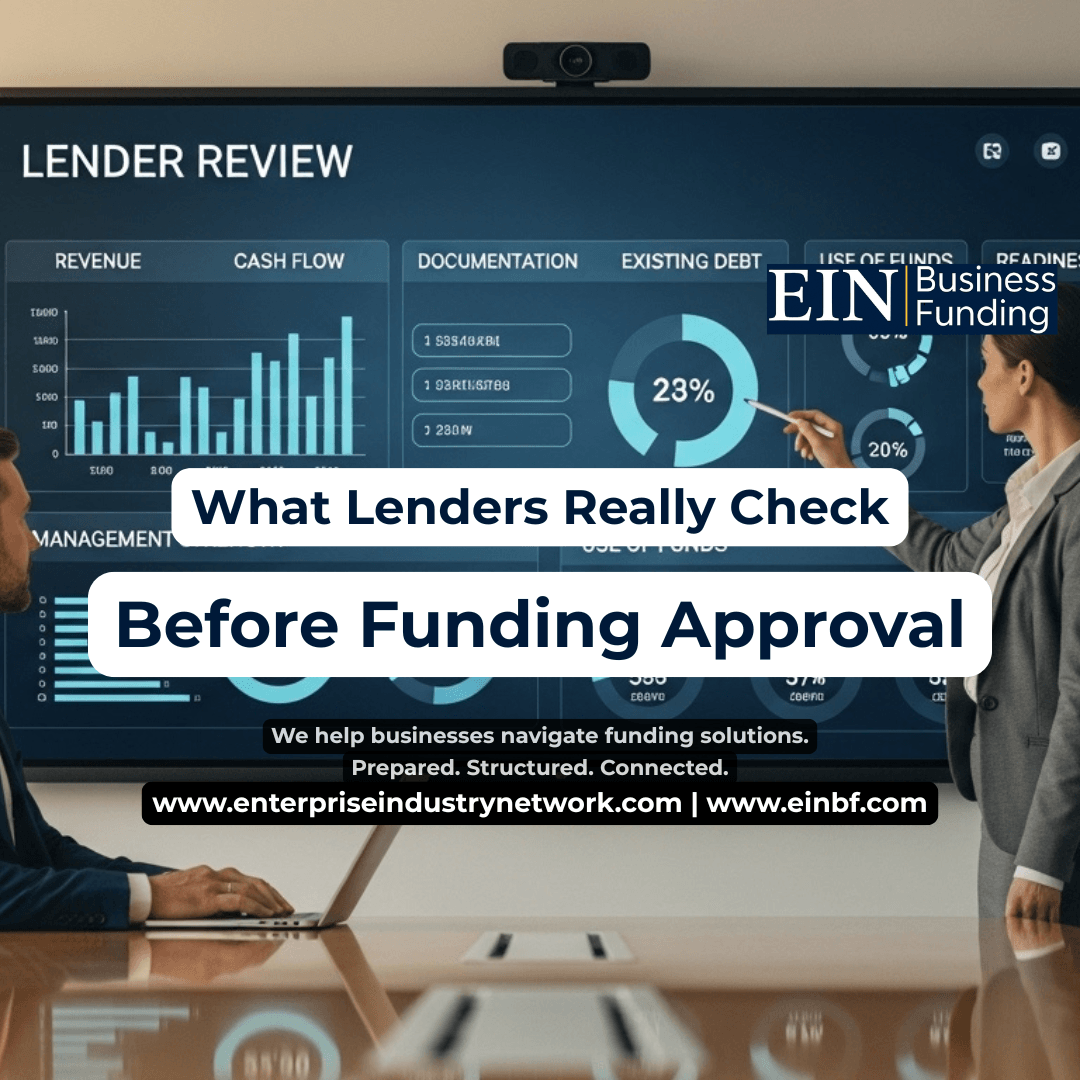
What do lenders check before approving business funding? A funding request is only one part of the decision. Depending on the financing product and provider, lenders may review the company’s cash flow, bank activity, repayment ability, expenses, profit margins, existing debt, credit profile, financial records, and the planned use of funds.
For business owners, funding readiness means being prepared to show how the business is performing, why capital is needed, and whether the company appears capable of supporting additional financing obligations.
In this short educational video, EIN Business Funding (EINBF), part of Enterprise Industry Network (EIN), explains the key areas lenders may evaluate before deciding whether to approve business funding.
What Do Lenders Look at Before Approving Business Funding?
Lenders and funding providers generally want to understand the financial strength, stability, and repayment capacity of the business before providing capital.
Depending on the product and provider, they may review:
- Business revenue and revenue consistency.
- Operating cash flow.
- Business bank statements and account activity.
- Profit margins and operating expenses.
- Existing business debt and financial obligations.
- Credit history or credit profile.
- Time in business.
- The amount of funding requested.
- The intended use of funds.
- Available financial documents and supporting records.
Why Cash Flow Matters in a Funding Decision
Revenue shows how much a business generates, but cash flow can provide insight into whether the company has enough available cash to meet day-to-day expenses and additional financing obligations.
A business may generate strong sales and still experience cash-flow pressure because of slow customer payments, high operating costs, inventory requirements, seasonal changes, or existing debt.
This is why lenders may look beyond top-line revenue when evaluating repayment ability.
How Bank Activity Can Affect Funding Readiness
Business bank statements can help show how money moves through the company over time. Depending on the financing structure, funding providers may review deposits, withdrawals, average balances, overdrafts, recurring expenses, and other patterns in business banking activity.
Clear and consistent bank activity can help support a more complete picture of the company’s financial position.
Why Existing Debt and Obligations Matter
Lenders may also review current loans, credit lines, leases, merchant advances, or other financial commitments before approving new financing.
The objective is to understand how much financial pressure the business already carries and whether an additional funding obligation appears manageable.
Business owners should therefore know their current debt position before applying and be prepared to explain existing repayment obligations.
The Use of Funds Can Influence the Funding Review
How the business plans to use the capital can also matter. A clearly defined funding purpose can help lenders understand how the financing relates to the company’s operations, growth plans, or working-capital needs.
Common uses may include:
- Working capital.
- Equipment financing.
- Inventory purchases.
- Business expansion.
- Acquisition financing.
- Refinancing.
- Hiring and workforce expansion.
- Marketing and sales growth.
How Business Owners Can Prepare Before Applying
Preparation can make the funding process clearer and more efficient. Before applying, business owners should understand their financial position and organize the information most likely to be requested.
- Review recent business bank statements.
- Understand monthly revenue and cash flow.
- Know current debt and repayment obligations.
- Clarify how much funding is needed.
- Define exactly how the funds will be used.
- Organize available financial records.
- Be prepared to explain the company’s current financial performance.
Explore Business Funding with EIN Business Funding
EIN Business Funding (EINBF), part of Enterprise Industry Network, helps business owners understand funding readiness and explore financing options based on their business profile, capital needs, financial position, and intended use of funds.
Depending on the business and funding need, potential options may include working capital, business lines of credit, equipment financing, acquisition financing, refinancing, growth capital, and other business financing solutions.
Explore Business Funding Options
Understand what lenders may review before you apply. Start with a quick pre-qualification or submit your funding request to EIN Business Funding.
Frequently Asked Questions
What do lenders check before approving business funding?
Depending on the financing product and provider, lenders may review revenue, cash flow, business bank statements, expenses, profit margins, existing debt, credit information, time in business, financial records, funding amount, and intended use of funds.
Why is cash flow important for business funding approval?
Cash flow can help show whether the business appears capable of covering operating expenses and additional financing obligations, even when revenue is strong.
Do lenders review business bank statements?
Many business financing providers review recent business bank statements to understand deposits, cash-flow patterns, balances, recurring expenses, and overall banking activity.
Does existing business debt affect funding approval?
Existing loans and financial obligations can influence a funding decision because lenders may consider how much debt the business already carries and whether additional repayment obligations appear manageable.
How can a business improve funding readiness?
Business owners can prepare by organizing financial records, reviewing cash flow, understanding current debt, clarifying the amount needed, defining the use of funds, and being ready to explain the company’s financial position.
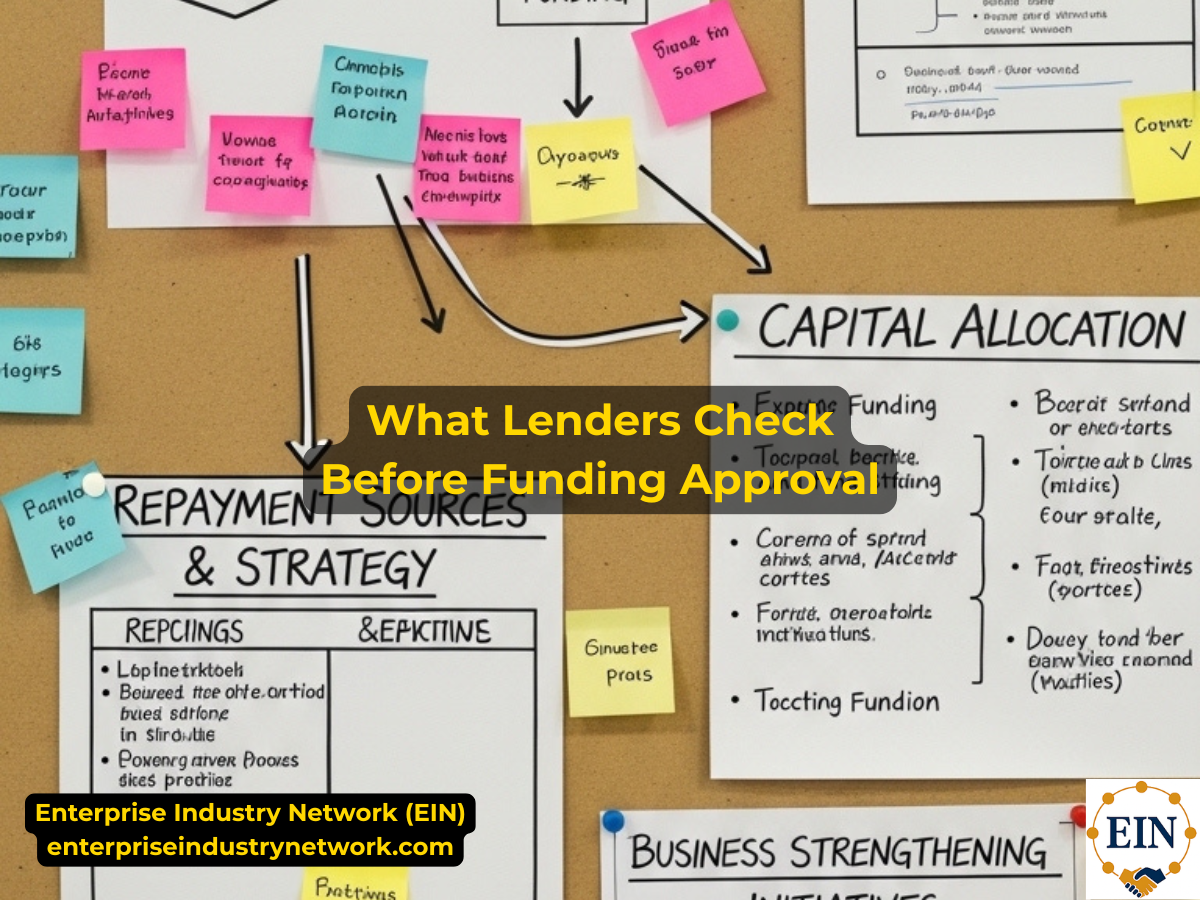 Lenders may evaluate cash flow, bank activity, repayment ability, existing debt, financial records, and use of funds before approving business funding.