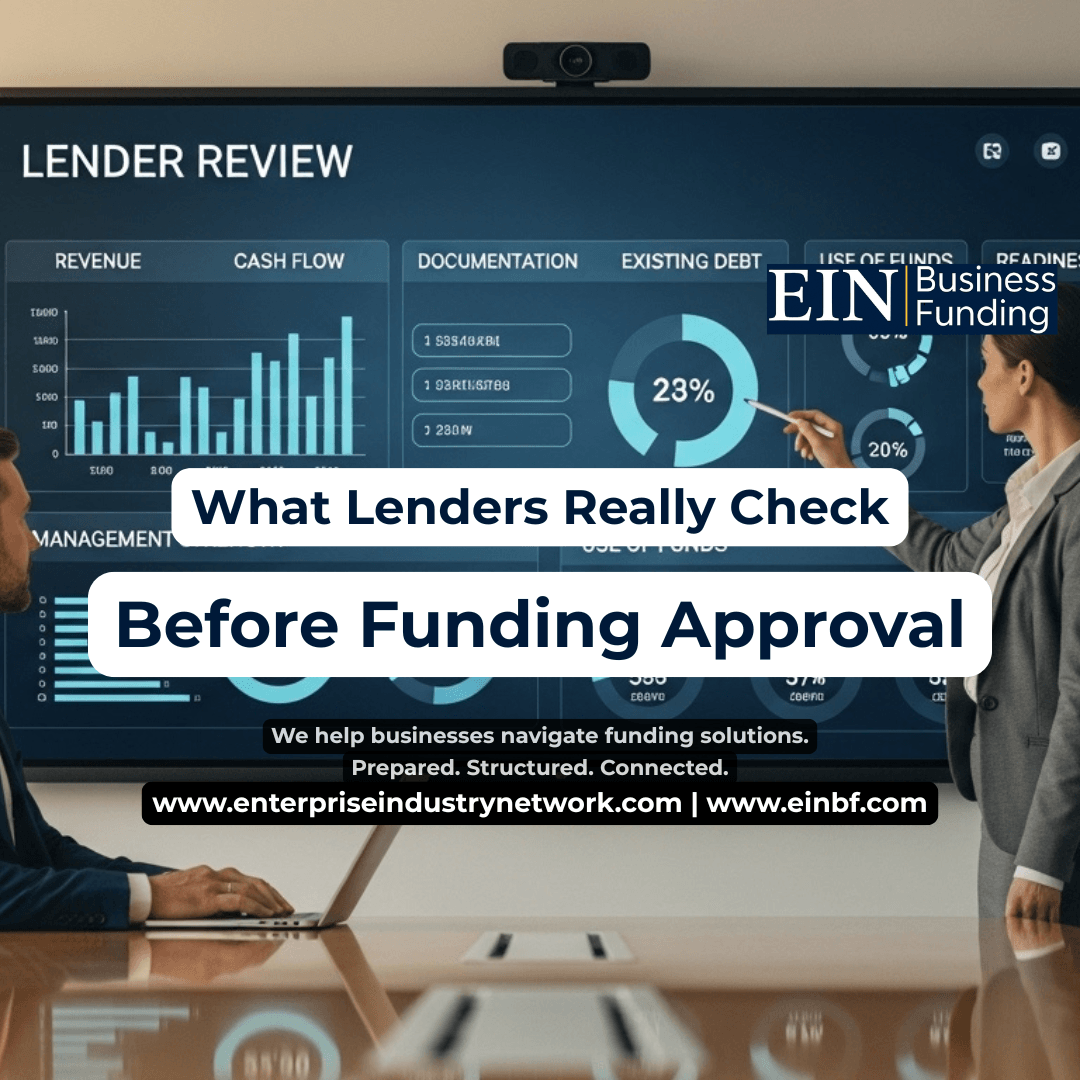
Business Loan Documentation Requirements: What to Prepare Before Lender Review
What documents should a business owner prepare before applying for business funding? Funding conversations can slow down when a company is not document-ready. Before lenders, funding providers, or capital sources can properly evaluate a financing request, they often need organized information that helps them understand the business, its financial position, existing obligations, ownership, cash flow, and intended use of capital.
Business loan documentation requirements vary by lender and financing product, but preparing core records in advance can reduce avoidable confusion and make the funding request easier to evaluate.
In this long-form educational video, EIN Business Funding (EINBF), part of Enterprise Industry Network (EIN), explains the major business funding documents owners may need before lender review and why document readiness matters when seeking capital.
Why Business Funding Documents Matter
A lender is not evaluating only the amount of money requested. The lender is evaluating the business behind the request.
Documents can help answer important questions such as:
- How much revenue does the business generate?
- How stable is business cash flow?
- What expenses and liabilities already exist?
- Who owns and controls the company?
- How much debt is currently outstanding?
- What will the requested capital be used for?
- Can the business reasonably support repayment?
Clear documentation can help create a more complete financial picture and reduce the need for repeated clarification during underwriting.
1. Business Bank Statements
Business bank statements can provide lenders with a practical view of how money actually moves through the company.
Depending on the financing product, providers may review several months of bank activity to understand:
- Deposit consistency.
- Average balances.
- Revenue patterns.
- Operating expenses.
- Existing financing withdrawals.
- Overdrafts or returned payments.
- Seasonality.
- Large or unusual transactions.
Business owners should review bank statements before applying so they understand what a lender may see and can explain any unusual activity.
2. Profit-and-Loss Statement
A profit-and-loss statement, often called a P&L or income statement, helps show revenue, expenses, and profitability over a defined period.
It can help lenders understand:
- Sales performance.
- Cost of goods sold.
- Operating expenses.
- Gross profit.
- Operating profit.
- Net income.
- Expense trends.
Current financial statements are generally more useful than records that no longer reflect the present financial condition of the business.
3. Balance Sheet
A balance sheet provides a snapshot of the company’s assets, liabilities, and equity at a particular point in time.
Lenders may use the balance sheet to understand:
- Cash and current assets.
- Accounts receivable.
- Inventory.
- Equipment and other assets.
- Short-term liabilities.
- Long-term debt.
- Owner or shareholder equity.
The balance sheet can help show how the business is financed and how much financial leverage already exists.
4. Business Tax Returns
Some lenders and financing programs may request business tax returns to verify historical revenue, income, ownership information, or other financial details.
Tax-return requirements can vary by provider and funding product.
When tax records are requested, business owners should make sure they understand any significant differences between tax information and current financial statements.
5. Existing Business Debt Schedule
A debt schedule summarizes current business financing obligations.
It may include:
- Lender or creditor name.
- Original loan amount.
- Current balance.
- Monthly payment.
- Interest rate or financing cost.
- Loan maturity.
- Collateral.
- Personal guarantees.
A clear debt schedule helps lenders understand how much of the company’s cash flow is already committed to existing obligations.
6. Accounts Receivable Information
Businesses that invoice customers may be asked to provide accounts receivable information.
An accounts receivable aging report can help show:
- Total outstanding invoices.
- How long invoices have remained unpaid.
- Customer concentration.
- Collection patterns.
- Potentially overdue receivables.
This information can be especially relevant for working-capital financing, invoice financing, and businesses with long customer-payment cycles.
7. Accounts Payable Information
Accounts payable records can help show how much the business owes suppliers and vendors.
Lenders may want to understand whether the company has:
- Current supplier obligations.
- Past-due vendor balances.
- Significant upcoming payments.
- Working-capital pressure caused by supplier terms.
Together, receivables and payables can provide additional context around the company’s operating cash cycle.
8. Business Ownership Documents
Lenders may need to verify who owns the company and who has authority to enter into financing agreements.
Depending on the business structure, documentation may include:
- Articles of incorporation or organization.
- Operating agreements.
- Partnership agreements.
- Shareholder information.
- Ownership percentages.
- Business licenses.
- Employer identification information.
Accurate ownership records are particularly important when multiple owners or guarantors are involved.
9. Business Legal and Formation Records
Financing providers may verify that the company is properly formed and operating under the legal entity identified in the funding request.
Relevant records can include:
- Entity formation documents.
- Business licenses.
- Good-standing records where applicable.
- Legal business address.
- DBA or trade-name information.
- Ownership records.
Consistency between legal documents, bank records, tax records, and the application can help reduce verification issues.
10. Clear Use-of-Funds Statement
One of the most important parts of a funding request is explaining exactly how the capital will be used.
A use-of-funds statement may identify capital needed for:
- Working capital.
- Payroll.
- Inventory.
- Equipment.
- Technology.
- Marketing.
- Business expansion.
- Acquisition financing.
- Refinancing.
- Other defined business purposes.
The requested amount should reasonably connect with the intended purpose.
11. Business Summary or Company Profile
A concise business summary can help a funding provider quickly understand what the company does and why the financing request matters.
A useful business summary may explain:
- What the company sells.
- Who the customers are.
- How long the business has operated.
- How revenue is generated.
- Current business size.
- Management experience.
- The reason capital is needed.
The goal is to make the business understandable without forcing the lender to reconstruct the story from financial records alone.
12. Financial Projections
Some financing requests may require forward-looking projections, particularly when the capital is intended for expansion, acquisitions, new equipment, hiring, or another growth initiative.
Projections may include:
- Expected revenue.
- Operating expenses.
- Payroll.
- Cash-flow forecasts.
- Debt payments.
- Working-capital requirements.
- Expected impact of the new capital.
Projections should be realistic and based on assumptions the business can explain.
13. Equipment Quotes or Purchase Information
When financing is intended for machinery, vehicles, technology, medical equipment, restaurant equipment, or other business assets, the lender may request documentation related to the purchase.
That may include:
- Vendor quotes.
- Purchase agreements.
- Equipment descriptions.
- Serial numbers where applicable.
- Asset condition.
- Purchase price.
These documents help connect the financing amount with the asset being acquired.
14. Acquisition Documents
Business acquisition financing usually requires documentation beyond a standard working-capital request.
Potential documents may include:
- Letter of intent.
- Purchase agreement.
- Target-company financial statements.
- Business tax returns.
- Seller financing terms.
- Buyer equity contribution.
- Business valuation information.
- Post-closing working-capital requirements.
Both the buyer and the business being acquired may be evaluated during the financing process.
15. Invoice and Receivables Documentation
For invoice financing or receivables-based funding, providers may request information about specific customer invoices.
Documentation may include:
- Invoice copies.
- Accounts receivable aging.
- Customer information.
- Payment terms.
- Proof that work or delivery has been completed.
- Customer-payment history.
The quality of the receivable can be an important part of the financing review.
16. Identification and Guarantor Information
Depending on the financing structure, business owners or guarantors may need to provide identity and ownership information.
Requirements vary, but financing providers may need to verify:
- Owner identity.
- Ownership percentage.
- Authorized signers.
- Guarantor information.
- Personal credit where applicable.
Why Document Consistency Matters
Preparing documents is only part of funding readiness. The information should also make sense together.
Lenders may compare:
- Revenue reported on the application.
- Deposits visible in bank statements.
- Revenue shown on financial statements.
- Debt disclosed by the business.
- Ownership shown in legal records.
- The stated funding purpose.
Significant inconsistencies can lead to additional lender questions and may delay the review.
How Recent Should Business Funding Documents Be?
The required time period varies by funding provider, but financial information should generally be current enough to accurately represent the company’s present financial position.
An outdated P&L or debt schedule may fail to reflect:
- Recent growth.
- New debt.
- Changes in expenses.
- Changes in ownership.
- Current cash-flow conditions.
Business owners should confirm which document periods are required for the specific funding option being considered.
Organize Documents Before Capital Becomes Urgent
Waiting until the business urgently needs cash can make document preparation more difficult.
Preparing earlier gives owners time to:
- Update bookkeeping.
- Review bank activity.
- Reconcile financial statements.
- Identify existing debt.
- Organize ownership records.
- Clarify the use of funds.
- Correct missing or inconsistent information.
Document readiness is strongest when it becomes part of ongoing financial management rather than an emergency exercise.
Different Funding Products Require Different Documents
There is no single universal document checklist for every financing product.
Documentation requirements may differ for:
- Working-capital financing.
- Business term loans.
- Business lines of credit.
- Equipment financing.
- Invoice financing.
- Acquisition financing.
- Refinancing.
- Other business capital structures.
The business should therefore prepare core financial records while also confirming product-specific documentation requirements.
What Lenders Learn from Financial Statements
Financial statements help lenders move beyond a single revenue figure.
They may help show:
- Whether the company is profitable.
- How expenses are changing.
- Whether margins are stable.
- How much debt exists.
- What assets the business owns.
- Whether financial performance is improving or weakening.
Better financial visibility can help make the funding conversation more focused and productive.
What Lenders Learn from Bank Statements
Bank statements provide another perspective because they show actual cash movement rather than accounting entries alone.
A provider may review:
- Cash deposits.
- Withdrawal patterns.
- Average balances.
- Current lender payments.
- Overdraft activity.
- Seasonal changes.
Financial statements and bank activity should generally tell a coherent story about the business.
Document Readiness Does Not Guarantee Approval
Having complete documentation does not automatically qualify a business for financing.
Approval may still depend on:
- Revenue.
- Cash flow.
- Credit.
- Existing debt.
- Time in business.
- Industry.
- Collateral.
- Repayment capacity.
- Funding amount.
- Specific lender requirements.
Document readiness helps a lender evaluate the business more effectively. It does not replace underwriting.
Business Funding Document Checklist
Before beginning a funding conversation, business owners may want to organize a core document package that includes:
- Recent business bank statements.
- Current profit-and-loss statement.
- Current balance sheet.
- Business tax returns when applicable.
- Existing debt schedule.
- Accounts receivable and payable information where relevant.
- Ownership and entity records.
- Clear use-of-funds statement.
- Business summary.
- Financial projections where applicable.
- Product-specific supporting documents.
How EIN Business Funding Helps Businesses Prepare
EIN Business Funding (EINBF), part of Enterprise Industry Network, helps business owners approach capital with greater preparation and clarity by understanding funding needs, organizing relevant financial information, reviewing existing obligations, clarifying the use of funds, and exploring financing paths that may fit the business.
Depending on the company and capital need, potential financing options may include working capital, business lines of credit, equipment financing, invoice financing, acquisition financing, refinancing, and other qualified business funding structures.
The objective is not simply to collect documents. It is to present a clear and consistent financial picture that lenders and funding providers can evaluate efficiently.
Prepare Your Funding Documents Before You Apply
Organize your bank statements, financial statements, debt information, ownership records, use of funds, and supporting documents before starting the funding process.
Frequently Asked Questions
What documents are usually needed for business funding?
Requirements vary by lender, but businesses may be asked for bank statements, profit-and-loss statements, balance sheets, tax returns, debt schedules, ownership records, accounts receivable information, a use-of-funds statement, and other supporting documents.
Why do lenders ask for business bank statements?
Bank statements can help lenders understand deposit activity, cash flow, existing financing withdrawals, balances, overdrafts, seasonality, and how money actually moves through the business.
Do I need tax returns to apply for business funding?
Some lenders and funding programs may require business tax returns, while others may use different documentation. Requirements depend on the financing product and provider.
What is a business debt schedule?
A debt schedule summarizes existing financing obligations, including balances, payment amounts, lenders, repayment terms, and other relevant debt information.
Why is a use-of-funds statement important?
A clear use-of-funds statement explains why capital is needed, how much is required, and how the business intends to deploy the financing.
Does having all documents guarantee funding approval?
No. Complete documentation can make lender review easier, but approval still depends on underwriting factors such as revenue, cash flow, credit, existing debt, repayment capacity, industry, funding purpose, and provider requirements.
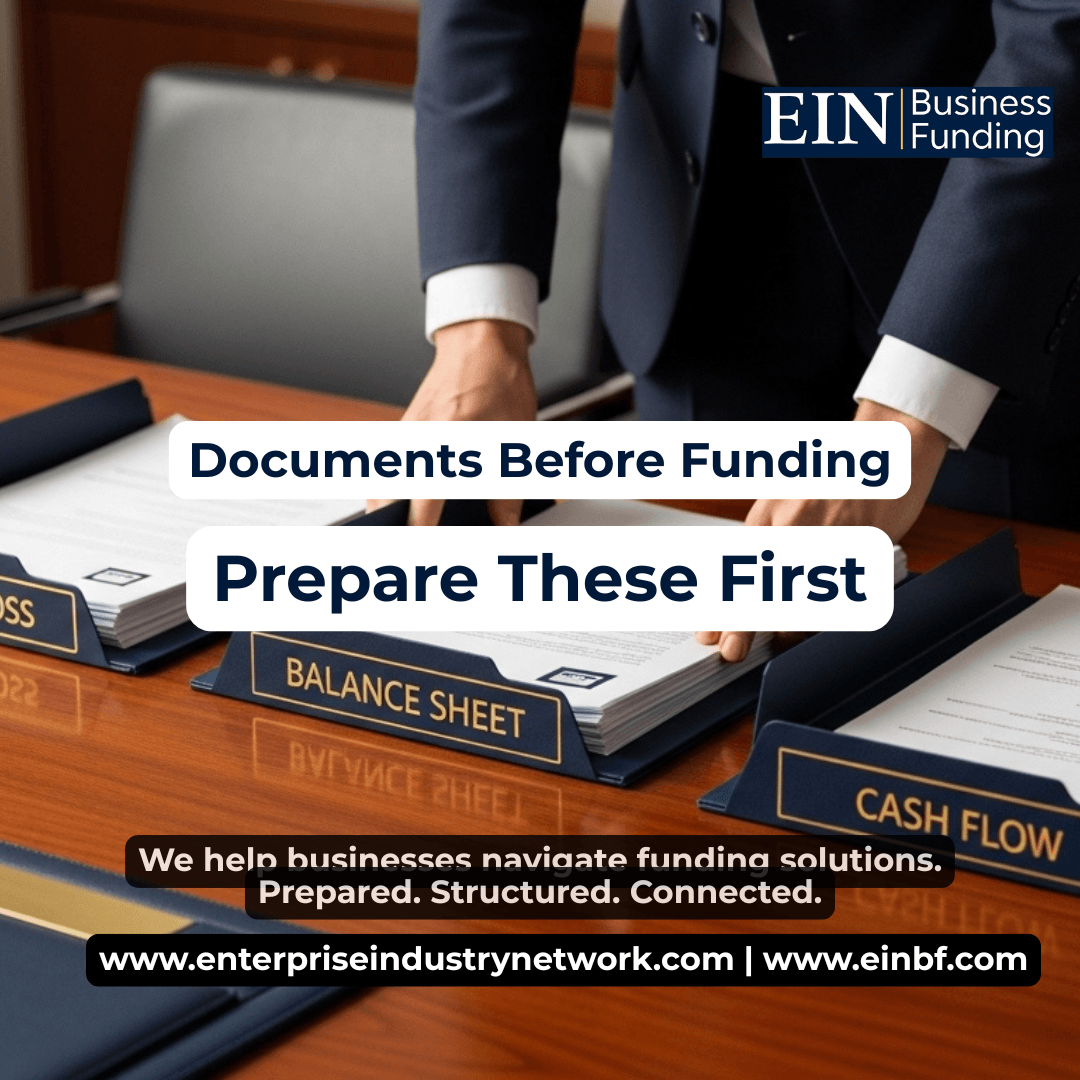 Preparing complete and consistent business funding documents can help lenders understand revenue, cash flow, debt, ownership, repayment capacity, and the intended use of capital more efficiently.