Business Loan With EIN and Bank Statements: What Online Lenders May Review Before Pre-Qualification
Business owners searching for a business loan with an EIN often want a financing process that focuses more heavily on the company than on a traditional bank application. Online and alternative lenders can use different underwriting models, but the EIN itself is still only one part of the funding profile.
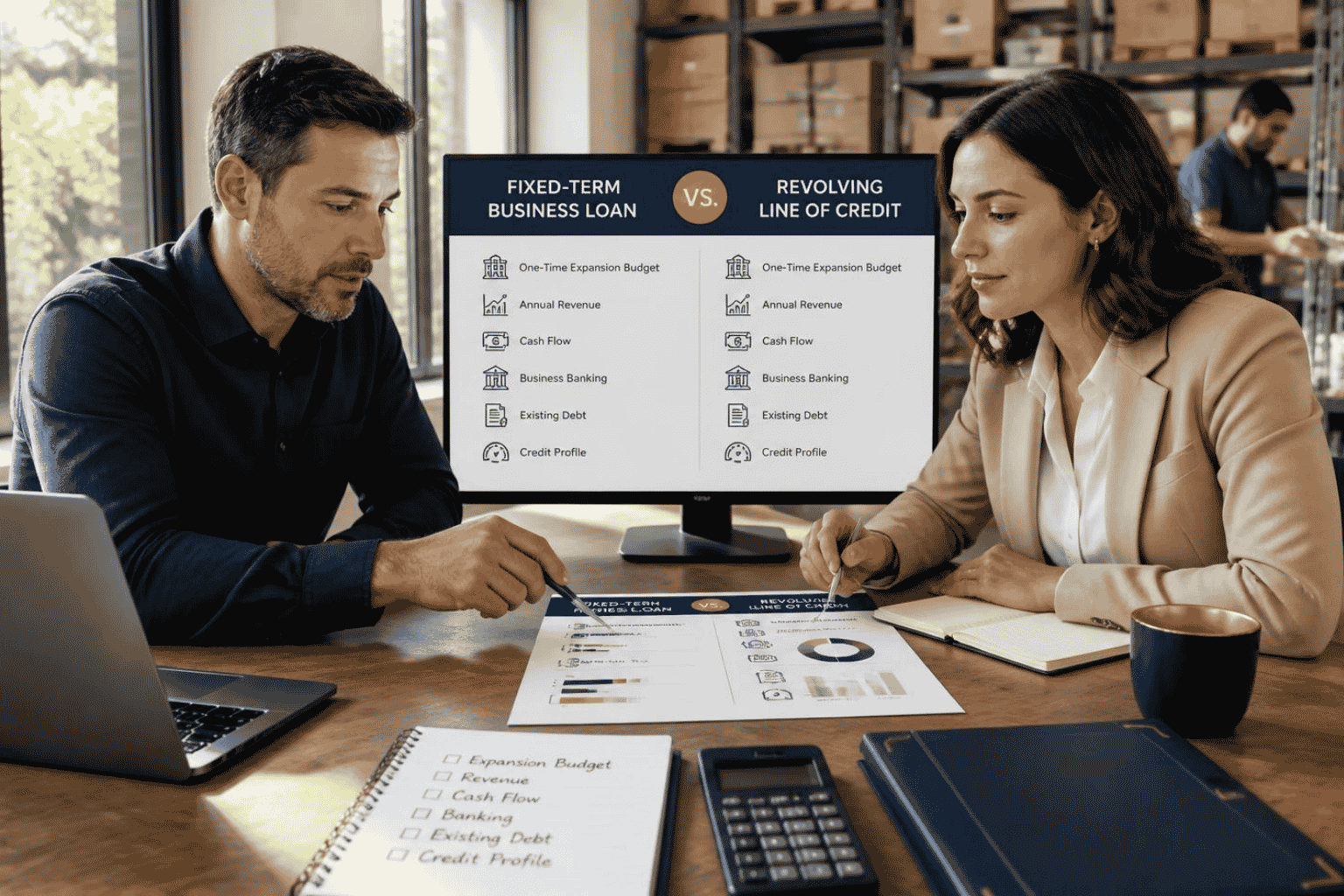
Business bank statements can become especially important because they show what is happening inside the business now: deposits, cash-flow patterns and the operating activity supporting the funding request.
If your business has an active capital need and recent bank statements are available, complete the EIN Business Funding Quick Lead Pre-Qualification with current—not estimated—business information.
What Does an EIN Tell the Lender?
An Employer Identification Number identifies the business for federal tax and other business purposes. It can be required or recommended in business financing applications.
It does not, by itself, show whether the company has enough revenue or cash flow to support financing.
Why Are Bank Statements Important?
Bank statements can show actual business deposits and help establish whether the company is generating consistent operating activity.
The EIN Business Funding guidance specifically identifies consistent deposits and bank statements as common considerations for online or alternative small-business loans.
What Are Common Online or Alternative Funding Benchmarks?
The guidance identifies approximately 600 to 680+ personal credit, six to twelve months in business and roughly $50,000 to $250,000+ in annual revenue as common benchmarks for online or alternative financing.
These are general screening ranges rather than universal lender requirements.
What Can a Lender Learn From Deposits?
A lender may look at whether deposits are relatively consistent, whether revenue appears to be growing or declining and whether the company’s banking activity supports the amount being requested.
A business with $200,000 in annual revenue spread consistently throughout the year can present differently from a company that generated most of that revenue during one unusually strong month.
Does Lower Documentation Mean No Underwriting?
No. Some online financing products may require less documentation than a traditional bank loan, but that does not mean the provider ignores repayment risk.
Credit, operating history, revenue, cash flow, existing debt and industry can still matter.
What Existing Debt Should Be Disclosed?
Prepare all open business credit cards, business lines of credit and business loans. Include the lender or card name, applicable limit, balance and open date.
This information helps show how much repayment capacity is already committed.
What If Revenue Is Strong but Deposits Are Inconsistent?
That situation may require explanation. There can be legitimate reasons for uneven banking activity, particularly in seasonal businesses or companies with large invoices.
The important point is to use accurate current information rather than assuming annual revenue alone answers the lender’s cash-flow questions.
What Should Be Ready Before Pre-Qualification?
- Legal business name
- EIN
- Entity type
- Formation date
- Annual business revenue
- Recent bank deposits
- Business bank statements
- Current credit profile
- Existing business debt
- Requested funding amount
- Specific use of funds
Why the Use of Funds Still Matters
A lender needs to understand what the capital will accomplish. Equipment, inventory, payroll, expansion, acquisition and general working-capital needs are not necessarily financed the same way.
A request for “$100,000 for business growth” is less informative than a request tied to a specific inventory purchase, expansion expense or identifiable cash-flow gap.
Should You Apply to Multiple Lenders First?
Not necessarily. Repeatedly applying without first understanding the borrower profile can create unnecessary activity without improving the underlying financing fit.
A better starting point is to organize current revenue, deposits, debt, credit and the exact funding requirement, then evaluate which financing category appears relevant.
Bank Statements Can Strengthen—or Clarify—the Funding Story
The goal is not to make every statement look perfect. The goal is to present an accurate operating picture.
If the business has real revenue, consistent activity and a defined use of funds, current bank information can help move the funding discussion from a generic inquiry toward an actual financing review.
Complete the EIN Business Funding pre-qualification when you can provide the business age, revenue, credit profile, amount needed and specific use of funds.
FAQs
Can I get a business loan using an EIN and bank statements?
Potentially. The EIN and bank statements can be part of the application, but providers may also evaluate credit, time in business, revenue, cash flow, debt and industry.
What do online lenders look for in business bank statements?
Depending on the provider, bank statements can help show recent deposits, revenue activity and cash-flow consistency.
Does online business funding mean personal credit will not be reviewed?
No. Personal credit can still be one of the factors considered by online or alternative financing providers.
 Bank statements can help online lenders understand current deposits and operating activity behind an EIN-based business funding request.