Equipment Financing Strategy: How Growing Businesses Acquire Assets Without Draining Cash
How can a growing business purchase needed equipment without using too much cash upfront? Equipment financing can help companies acquire machinery, vehicles, technology systems, tools, medical equipment, restaurant equipment, construction equipment, manufacturing assets, and other productive equipment while spreading the cost over time.
For many businesses, paying the full purchase price upfront can reduce cash reserves that may also be needed for payroll, inventory, vendor payments, marketing, customer delivery, and working capital. Equipment financing may allow a business to obtain an important asset while preserving more operating liquidity.
In this long-form educational video, EIN Business Funding (EINBF), part of Enterprise Industry Network (EIN), explains how business owners can evaluate equipment financing strategically by looking at the economic purpose of the asset, expected return, useful life, financing cost, collateral, repayment structure, and effect on cash flow.
What Is Equipment Financing?
Equipment financing is business funding used to acquire productive assets.
Depending on the business and financing structure, eligible equipment may include:
- Manufacturing machinery.
- Construction equipment.
- Commercial vehicles.
- Medical equipment.
- Restaurant equipment.
- Technology systems.
- Industrial tools.
- Warehouse equipment.
- Agricultural equipment.
- Other business-use assets.
The financing is typically connected directly to the equipment being purchased, although specific structures and requirements vary by provider.
Why Businesses Finance Equipment Instead of Paying Cash
The main reason is often liquidity.
A business may have enough cash to buy an asset outright but still prefer to preserve capital for other operating needs.
Cash may also be needed for:
- Payroll.
- Inventory.
- Vendor payments.
- Marketing.
- Customer acquisition.
- Working capital.
- Unexpected expenses.
Equipment financing can potentially spread the cost of the asset over time rather than concentrating the entire expense at the beginning.
Start With the Business Purpose Behind the Equipment
A strong equipment financing decision begins with understanding why the asset is needed.
Business owners should ask:
- Will the equipment increase production capacity?
- Will it improve productivity?
- Will it support additional revenue?
- Will it replace an unreliable asset?
- Will it reduce operating costs?
- Will it improve customer delivery?
- Will it enable business expansion?
The clearer the economic purpose, the easier it becomes to evaluate whether financing makes sense.
Equipment Financing Should Support a Measurable Business Benefit
Equipment should ideally create a financial or operational benefit that helps justify the financing obligation.
Potential benefits may include:
- Higher production output.
- Lower labor cost.
- Reduced downtime.
- Improved efficiency.
- New revenue opportunities.
- Faster customer delivery.
- Improved quality control.
Financing an asset without a clear business purpose can increase debt without producing enough economic value.
Preserving Cash for Working Capital
One of the strongest reasons to finance equipment may be to protect working capital.
A company that spends a large amount of cash on machinery or vehicles may later have less money available for everyday operations.
Preserved liquidity can help support:
- Payroll.
- Inventory.
- Supplier payments.
- Marketing.
- Operating reserves.
- Growth initiatives.
Match the Financing Term to the Asset’s Useful Life
The repayment period should generally make sense relative to how long the equipment is expected to remain productive.
Owners should consider:
- Useful life of the asset.
- Expected replacement cycle.
- Technology obsolescence.
- Maintenance requirements.
- Expected resale value.
Financing should not create a situation where the business continues paying for an asset that has already become obsolete or unusable.
New vs Used Equipment
Businesses may finance either new or used equipment depending on the asset and provider.
When comparing the two, owners should evaluate:
- Purchase price.
- Remaining useful life.
- Warranty.
- Maintenance risk.
- Technology level.
- Expected resale value.
A lower purchase price does not always mean lower total cost if used equipment requires significant repairs or replacement sooner.
Equipment Financing for Growth
Growing companies often need equipment before the additional revenue is fully realized.
For example, a company may need to purchase machinery before:
- Expanding production.
- Hiring additional staff.
- Serving a larger customer base.
- Opening another location.
- Accepting larger contracts.
Equipment financing may help align asset acquisition with the expected growth period.
Equipment Financing for Manufacturing Businesses
Manufacturers may use equipment financing for:
- Production machinery.
- CNC equipment.
- Packaging systems.
- Assembly equipment.
- Material-handling systems.
- Quality-control equipment.
The owner should evaluate how the equipment affects production capacity, labor requirements, maintenance, and margins.
Equipment Financing for Construction Companies
Construction businesses may require large productive assets such as:
- Excavators.
- Loaders.
- Trucks.
- Lifts.
- Specialized tools.
- Site equipment.
Financing may help spread the cost while allowing the company to retain cash for payroll, fuel, materials, and project expenses.
Equipment Financing for Medical Practices
Healthcare businesses may use financing to acquire:
- Diagnostic equipment.
- Imaging systems.
- Dental equipment.
- Laboratory equipment.
- Practice technology.
Owners should consider expected patient volume, useful life, regulatory requirements, and the financial benefit of the equipment.
Equipment Financing for Restaurants
Restaurants may finance:
- Commercial ovens.
- Refrigeration.
- Food-preparation equipment.
- Point-of-sale systems.
- Furniture or fixtures where applicable.
The repayment obligation should fit within realistic restaurant cash flow and margins.
Equipment Financing for Transportation Businesses
Transportation companies may need financing for:
- Trucks.
- Trailers.
- Commercial vehicles.
- Delivery vans.
- Fleet technology.
Business owners should evaluate fuel, maintenance, insurance, utilization, and replacement costs together with the financing payment.
Equipment Financing for Technology
Some technology assets become obsolete faster than traditional machinery.
Businesses should consider:
- Expected replacement cycle.
- Software compatibility.
- Upgrade costs.
- Resale value.
- Whether leasing may be more appropriate.
Loan vs Lease
Equipment loans and equipment leases can both support asset acquisition, but they are structured differently.
An equipment loan may result in ownership of the asset, while a lease may provide use of the equipment for an agreed period under specified terms.
Owners should compare:
- Upfront cost.
- Monthly payment.
- Ownership.
- End-of-term options.
- Maintenance obligations.
- Tax treatment.
- Total cost.
Businesses should consult qualified accounting or tax professionals regarding specific tax treatment.
Down Payment Requirements
Some equipment financing arrangements may require a down payment or equity contribution.
The required amount can vary based on:
- Asset type.
- Purchase price.
- Business financial profile.
- Credit.
- Equipment age.
- Resale value.
- Lender requirements.
Owners should consider how the down payment affects remaining cash reserves.
Collateral and Equipment Financing
The financed equipment itself may serve as collateral in some financing structures.
Owners should understand:
- What assets are pledged.
- Whether additional collateral is required.
- What lien is created.
- What happens in default.
Existing Liens Can Affect Equipment Financing
A business may already have lenders with liens on business assets.
Before financing new equipment, owners should understand:
- Existing lien positions.
- Collateral already pledged.
- Whether lender consent is required.
- Whether a new security interest can be added.
Personal Guarantees
Depending on the financing provider, owners may be asked to provide personal guarantees.
Business owners should understand the scope of any personal obligation before accepting financing.
Total Equipment Cost Matters
The purchase price is only one part of the economic decision.
Owners should also consider:
- Installation.
- Shipping.
- Training.
- Maintenance.
- Insurance.
- Repairs.
- Software.
- Licensing.
The complete cost should be compared with the expected economic benefit.
Evaluate the Financing Cost
Business owners should understand the full cost of borrowing.
Potential costs may include:
- Interest.
- Origination fees.
- Closing costs.
- Documentation fees.
- Other financing charges.
The monthly payment should not be the only number evaluated.
Monthly Payment and Cash Flow
The financing payment must fit within business cash flow.
Owners should consider whether the company can support:
- Normal operating expenses.
- Payroll.
- Existing debt.
- Taxes.
- Working-capital needs.
- The new equipment payment.
Calculate the Expected Return on the Equipment
A useful decision framework is to compare the cost of the equipment with the value it is expected to create.
Potential benefits may include:
- Additional revenue.
- Labor savings.
- Reduced downtime.
- Lower maintenance costs.
- Faster production.
- Improved margins.
Revenue-Generating Equipment
Some assets directly support new revenue.
For example, a new machine may increase production capacity or a commercial vehicle may allow a company to serve more customers.
Owners should estimate:
- Expected new revenue.
- Gross margin.
- Operating cost.
- Financing payment.
- Expected payback period.
Cost-Saving Equipment
Not every asset needs to generate new revenue directly.
Some equipment may create value by reducing:
- Labor expense.
- Outsourcing.
- Repair costs.
- Energy use.
- Production waste.
- Downtime.
Cost savings should be included in the economic analysis.
Replacing Unreliable Equipment
An aging asset can create hidden costs through:
- Frequent repairs.
- Lost production.
- Delayed customer delivery.
- Emergency maintenance.
- Lower efficiency.
The comparison should include the cost of keeping the old equipment as well as the cost of replacing it.
Equipment Financing and Working Capital
One major advantage of financing equipment can be preserving cash for day-to-day operations.
Owners should evaluate how much liquidity remains after:
- Down payment.
- Installation costs.
- Initial maintenance.
- Training.
- Other upfront expenses.
Avoid Using Working Capital for Long-Lived Assets
Using short-term operating capital to purchase a long-lived asset can create a financing mismatch.
The business may lose liquidity for payroll, inventory, or suppliers while the equipment generates benefits over several years.
An appropriately structured equipment facility may better align repayment with the asset’s productive life.
Equipment Financing vs Business Line of Credit
A line of credit may be better suited to short-term recurring operating needs.
Equipment financing is generally more appropriate when the business is purchasing a defined productive asset.
Using a revolving line for a large long-term equipment purchase can reduce future credit availability.
Equipment Financing vs Working Capital Loan
Working capital financing is typically used for operating expenses such as payroll, inventory, vendors, and seasonal needs.
Equipment financing is tied more directly to the asset purchase.
Equipment Financing vs Term Loan
A general term loan may potentially be used for several business purposes, while equipment financing is usually structured around a specific asset.
Owners should compare:
- Rate.
- Term.
- Collateral.
- Down payment.
- Flexibility.
- Total cost.
Equipment Financing vs Paying Cash
Paying cash eliminates financing cost, but it also reduces liquidity immediately.
Owners should compare:
- Cash reserves after purchase.
- Financing cost.
- Expected return on equipment.
- Other opportunities for available cash.
- Working-capital needs.
Consider Opportunity Cost
Cash used for equipment cannot simultaneously be used for payroll, inventory, expansion, marketing, or another opportunity.
The decision therefore involves more than comparing interest expense with zero interest.
Owners should consider what preserving cash may allow the business to do elsewhere.
What Lenders May Review
Equipment financing providers may evaluate:
- Business revenue.
- Cash flow.
- Credit profile.
- Time in business.
- Existing debt.
- Financial statements.
- Bank activity.
- Equipment type.
- Purchase price.
- Asset age.
- Resale value.
- Repayment capacity.
The Equipment Itself Matters
Unlike some other forms of business financing, equipment financing often involves lender evaluation of the asset itself.
The provider may consider:
- Type of equipment.
- Useful life.
- Marketability.
- Age.
- Condition.
- Expected resale value.
Prepare the Equipment Quote
Owners may need documentation showing:
- Vendor.
- Asset description.
- Purchase price.
- Model.
- Condition.
- Expected delivery.
Clear documentation can help connect the financing request directly to the asset being purchased.
Business Financial Documentation
Depending on the provider, businesses may need:
- Bank statements.
- Profit-and-loss statements.
- Balance sheets.
- Business tax returns.
- Debt schedules.
- Ownership information.
Equipment Financing for New Businesses
Newer companies may face different requirements because they have less operating history.
The lender may place greater emphasis on:
- Owner credit.
- Industry experience.
- Available equity.
- Equipment value.
- Business plan.
- Expected cash flow.
Requirements vary significantly by lender.
Equipment Financing for Established Businesses
Established businesses may be able to demonstrate:
- Historical revenue.
- Cash flow.
- Operating history.
- Existing customer base.
- Repayment record.
This information can help a lender understand how the new equipment fits into an already operating company.
Equipment Financing for Expansion
A company may finance equipment as part of a broader expansion plan.
Owners should consider whether the expansion also requires:
- More employees.
- More inventory.
- Larger facilities.
- Additional marketing.
- More working capital.
Financing the machine alone may not be enough if the broader expansion requires additional operating cash.
Do Not Ignore Installation and Ramp-Up Time
New equipment may not generate economic benefits immediately.
There may be time required for:
- Delivery.
- Installation.
- Training.
- Testing.
- Production ramp-up.
- Regulatory approval.
Owners should ensure that cash flow can support payments during the ramp-up period.
Maintenance and Repair Costs
Financing covers the purchase of the asset, but ownership may create ongoing expenses.
These can include:
- Preventive maintenance.
- Repairs.
- Replacement parts.
- Insurance.
- Service contracts.
The total ownership cost should be included in the decision.
Insurance Requirements
Lenders may require financed equipment to be properly insured.
Owners should include insurance expense in the total economic analysis.
Technology Obsolescence Risk
Some equipment becomes outdated faster than others.
Technology-heavy assets may require more careful consideration of:
- Upgrade cycles.
- Software compatibility.
- Replacement schedules.
- Resale value.
Balloon Payments
Certain financing arrangements may include a larger payment at the end of the term.
Owners should understand:
- Amount of any balloon payment.
- Expected asset value at that time.
- Refinancing options.
- Available cash.
Prepayment Terms
Some businesses may want to pay equipment financing off early.
The agreement should be reviewed for:
- Prepayment penalties.
- Early payoff calculations.
- Remaining interest requirements.
- Other fees.
Equipment Financing Before a Business Sale
A company preparing for a future sale may need to replace critical equipment before going to market.
Owners should understand how the new financing may affect:
- Debt balances.
- Liens.
- Buyer due diligence.
- Seller proceeds.
- Transaction structure.
The business improvement should be weighed against the remaining financing obligation at closing.
Equipment Financing in a Business Acquisition
A buyer acquiring an existing business may discover that equipment needs immediate replacement or expansion.
Acquisition planning should consider:
- Condition of existing assets.
- Deferred maintenance.
- Replacement requirements.
- Post-closing working capital.
- Additional equipment financing.
The purchase price is only one part of the total capital requirement.
Calculate the Break-Even Point
Owners can evaluate when the asset is expected to generate enough benefit to justify its cost.
The analysis may include:
- Purchase price.
- Financing cost.
- Maintenance.
- Expected additional revenue.
- Expected cost savings.
- Useful life.
When Equipment Financing May Make Sense
Equipment financing may be worth evaluating when:
- The asset has a clear business purpose.
- The equipment supports revenue or efficiency.
- The business wants to preserve operating cash.
- The repayment term fits the asset life.
- Cash flow can reasonably support payments.
- The expected economic benefit justifies the cost.
When Equipment Financing May Be a Poor Fit
Financing may be less appropriate when:
- The asset is not essential.
- The business cannot support the payment.
- The equipment may become obsolete quickly.
- Maintenance costs are excessive.
- The financing term exceeds the useful life.
- The total cost outweighs the expected benefit.
Questions to Ask Before Financing Equipment
Business owners should ask:
- Why does the business need this asset?
- How will it improve revenue, productivity, or efficiency?
- What is the total equipment cost?
- What down payment is required?
- What is the financing cost?
- How long will the equipment remain useful?
- What will maintenance cost?
- What collateral is required?
- Can current cash flow support the payment?
- How much working capital will remain after the purchase?
Finance the Asset—Not Financial Stress
Equipment financing can be a powerful business-growth tool when the asset has a clear economic purpose and the repayment structure matches the company’s financial capacity.
The objective is not simply to acquire more equipment. It is to acquire productive assets while preserving enough liquidity to operate, grow, and meet other business obligations.
Explore Equipment Financing with EIN Business Funding
EIN Business Funding (EINBF), part of Enterprise Industry Network, helps business owners evaluate equipment needs and explore financing structures for qualifying productive assets.
Depending on the company and asset, potential financing needs may involve machinery, vehicles, technology, medical equipment, restaurant equipment, construction equipment, manufacturing assets, or other qualified business equipment.
The objective is to understand the asset cost, business purpose, expected economic benefit, cash-flow impact, useful life, existing obligations, and repayment capacity before choosing an equipment financing structure.
Need Equipment Without Draining Business Cash?
Evaluate the asset cost, useful life, expected return, financing term, cash-flow impact, collateral, and working-capital needs before financing business equipment.
Frequently Asked Questions
What is equipment financing?
Equipment financing is business funding used to acquire productive assets such as machinery, vehicles, technology, medical equipment, restaurant equipment, construction equipment, and other business-use assets.
Why finance equipment instead of paying cash?
Financing can allow a business to spread the equipment cost over time and preserve cash for payroll, inventory, suppliers, marketing, working capital, and other operating needs.
What do lenders look for when approving equipment financing?
Funding providers may review business revenue, cash flow, credit, time in business, existing debt, bank activity, financial statements, repayment capacity, and the equipment’s type, age, condition, purchase price, and resale value.
Can equipment itself be used as collateral?
In some equipment financing structures, the financed asset may serve as collateral. Requirements vary by provider and may involve additional collateral or guarantees.
What is the difference between equipment financing and a business line of credit?
Equipment financing is generally tied to a specific productive asset, while a business line of credit is more commonly used for recurring or variable short-term working-capital needs.
When might equipment financing not make sense?
It may be a poor fit when the asset has limited economic benefit, becomes obsolete quickly, carries excessive maintenance costs, has a shorter useful life than the financing term, or creates a payment the business cannot reasonably support.
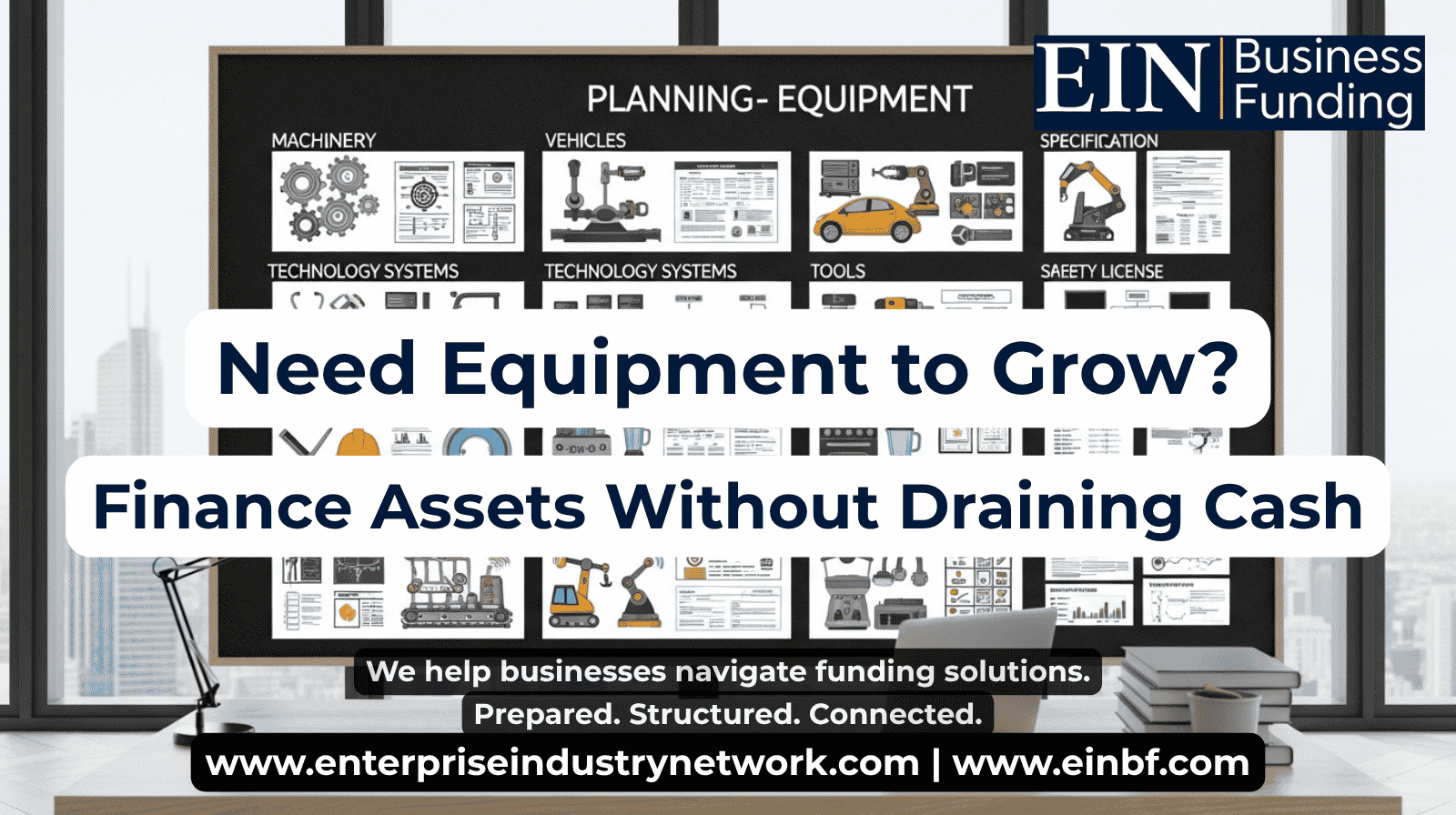 Equipment financing can help growing businesses acquire productive assets while preserving cash for payroll, inventory, vendors, working capital, and other operating needs.