Business Funding Documents Checklist: What to Prepare Before You Apply
What documents should you prepare before applying for business funding? Depending on the financing product and provider, business owners may be asked for bank statements, financial statements, tax returns, debt information, ownership records, legal documents, and supporting information related to the intended use of funds.
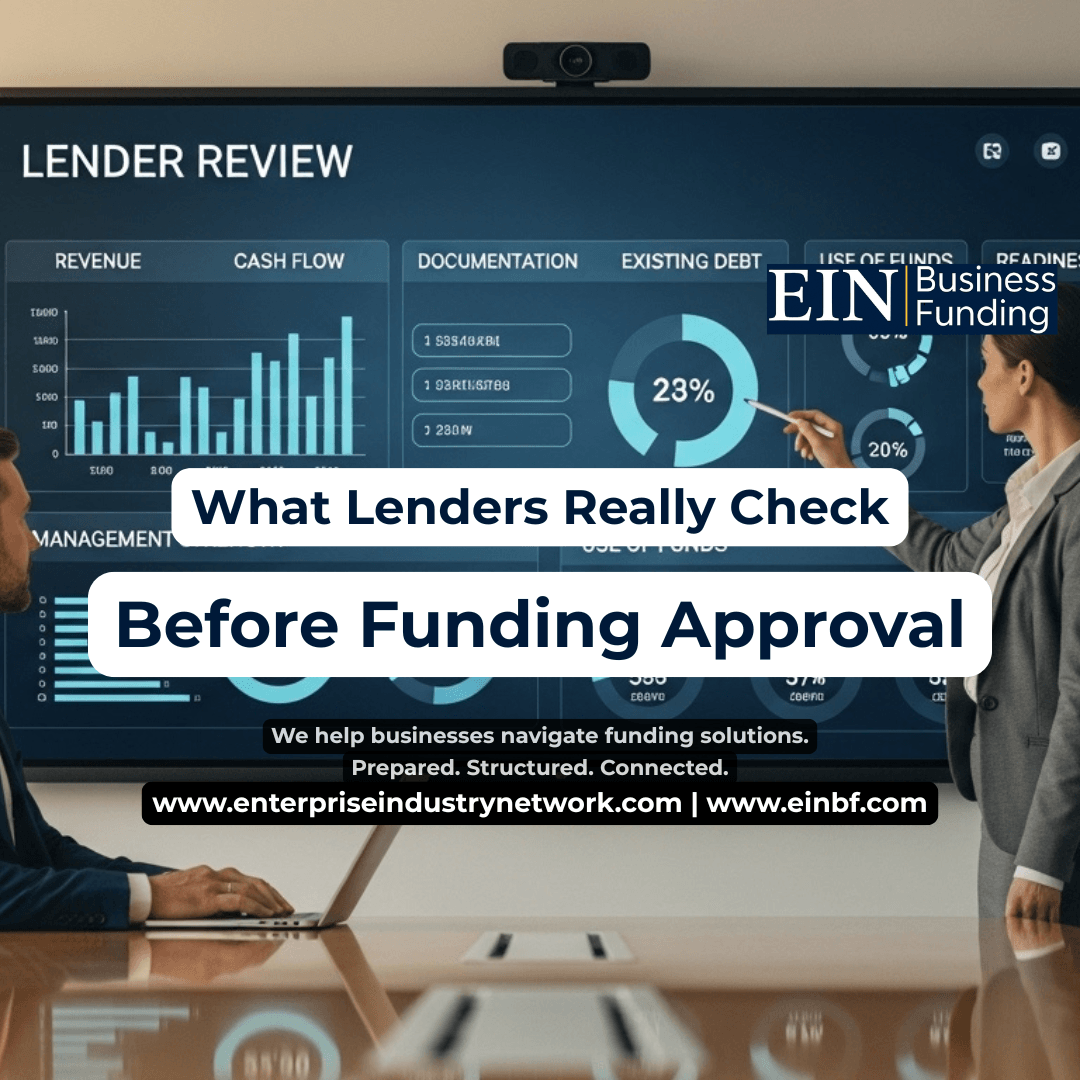
Document readiness matters because lenders and funding providers need a clear picture of the business before evaluating a financing request. Organized records can help explain revenue, cash flow, existing obligations, business ownership, financial performance, and how the requested capital will be used.
In this short educational video, EIN Business Funding (EINBF), part of Enterprise Industry Network (EIN), explains the key documents business owners may need to organize before applying for funding.
What Documents May Be Needed for Business Funding?
The exact documentation depends on the funding product, provider, business profile, requested amount, and intended use of funds. However, business owners are often asked to provide information that helps verify the company’s financial position and operating history.
Common documents may include:
- Recent business bank statements.
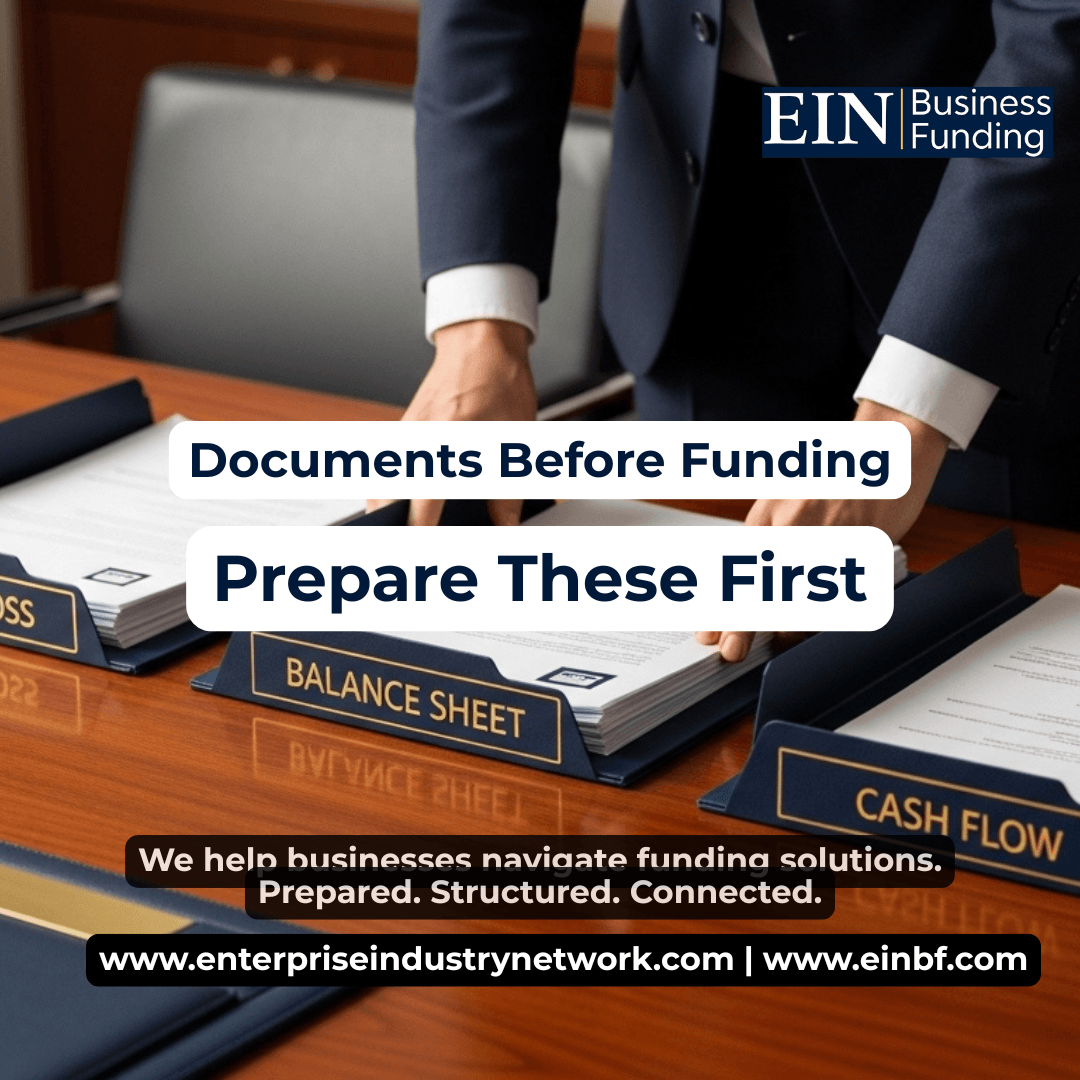
- Profit-and-loss statements.
- Balance sheets.
- Business tax returns when requested.
- Accounts receivable and accounts payable information.
- Existing debt schedules.
- Ownership information.
- Formation or legal business documents.
- Contracts, invoices, purchase orders, or equipment quotes when relevant.
- Information explaining how the funding will be used.
Why Business Bank Statements Matter
Business bank statements can help funding providers understand how money moves through the company. They may show deposits, withdrawals, average balances, recurring expenses, and patterns in business cash flow.
For some funding products, recent bank activity can be an important part of evaluating revenue consistency, cash-flow strength, and the company’s ability to support financing obligations.
Why Financial Statements Are Important
Financial statements help provide a broader view of business performance beyond bank activity alone.
A profit-and-loss statement can help show revenue, expenses, and profitability over a defined period. A balance sheet can help show assets, liabilities, and the financial position of the business at a particular point in time.
Accurate financial statements can make it easier to explain how the business is performing and how additional capital may fit into the company’s financial structure.
Tax Returns and Historical Business Performance
Depending on the financing request, lenders or funding providers may ask for business tax returns to verify historical revenue, profitability, ownership, or other financial information.
Not every funding product requires the same documentation, but business owners should know where their tax and financial records are and make sure the information is accurate and consistent.
Document Existing Debt and Financial Obligations
Business owners should also be prepared to explain current loans, lines of credit, leases, merchant financing, or other financial commitments.
A debt schedule or similar record can help show:
- Current lenders or financing providers.
- Outstanding balances.
- Monthly payment obligations.
- Interest rates when applicable.
- Remaining terms or maturity dates.
Understanding existing obligations can help the business owner and funding provider evaluate whether additional financing appears manageable.
Prepare Documents for the Intended Use of Funds
The purpose of the funding may determine which supporting documents are useful or required.
For example:
- Equipment financing may require equipment quotes or invoices.
- Acquisition financing may involve purchase agreements, financial information for the target business, or related transaction documents.
- Working-capital requests may focus more heavily on cash flow, revenue, and bank activity.
- Inventory financing may require supplier information or purchase orders.
- Refinancing may require documentation of existing obligations.
Clear supporting documentation can help explain why the capital is needed and how it will be used.
Make Sure Business Information Is Consistent
One common funding-readiness problem is inconsistent information across applications, bank statements, financial reports, tax documents, and ownership records.
Before applying, business owners should confirm that names, addresses, ownership details, revenue figures, debt information, and other core business data are accurate and consistent.
Inconsistencies do not automatically prevent funding, but they can create questions and delays that may require additional explanation.
How to Organize Your Funding Documents
Business owners can make the funding process easier by preparing records before submitting an application.
- Gather recent bank statements.
- Update financial statements.
- Locate tax returns and legal business documents.
- Prepare a current debt schedule.
- Organize ownership information.
- Collect documents supporting the use of funds.
- Check that information is current and consistent.
- Keep documents in a secure, organized digital folder for easier access.
Explore Business Funding with EIN Business Funding
EIN Business Funding (EINBF), part of Enterprise Industry Network, helps business owners understand funding readiness and explore potential financing options based on their business profile, capital needs, financial position, and intended use of funds.
Depending on the company and funding purpose, potential options may include working capital, business lines of credit, equipment financing, acquisition financing, refinancing, growth capital, and other business financing solutions.
Prepare Your Funding Documents
Organized financial and business records can help create a clearer funding request. Start with a quick pre-qualification or explore business funding options with EIN Business Funding.
Frequently Asked Questions
What documents do I need to apply for business funding?
Requirements vary by provider, but common documents may include business bank statements, financial statements, tax returns, debt information, ownership records, legal documents, and supporting information related to the intended use of funds.
How many months of business bank statements may be required?
The number of bank statements required varies by financing product and provider. Many funding providers request several recent months of business banking activity, but exact requirements differ.
Do I need tax returns for business funding?
Some financing products and providers may request business tax returns, while others may rely more heavily on bank activity, revenue, cash flow, or other financial documentation.
Why do lenders ask for a debt schedule?
A debt schedule helps show existing financial obligations, outstanding balances, payment requirements, and the amount of debt the business is already carrying.
How can I prepare documents before applying?
Gather current bank statements, update financial reports, locate legal and tax documents, prepare debt information, organize ownership records, and collect documents that support how the requested funding will be used.
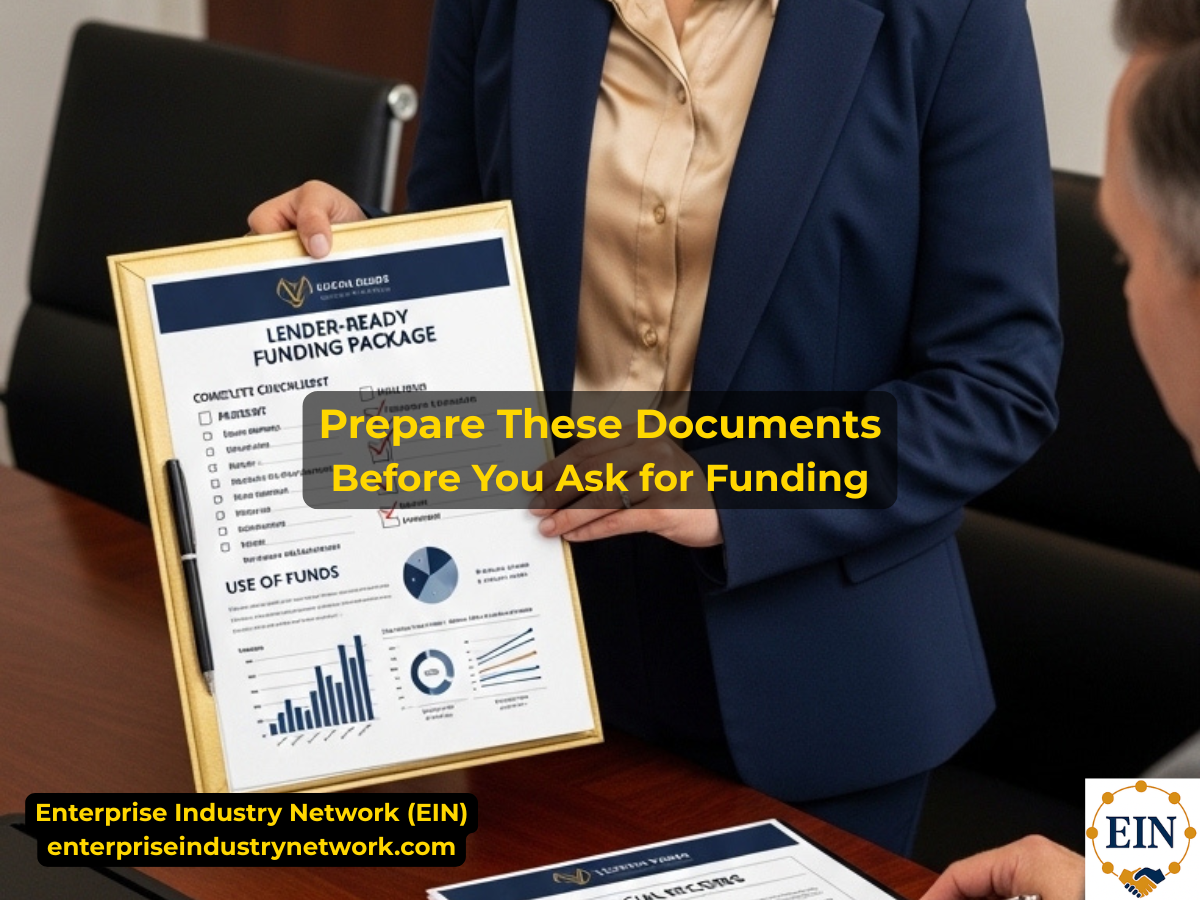 Preparing bank statements, financial records, debt information, ownership documents, and supporting records can help business owners approach the funding process with better organization and clearer information.