How to Compare Business Funding Options and Choose the Right Financing Path
Should you begin your business funding search with just one lender or one financing product? Not necessarily. A stronger approach is to first understand the business need, funding purpose, cash flow, financial position, repayment capacity, timing, and available documentation—then compare financing options that may fit.
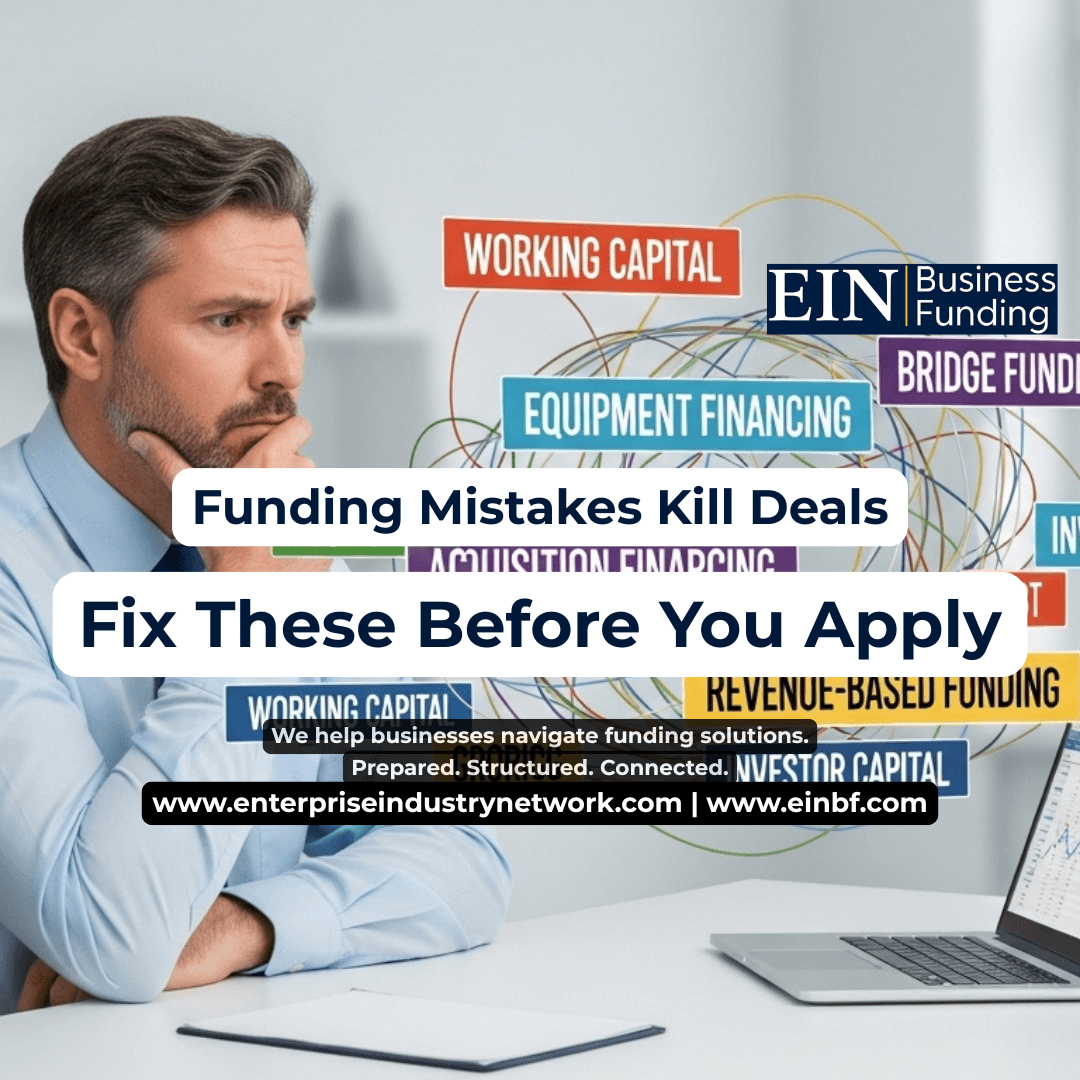
Different capital needs can require different funding structures. Working capital, a business line of credit, equipment financing, acquisition financing, invoice financing, refinancing, or another form of business funding may be appropriate depending on the company, transaction, and intended use of capital.
In this short educational video, EIN Business Funding (EINBF), part of Enterprise Industry Network (EIN), explains how business owners and buyers can compare funding options instead of forcing every capital need into a single lender or financing product.
Why Should Businesses Compare Funding Options?
Business financing is not one-size-fits-all. Two businesses requesting the same amount of capital may need completely different financing structures because their cash flow, operating history, collateral, repayment capacity, purpose, and timing are different.
Comparing options can help business owners better understand:
- Which financing structure matches the business need.
- How repayment may affect cash flow.
- The total cost of capital.
- Whether collateral or guarantees may be required.
- How quickly the funding may be needed.
- Whether the structure provides flexibility or fixed repayment.
- How the financing may affect future borrowing capacity.
Start with the Business Need, Not the Lender
A funding search should begin with the business problem that needs to be solved.
Important questions include:
- How much capital is needed?
- What will the funds be used for?
- Is the need short term or long term?
- Is the funding need recurring or one-time?
- How quickly is capital required?
- Can the business support fixed payments?
- Does the business need flexibility to draw funds over time?
Once the need is clearly defined, it becomes easier to compare financing structures that may be appropriate.
Compare Working Capital Options
Working capital financing may be useful for short-term operating needs such as payroll, inventory, vendor payments, seasonal expenses, or temporary cash-flow gaps.
Owners should compare:
- Amount available.
- Repayment frequency.
- Total financing cost.
- Length of the financing term.
- Impact on operating cash flow.
- Whether the need is genuinely temporary.
Compare a Business Line of Credit
A business line of credit may provide flexible access to capital up to an approved limit rather than providing the entire amount upfront.
This structure may be useful when a business has recurring short-term needs or unpredictable cash-flow timing.
Business owners should review:
- Credit limit.
- Availability of unused credit.
- Interest or financing charges.
- Draw fees or annual fees.
- Minimum-payment requirements.
- Whether the facility is revolving.
- Collateral or guarantee requirements.
Compare Equipment Financing
Equipment financing is generally designed for purchasing productive business assets such as machinery, commercial vehicles, technology, medical equipment, restaurant equipment, or construction equipment.
Owners should consider:
- Equipment cost.
- Required down payment.
- Useful life of the asset.
- Expected return on investment.
- Monthly financing payment.
- Working capital preserved by financing instead of paying cash.
Compare Invoice Financing
Invoice financing may help businesses access capital tied up in unpaid customer invoices.
This can be relevant when customers pay on 30-, 60-, or 90-day terms and the business needs cash sooner for ongoing operations.
Important factors include:
- Eligible invoice value.
- Advance rate.
- Customer credit quality.
- Invoice age.
- Fees.
- Recourse terms.
- Impact on profit margins.
- Customer-payment process.
Compare Business Acquisition Financing
Buying an existing business may require a combination of financing sources rather than a single product.
Potential components can include:
- Buyer equity.
- Bank or SBA-style acquisition financing.
- Seller financing.
- Investor or partner capital.
- Asset-based financing.
- Post-closing working capital.
Business buyers should evaluate the entire transaction structure, including purchase price, cash flow, repayment capacity, seller terms, buyer contribution, and working-capital needs after closing.
Compare Refinancing Options
Refinancing may help restructure existing business debt, reduce repayment pressure, consolidate obligations, or improve cash-flow flexibility.
Owners should compare both the short-term benefit and total long-term cost.
Key factors may include:
- Existing balances.
- Current payment obligations.
- New monthly payments.
- Interest or financing cost.
- Fees.
- Repayment period.
- Collateral.
- Prepayment terms.
- Total cost over the life of the financing.
Compare Total Cost, Not Just the Monthly Payment
A lower monthly payment does not always mean a less expensive financing option.
A longer repayment period can reduce monthly cash pressure while increasing the total amount paid over time.
Business owners should understand:
- Interest or financing charges.
- Origination fees.
- Service fees.
- Closing costs.
- Prepayment penalties.
- Required deposits or reserves.
- Total repayment amount.
Compare Repayment Structure and Cash-Flow Impact
The repayment schedule should fit the way the business generates cash.
A financing structure with frequent payments may create pressure for a company whose customers pay slowly. A seasonal business may need a structure that reflects predictable periods of higher and lower revenue.
The right financing option should be evaluated in the context of actual business cash flow rather than approval amount alone.
Review Collateral and Personal Guarantees
Some business funding structures may require business assets, equipment, receivables, or other collateral. Personal guarantees may also be required depending on the financing provider and product.
Owners should understand exactly what assets or obligations are supporting the financing before accepting an offer.
Do Not Choose Funding Based Only on Speed
Fast access to capital can be valuable when timing matters, but speed should not be the only factor in a financing decision.
Business owners should balance:
- Funding speed.
- Cost.
- Repayment structure.
- Flexibility.
- Collateral requirements.
- Impact on cash flow.
- Long-term financial consequences.
Why a Lender-Agnostic Approach Can Help
A lender-agnostic funding approach starts with the business need and then evaluates potential financing pathways rather than forcing the request into one lender’s product menu.
This can help owners compare structures based on business fit instead of simply accepting the first available funding source.
The objective is not necessarily to find the maximum amount of capital available. It is to identify financing that supports the business need while remaining financially sustainable.
Questions to Ask When Comparing Business Funding
- Does this financing match the intended use of funds?
- What is the total financing cost?
- How often are payments required?
- Can current cash flow comfortably support repayment?
- Are collateral or guarantees required?
- How quickly is funding available?
- Can the financing be repaid early?
- Are there prepayment penalties?
- Does the structure provide enough flexibility?
- How might this financing affect future funding options?
Explore Business Funding Options with EIN Business Funding
EIN Business Funding (EINBF), part of Enterprise Industry Network, helps business owners and buyers prepare for capital conversations and explore potential funding paths based on business profile, financial need, cash flow, use of funds, timing, and overall readiness.
Depending on the situation, potential options may include working capital, business lines of credit, equipment financing, acquisition financing, invoice financing, refinancing, growth capital, and other business funding structures.
The goal is to understand the business need first and then evaluate which financing structure may provide the best overall fit.
Find the Funding Path That Fits
Compare financing based on your business need, cash flow, repayment capacity, funding purpose, and timing—not simply the first option available.
Frequently Asked Questions
How do I compare business funding options?
Compare each option based on funding purpose, amount, repayment structure, total cost, cash-flow impact, collateral requirements, timing, flexibility, and the company’s ability to support repayment.
Should I apply with only one business lender?
Not necessarily. Different lenders and financing providers may offer different structures, eligibility requirements, costs, and repayment terms, so understanding the business need first can help identify suitable options.
What is the best type of business funding?
There is no single best option for every business. The right structure depends on the company’s financial profile, use of funds, cash flow, time horizon, repayment capacity, and specific capital need.
What is the difference between working capital and a business line of credit?
Working capital is a broad funding need or category, while a line of credit is a specific financing structure that may provide flexible access to capital up to an approved limit.
Should I choose the financing option with the lowest monthly payment?
Not automatically. Owners should compare total financing cost, repayment length, fees, cash-flow impact, and overall business fit—not just the monthly payment.
Why should businesses compare funding before applying?
Comparing options can help owners understand the tradeoffs between cost, repayment, flexibility, timing, collateral, and the business impact of different financing structures.
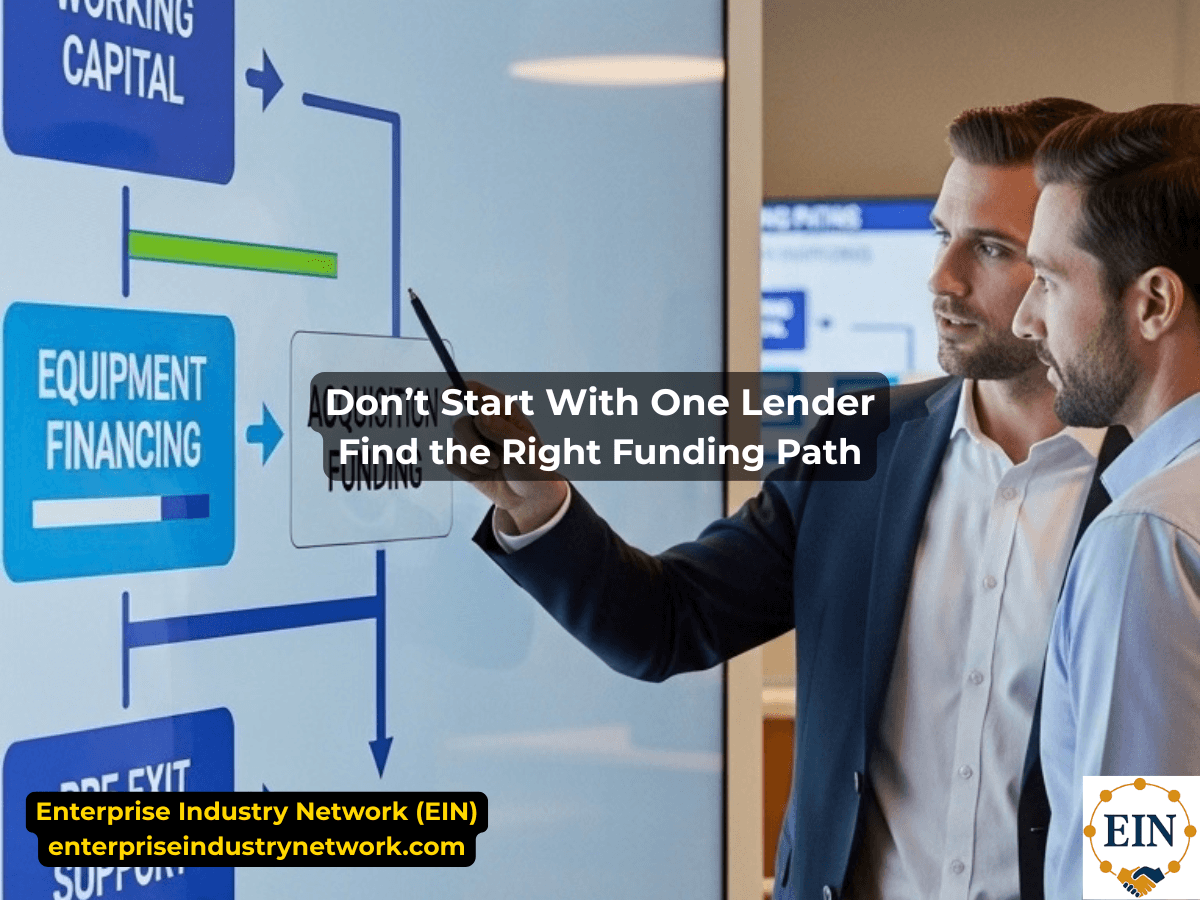 Business owners should compare financing options based on funding purpose, total cost, repayment structure, cash-flow impact, timing, flexibility, and business fit rather than choosing the first available lender.