Black Friday Equipment Deals for Contractors: Finance Skid Steers, Excavators and Tools Without Draining Winter Working Capital
Black Friday is no longer only about televisions, laptops and consumer purchases.
Contractors and construction-related businesses can also encounter year-end promotions, dealer incentives and attractive opportunities to replace or add business equipment.
A skid steer, compact excavator, trailer, generator, compressor or specialized tool package may improve productivity for years.
But using too much cash for the purchase can leave the business short of money for payroll, materials, fuel and winter projects.
If your business has identified equipment to purchase and knows the approximate cost, complete the EIN Business Funding Quick Lead Pre-Qualification using the actual equipment and business information.
Start With the Equipment the Business Actually Needs
A discount does not create a business need.
The first question should be whether the equipment solves a real operating problem.
Examples include:
- Replacing unreliable machinery
- Reducing rental expense
- Increasing crew productivity
- Taking on larger projects
- Reducing subcontractor dependence
- Expanding into another service
A productive asset should have a clear role in the company’s operations.
Calculate Utilization Before Financing
Equipment creates value when it is used productively.
A machine needed five days per year may be more economical to rent.
A machine used every week across multiple projects may justify ownership.
Estimate realistic annual utilization rather than assuming every future job will require the asset.
Compare Rental Cost With Ownership Cost
Contractors frequently rent equipment because it preserves flexibility.
Ownership can become attractive when rental frequency, delivery charges and scheduling difficulties become significant.
Compare:
- Purchase price
- Financing payment
- Maintenance
- Insurance
- Storage
- Transportation
- Rental expense being replaced
Equipment Financing Can Preserve Winter Cash
A contractor may have enough cash to purchase equipment outright.
That does not always mean paying cash is the best operating decision.
Winter months can create working-capital needs for payroll, materials, fuel, insurance and projects where customer payments arrive after work begins.
Financing a long-lived productive asset may allow the company to preserve liquidity for those shorter-term needs.
The Down Payment Should Not Empty the Bank Account
Depending on the financing structure, the business may need to contribute some cash toward the purchase.
The owner should calculate the contribution alongside the working-capital reserve.
A new excavator does not help if the company then lacks cash to pay the crew operating it.
Used Equipment Can Be Attractive During Year-End Sales
Used construction equipment can reduce the purchase price, but condition becomes especially important.
Review hours, service history, maintenance records and major component condition where appropriate.
Financing providers may also consider the age and useful life of the equipment.
Include Attachments and Accessories
A skid steer may require buckets, forks or other attachments.
An excavator may need specialized tools. A trailer may need additional equipment or modifications.
Calculate the complete package rather than financing the machine and later discovering that another large cash purchase is required before it can work productively.
Delivery and Transportation Matter
Heavy equipment may involve transportation expenses, registration, taxes or other transaction costs depending on the asset and location.
Understand the complete delivered cost before deciding how much financing is needed.
Existing Equipment Debt Can Limit Flexibility
A growing contractor may already be financing trucks, trailers, machinery and other assets.
List current balances and monthly payments before adding another obligation.
Strong revenue does not automatically mean the company should continue adding equipment debt indefinitely.
Match Financing Term With Equipment Life
Construction machinery may produce value for several years.
Using an extremely short repayment structure for a long-lived asset can unnecessarily pressure operating cash flow.
The financing period should be evaluated alongside the expected useful life and productivity of the equipment.
Do Not Finance Equipment Solely for a Tax Reason
Year-end purchasing decisions can have tax implications, but tax treatment depends on the business and transaction.
Business owners should consult their tax professional before making a purchase based on expected deductions or depreciation treatment.
The equipment should make operating sense even before considering possible tax effects.
Black Friday Pricing Should Not Override Dealer Due Diligence
A limited-time promotion can create pressure to act quickly.
Verify the equipment, condition, warranty, dealer credibility and purchase terms before committing.
A discount is not valuable if the business acquires the wrong machine.
What About Materials and Payroll?
Equipment financing generally addresses the asset itself.
Materials, payroll, fuel and mobilization are working-capital needs.
A contractor purchasing equipment while also starting new projects should calculate these requirements separately.
Example: $100,000 Equipment Purchase
Suppose a contractor finds a $100,000 piece of equipment that could reduce recurring rental costs and support existing project demand.
The company has $80,000 in available cash but expects to need $50,000 over the next several weeks for payroll, materials and fuel.
Paying the full equipment price in cash would create an immediate liquidity shortage.
That is the type of situation where comparing equipment financing with a cash purchase can be useful.
Prepare Before Requesting Equipment Financing
Have available:
- Equipment description
- Dealer quotation
- New or used status
- Purchase price
- Attachments and accessories
- Cash contribution available
- Business formation date
- Annual revenue
- Current credit profile
- Existing equipment debt
- Winter working-capital requirement
The Best Black Friday Equipment Purchase Still Works in February
A limited-time price can be attractive, but the business will own and finance the asset long after Black Friday ends.
The purchase should improve productivity, reduce costs or support demonstrated customer demand throughout the year.
When contractors separate equipment capital from operating working capital, they can evaluate year-end opportunities without sacrificing the liquidity required to keep projects moving.
FAQs
Can construction equipment be financed with an EIN?
An EIN is part of the business application, but providers may also consider credit, business age, revenue, cash flow, existing debt and the equipment.
Can used skid steers or excavators be financed?
Potentially. Age, condition, useful life, purchase price and the borrower profile can affect eligibility.
Should contractors finance equipment or pay cash?
The answer depends on financing cost, available cash, utilization and the amount of working capital the business needs to preserve.
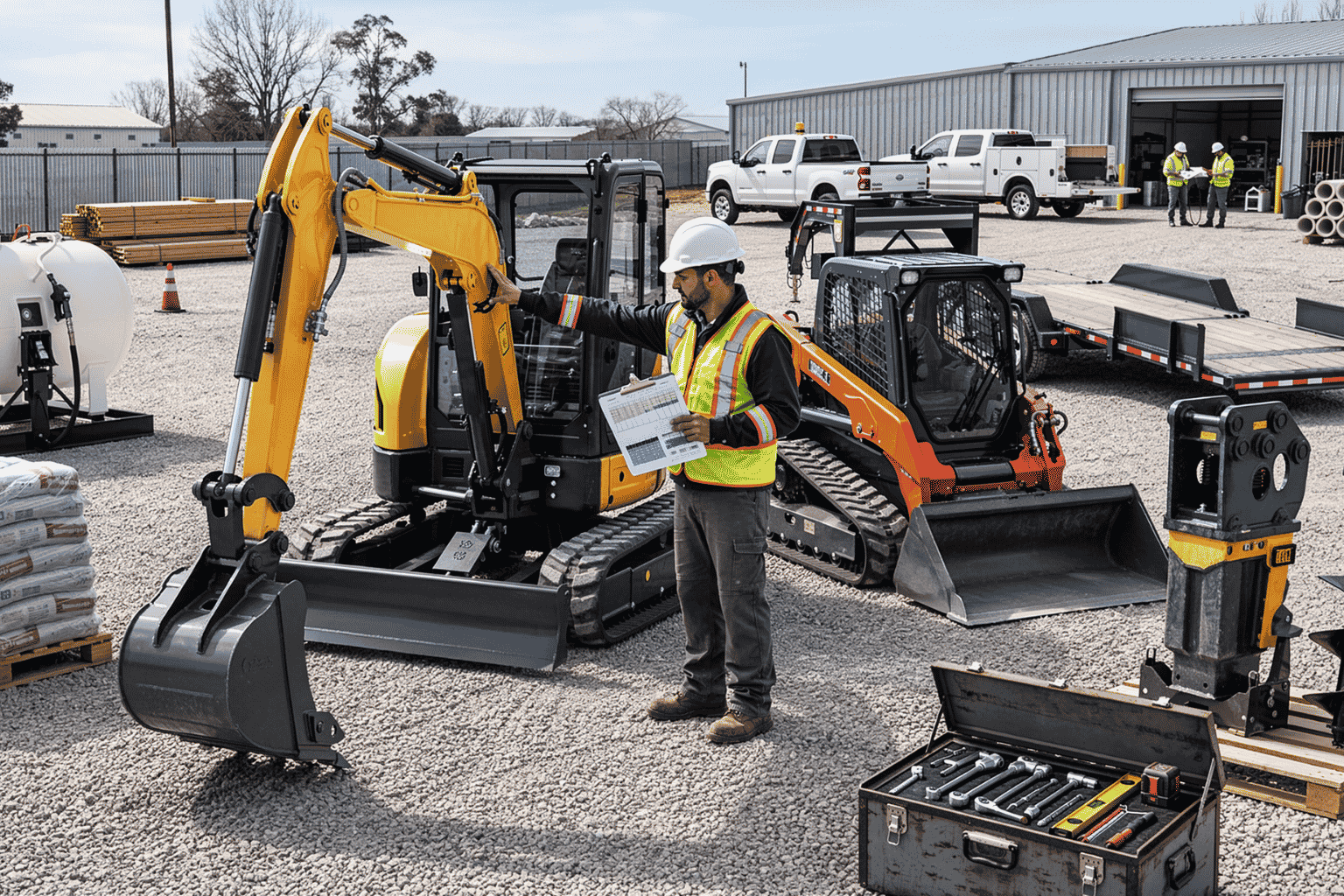 Contractors should evaluate utilization and winter working-capital needs before using cash or financing for year-end equipment purchases.